Wet/Dry & Gutter Vacuums
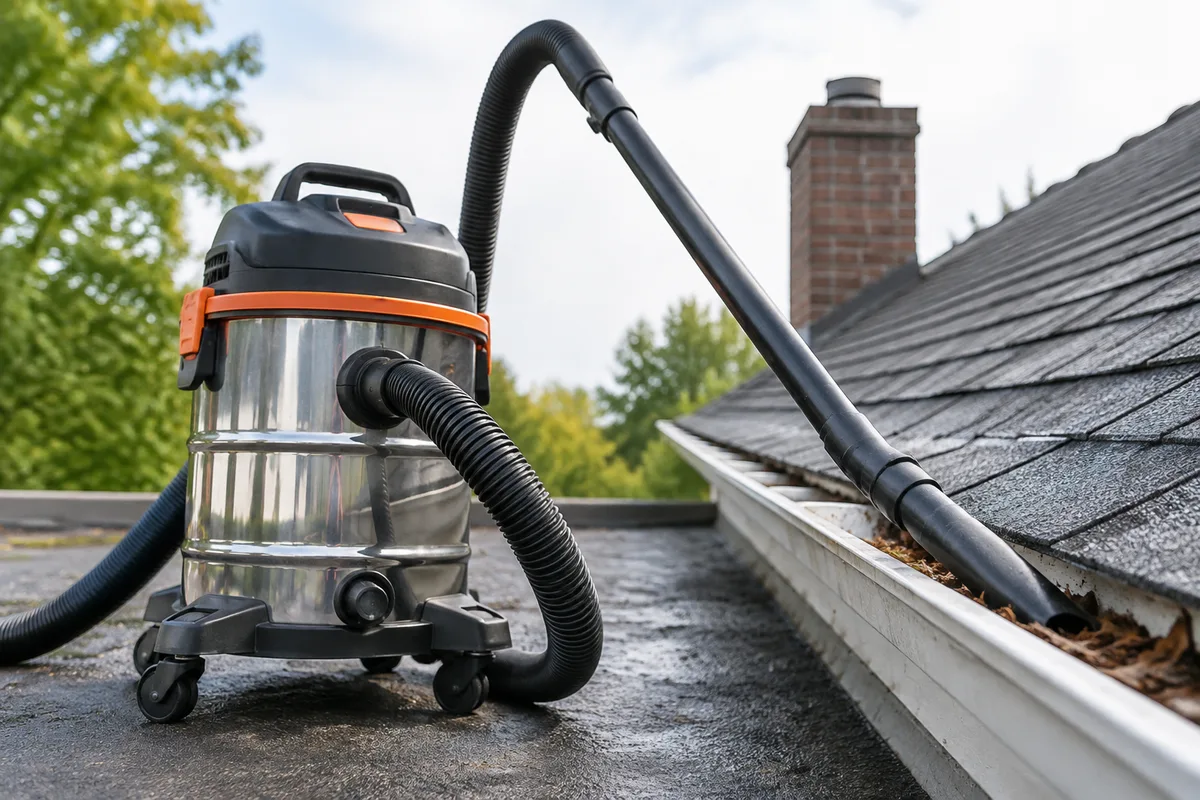
Wet/Dry & Gutter Vacuums
Clogged gutters and slow drains are a common source of roof and fascia damage, and clearing them safely is its own specialized task. SoffitSmith by Smithbuilt Roofing uses wet/dry and gutter vacuum systems to pull leaves, grit, shingle debris and standing water out of gutters and drains, most often from the ground rather than off a ladder balanced against your fascia.
What wet/Dry & Gutter Vacuums is
A wet/dry and gutter vacuum is a high-powered vacuum unit fitted with extended, curved tubing built to reach into a gutter run or a roof drain from the ground or from a lift. It is designed to pull both dry debris — leaves, seed pods, roofing grit, nesting material — and standing water, so one pass can clear a gutter that is both clogged and wet. This is different from a shop vacuum used indoors: the tubing, filters and motor are built for outdoor debris and moisture, and the reach is long enough to work a gutter line without a worker's hands ever being in the gutter itself.
Before tools like these were common, gutter clearing generally meant a worker on a ladder, hand-scooping debris into a bucket at every few feet of run, and often working blind on standing water in a downspout or internal drain. A vacuum system covers the same ground faster and with debris captured in a containment unit rather than dropped onto landscaping, walkways or a driveway below.
How we use it at SoffitSmith by Smithbuilt Roofing
On a gutter or drainage visit, the vacuum is typically the first tool out, not the last. Debris is captured rather than dropped, which keeps beds, walks and any parked vehicles clean during the work — the same reasoning behind our use of Landscape Protection Tarps on roofing jobs. Where a gutter run is clogged with standing water as well as leaves, the vacuum work often runs alongside our Submersible Pumps, Air Movers & Dehumidifiers, which handle larger volumes of standing water elsewhere on a property.
For internal roof drains that are blocked further down than a vacuum can reach, we follow with a Drain Snake for Internal Drains to clear the line completely. Once a gutter is cleared, a pass with Leaf Blowers clears any remaining grit from the roof valleys and gutter mouth, and where access requires more than a ladder, our Scaffolding & Boom/Scissor Lifts or Extension Ladders with Stabilizers get a crew safely to the gutter line. If the visit turns up a hanger, joint or seam that needs attention, that work draws on the same on-site gutter fabrication and fastening tools we use for new installations, including our Hidden Hanger Tools and Gutter Crimpers, Outlet Punches & Rivet Guns. Every stage is documented with our Photo Documentation Apps (CompanyCam) so you can see what came out of the gutter and what the line looks like after.
What it means for you
Clearing gutters this way keeps a worker off your gutters and fascia, which matters because gutters are not built to bear a person's weight and repeated ladder contact can bend or loosen them over time. Ground-based or lift-based vacuum work also means less foot traffic on the roof itself, which is generally easier on shingles, tile and any coatings.
Because debris is captured rather than dumped, there is typically less cleanup left behind on your property — no piles of wet leaves left on a walkway or driveway to sweep up afterward. And because standing water can be pulled at the same time as solid debris, a single visit can address a clog that is holding water as well as one that is simply full of leaves, rather than needing separate steps for each.
What to expect during your visit
A crew will typically walk the gutter line first to identify where debris and standing water have collected, and to check for any hanger or seam issues while they are looking. The vacuum work itself is usually done section by section along the gutter run, either from the ground with extended tubing or from a lift on taller or harder-to-reach sections. Homeowners do not need to do anything special to prepare beyond making sure ground-level access to the gutter line, such as flower beds or parked vehicles, is reasonably clear.
Once the gutters and any accessible drains are clear, a blower pass removes any remaining fine debris from valleys and gutter mouths, and the crew checks that water is now moving freely through downspouts. Photos are taken before and after so you have a record of the condition found and the condition left. Total time on site depends on the length and condition of the gutter run and whether internal drains also need snaking.
Frequently asked questions
Is gutter vacuuming safe for my roof and landscaping?
Yes — the vacuum work is generally done from the ground or from a lift rather than by a worker standing in the gutter, which reduces contact with your roof edge and fascia. Landscaping near the work area is typically protected with tarps before debris removal begins, and captured debris is bagged or contained rather than left on the ground.
Does the vacuum handle standing water as well as leaves?
Wet/dry gutter vacuums are built to pull both, which is part of why they are useful for clogs that involve trapped moisture, not just dry leaves and grit. For larger volumes of standing water elsewhere on a property, a separate pump system may be used alongside the gutter vacuum.
How long does a gutter vacuum visit take?
The time depends mainly on how long the gutter run is and how blocked it has become, along with whether any internal drains also need clearing with a drain snake. A straightforward gutter clearing is generally quicker than a full inspection-and-repair visit that also addresses hangers, seams or downspouts.
Is this suitable for any type of gutter or roof?
Gutter vacuuming works on standard hung gutters as well as internal or scupper-style drainage found on some flat and low-slope roofs, with the drain snake handling the parts a vacuum cannot reach. The right access method — ground-based tubing versus a lift — depends on the height and layout of your roofline.
If your gutters are holding water, overflowing, or simply due for a clearing, reach out to SoffitSmith by Smithbuilt Roofing to ask about a wet/dry and gutter vacuum visit.