Towable Air Compressors
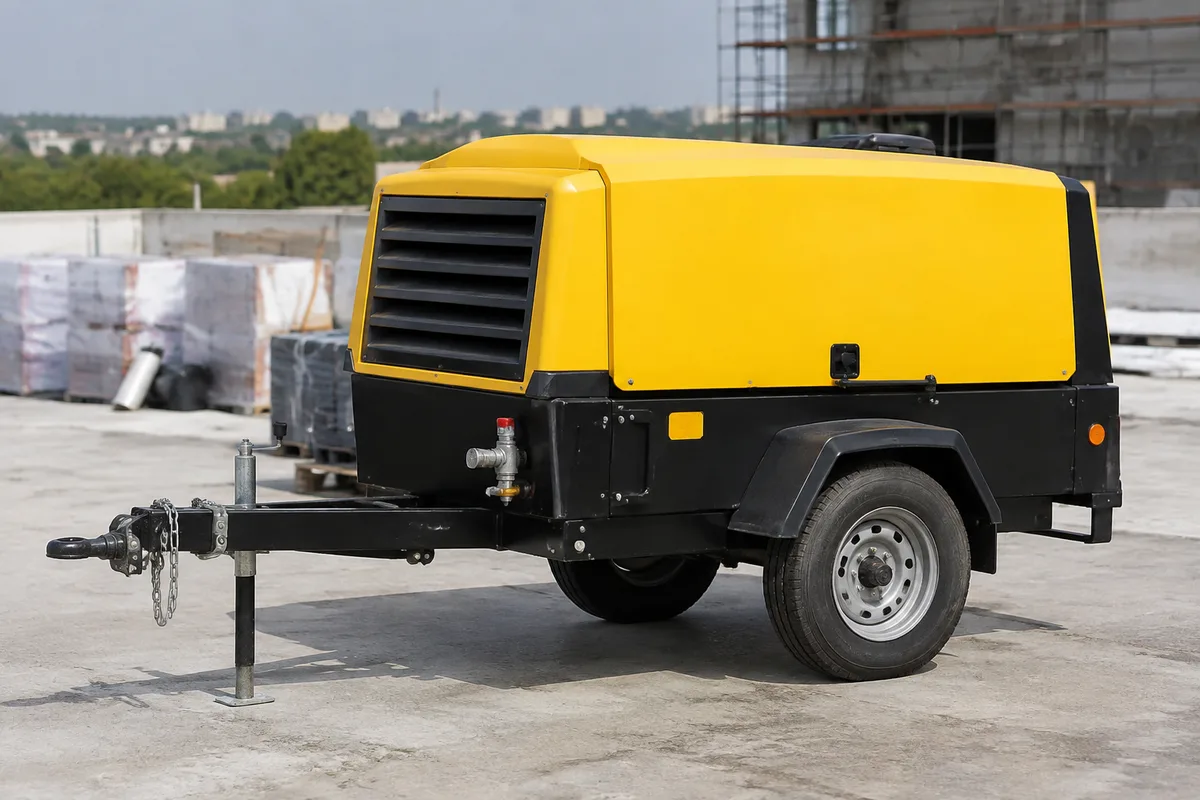
Towable Air Compressors
A towable air compressor is one of those pieces of equipment homeowners rarely think about until they see it parked in the driveway, but it is what makes the rest of a roofing crew's tools work the way they should. At SoffitSmith by Smithbuilt Roofing, it is part of the everyday setup that keeps nailers and pneumatic tools running steadily from the first shingle to the last, on jobs where power is available and on the ones where it is not.
What towable Air Compressors is
A towable air compressor is a trailer-mounted or wheeled unit that generates and stores compressed air, then delivers it through hoses to pneumatic tools on the roof. It replaced smaller job-site compressors and, before that, hand-driven fastening, both of which slowed a crew down and made consistent nail placement harder to control.
Because the unit is towable, it travels with the crew rather than staying fixed at a shop, which means it can be positioned close to the work and moved as the job progresses. The compressor holds pressure steady, so tools connected to it fire at a consistent depth and speed rather than tapering off as demand increases.
How we use it at SoffitSmith by Smithbuilt Roofing
On a SoffitSmith by Smithbuilt Roofing job site, the towable air compressor is what feeds the pneumatic coil roofing nailers, stand-up screw guns, and other membrane fastening tools our crews rely on for consistent plate and fastener spacing. That consistency matters whether the work is a full roof replacement, new construction roofing, a roof-over and overlay, or a straightforward shingle replacement — the fastening pattern underneath is part of what keeps a roof secured in wind.
Because the compressor is towable and self-contained, it can supply air on properties where there is no usable power, which comes up during storm response and other situations where a home's electrical service is not an option. It works alongside our portable generators and work lights in those conditions, so a crew is not waiting on the property to have power restored before fastening can begin.
What it means for you
For homeowners, reliable air supply on site generally translates into steadier progress. Tools that fire consistently mean fasteners go in at the correct depth throughout the job, rather than some areas getting more attention than others simply because the equipment was struggling. That consistency is part of what supports a roof's overall wind resistance over time.
It also means a crew is less likely to need a return trip for equipment reasons, since the compressor is brought along as standard site equipment rather than something arranged separately. And on jobs without power, having an independent air source means work is not delayed while waiting for utilities.
What to expect during your visit
Before fastening work begins, the crew positions the towable compressor somewhere convenient and out of the way of foot traffic, then runs hose up to the roof. You may hear the compressor cycling on and off in the background throughout the visit — that is normal and simply means it is maintaining pressure as tools draw air.
During the roofing work itself, the compressor runs continuously in the background while nailers, screw guns, and other pneumatic tools do the fastening. There is no separate step for you to prepare for; it operates as part of the general roofing process rather than as a standalone service. At the end of the visit, hoses are disconnected and the unit is towed away with the rest of the equipment, leaving no equipment behind on the property.
Frequently asked questions
Is a towable air compressor safe to have on my property?
Yes. It is set up away from walkways and work areas, and hoses are run in a way that keeps them out from underfoot. It is standard job-site equipment used on roofing projects generally, not something unusual for the property.
Will it be noisy during my visit?
You will likely hear it cycling on and off, similar to other job-site equipment, but it is not something that runs constantly at full volume. Most homeowners find it blends into the general sound of a roofing crew at work.
How long does a compressor stay on site?
It stays for as long as pneumatic fastening is needed, which depends on the size and type of the job, from a single-day repair to a multi-day full roof replacement. It leaves with the rest of the crew's equipment once fastening work is complete.
Is this equipment used on every type of roofing job?
It supports work that involves pneumatic nailers or screw guns, which covers most shingle, membrane, and structural fastening jobs. Not every visit — such as an inspection or a coating application — requires it, so its use depends on what the specific job involves.
If you have a roofing project coming up and want to know more about how SoffitSmith by Smithbuilt Roofing keeps work moving on site, reach out to ask about our towable air compressors and the rest of our equipment.