Tin Snips & Hand Seamers
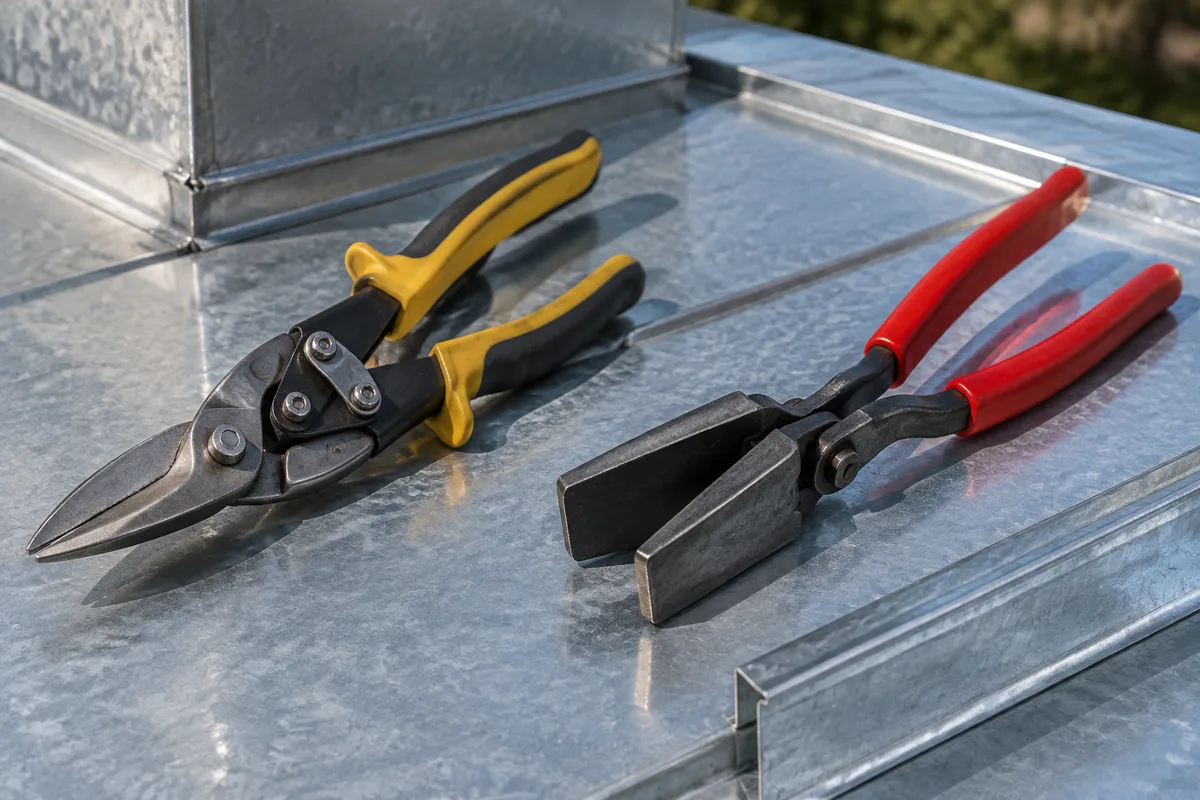
Tin Snips & Hand Seamers
Tin snips and hand seamers are the basic hand tools that let a metal roofer shape flashing and trim exactly to a roofline, a corner, or a penetration that a machine cannot reach. On this page we cover what they are, how they fit into the work SoffitSmith by Smithbuilt Roofing does in Bradenton, and what a homeowner can expect when a repair or installation calls for hand-formed metalwork.
What tin Snips & Hand Seamers is
Tin snips are hand shears built to cut sheet metal — steel, aluminum, or copper flashing stock — into precise shapes without distorting the edge. Hand seamers are pliers-like tools that fold, crimp, and lock metal edges together, closing a seam by hand pressure rather than a press or a roll former. Together they are the oldest tools in metal roofing, and they remain necessary because no machine can bend metal around an irregular chimney base, a skylight curb, or a valley that does not run in a straight line.
Portable brakes and mechanical seamers have taken over the long, straight runs on a metal roof, folding standing seam panels or forming flashing to spec in a fraction of the time hand tools would take. What tin snips and hand seamers still do is finish the details a brake cannot form: end caps, custom miters, tight terminations against walls, and small repair pieces cut to fit a single spot. They are a complement to powered equipment, not a replacement for it, and every metal roof or flashing job depends on both.
How we use it at SoffitSmith by Smithbuilt Roofing
On a Bradenton roof, hand-cut and hand-formed flashing comes into play anywhere the geometry is not a straight line — chimney flashing, valley metal, penetrations, and the small trim pieces that close out a job after the larger panels are in place. It works alongside the tools that handle the bulk of the metalwork: electric shears and nibblers for clean powered cuts, portable sheet metal brakes for bending custom flashing and counter flashing on site, and mechanical seamers for locking standing seam panels down to manufacturer spec. Tin snips and hand seamers step in for the last, tightest details those machines cannot reach.
The same hand tools carry over into gutter work. Gutter crimpers, outlet punches, and rivet guns depend on the same hand-forming skill to close corners and miters that do not leak, and hidden hanger tools rely on accurate hand trimming to keep the fascia line clean. Where a seamless gutter run comes off the trailer-mounted roll former or a downspout comes off the roll-former to length, any custom termination or offset is still finished by hand. Caulking guns and heat guns follow behind to seal and set the detail once the metal is formed.
What it means for you
Hand-formed flashing means the metal on your roof follows the actual shape of your chimney, wall, or valley instead of a generic template. That reduces the small gaps and loose seams that let water in over time. Because the work happens on site rather than in a shop, adjustments can be made in real time if the measurements on paper do not quite match what is actually on the roof.
For homeowners, the practical benefit is a tighter, better-fitted roof around every penetration and corner — the places a roof is most likely to leak first. It also means repairs to a small section of flashing do not require replacing a whole run of metal, since a single piece can be cut and formed to match what is already there.
What to expect during your visit
When hand-formed flashing is part of the job, the crew will first measure the detail area — a chimney base, valley, or gutter corner — against the roof itself rather than relying only on aerial measurements. Sheet metal stock is cut with tin snips to the shape needed, then the edges are folded and locked with hand seamers on site, right where the piece will be installed. This step usually takes a matter of minutes per detail rather than hours, though a roof with many chimneys, valleys, or transitions will need several rounds of it throughout the job.
You will generally hear this work rather than notice a change in the surroundings — it is quieter than powered cutting and happens in short bursts wherever a detail needs attention. No special preparation is needed on your part; it is simply one part of a larger flashing, metal roofing, or gutter installation visit.
Frequently asked questions
Is hand-cut flashing as durable as machine-formed metal?
Yes, when done correctly. The metal and the fastening method are the same; the difference is only in how the piece is shaped. Hand seaming is the standard method for the tight, irregular details where a machine cannot form the bend.
Will this add time to my roofing project?
Hand-forming individual flashing pieces is quick and is typically done alongside the rest of the roofing or gutter work, not as a separate visit. The number of custom details on your roof — chimneys, valleys, wall terminations — determines how much of it is needed.
Is this only for metal roofs?
No. Hand-cut flashing and seaming show up on asphalt shingle, tile, and flat roofs too, anywhere metal flashing meets a penetration, valley, or wall. It is also standard in gutter installation and repair, at corners, outlets, and miters.
Do I need to be present while this work is done?
No. This is a detail-level task performed by the crew as part of the larger job, whether that is a flashing repair, a metal roof installation, or a gutter run.
If you have flashing, valleys, or gutter corners that need a precise, hand-formed fit, get in touch with SoffitSmith by Smithbuilt Roofing to talk through what your roof needs.