Submersible Pumps, Air Movers & Dehumidifiers
Submersible Pumps, Air Movers & Dehumidifiers
When a roof failure lets water into a home, the roof itself is only part of the problem. Standing water on floors, soaked insulation, and damp framing keep working against a structure long after the leak is found. Submersible pumps, air movers, and dehumidifiers are the equipment that addresses that second stage — removing bulk water and then drying out what is left before it causes further damage.
What submersible Pumps, Air Movers & Dehumidifiers is
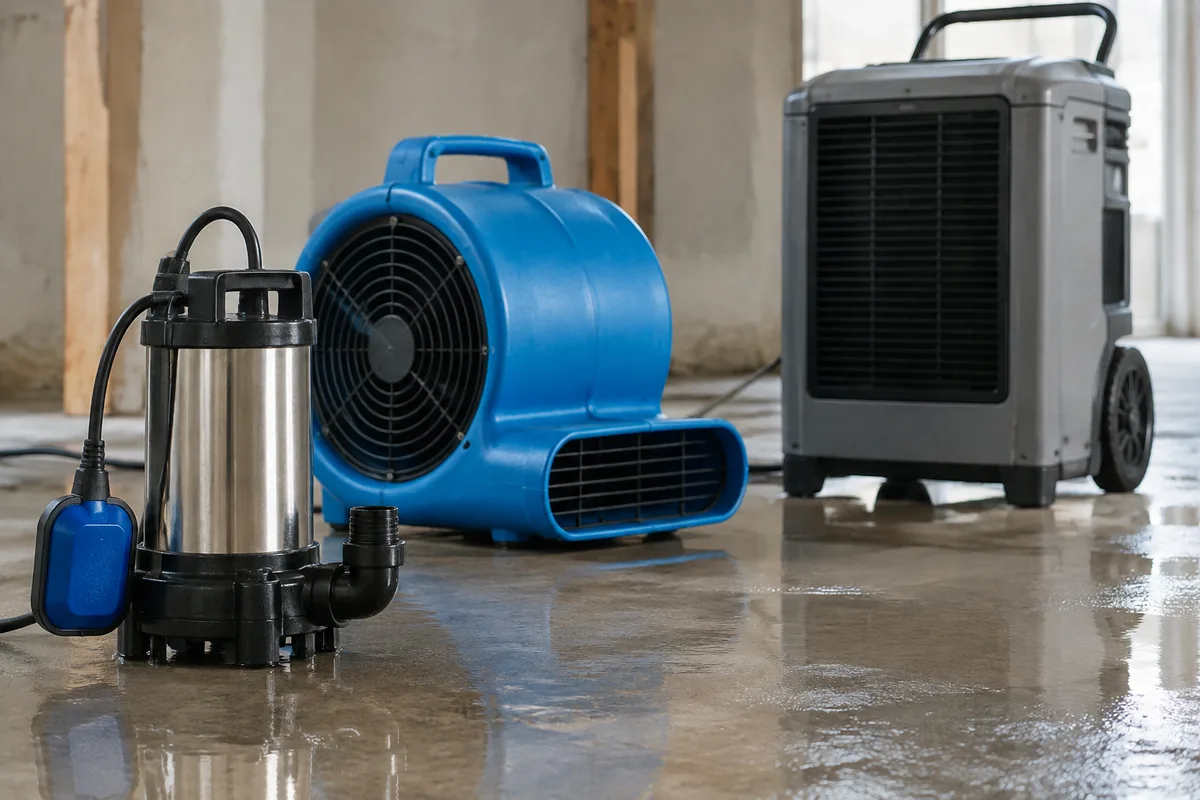
A submersible pump is designed to sit directly in standing water and push it out through a hose, which is far faster than shop vacuums or manual bailing for anything more than a small puddle. Air movers are high-output fans built to move large volumes of air across wet surfaces — floors, walls, ceilings — so moisture evaporates into the air rather than sitting and soaking in.
Dehumidifiers then pull that moisture back out of the air and collect it, instead of letting it settle into wood, drywall, or insulation somewhere else in the structure. Used together, this three-part process — remove the water, move the air, dry the air — is the standard approach for structural drying after a roof leak, storm intrusion, or interior flooding event, and it replaced slower methods that relied on open windows and time alone.
How we use it at SoffitSmith by Smithbuilt Roofing
This equipment comes into play after we have found where water is entering. Moisture meters and wood moisture meters give us direct readings on the roof deck, framing, and interior surfaces, so we know how far moisture has traveled and whether it is still active. On a flat roof with a blocked internal drain, we may also clear the drain itself so ponding stops adding to the problem while drying is underway.
Once the water source is addressed, submersible pumps handle standing water, and air movers and dehumidifiers take over on the wet materials that remain. Where a roof needs emergency protection first — a tarp, a board-up over an opening, sandbags to hold a tarp down — that work happens alongside the drying, since a structure cannot dry properly while more water is still getting in.
What it means for you
Getting standing water and trapped moisture out quickly matters because wet wood, insulation, and drywall are what allow mold to take hold. Acting on this before materials sit wet for an extended period is generally the difference between a straightforward dry-out and a larger repair involving rot or replacement.
For a homeowner, this equipment also means less guesswork. Direct moisture readings tell you and your contractor whether an area is actually dry, rather than relying on how a surface looks or feels. That clarity helps decide what can be dried in place and what needs to be opened up or replaced.
What to expect during your visit
A visit involving this equipment usually starts with an assessment: where the water came from, how far it traveled, and which materials are affected. Any standing water is pumped out first. Air movers are then positioned to direct airflow across wet floors, walls, or ceilings, and a dehumidifier is set up to work alongside them in the same space.
This equipment typically needs to run for a period of time rather than a single pass, so it may be left in place and checked periodically with a moisture meter until readings confirm the area is dry. Homeowners can expect some fan noise and equipment left running in affected rooms during that window, and clear updates on when it is safe to remove.
Frequently asked questions
Is it safe to have this equipment running in an occupied home?
Submersible pumps, air movers, and dehumidifiers are standard equipment for structural drying and are designed for use in occupied spaces. The main considerations are keeping cords and equipment clear of walkways and away from any remaining standing water until it is fully removed.
How long does drying take?
It depends on how much water was involved and what materials absorbed it. Rather than working to a fixed schedule, drying is monitored with moisture readings and continues until those readings confirm the affected materials are back to a normal moisture level.
Will this equipment damage my floors or walls?
No. Pumps, air movers, and dehumidifiers are used specifically to protect floors, walls, and framing by removing moisture before it causes swelling, staining, or rot. Equipment is positioned to move air across surfaces without direct contact damage.
Is this only for major flooding?
No — it is used any time standing water or trapped moisture needs to be removed, whether that is from a significant storm intrusion or a smaller leak that has let water collect in one area. The equipment scales to the size of the affected space.
If your home has standing water, a damp ceiling, or a roof leak you are worried has already soaked into the structure, get in touch with SoffitSmith by Smithbuilt Roofing to talk through what drying and repair work is needed.