Scaffolding & Boom/Scissor Lifts
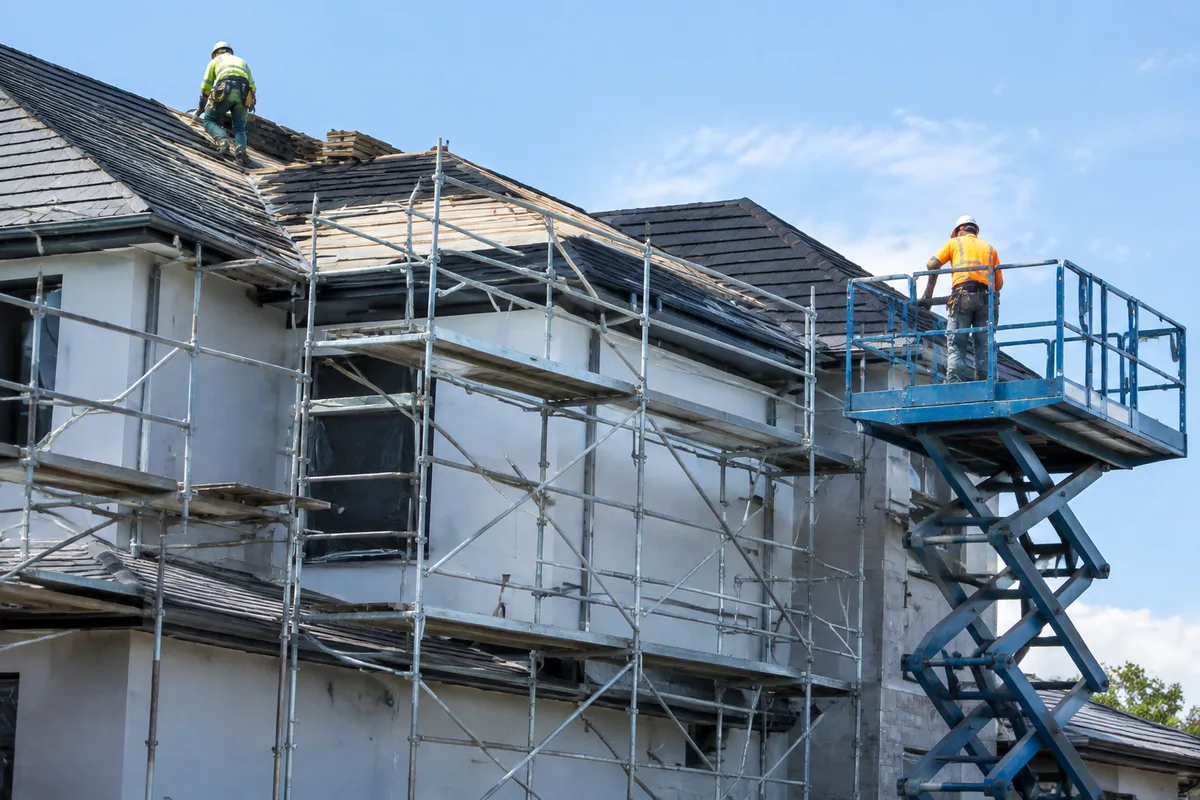
Scaffolding & Boom/Scissor Lifts
Some roofs cannot be safely reached with a ladder alone. Steep pitches, tall walls, and commercial buildings call for equipment that gives a crew stable footing and a stable place to stage tools and material, rather than balancing on rungs. Scaffolding and boom or scissor lifts are the access equipment that makes that possible, and they are part of how SoffitSmith by Smithbuilt Roofing gets crews safely to and around a roof before any repair or replacement work begins.
What scaffolding & Boom/Scissor Lifts is
Scaffolding is a temporary structure of framing and platforms built up against a wall or roofline, giving workers a fixed, level surface to stand and move on at height. Boom lifts and scissor lifts are self-propelled machines that raise a platform straight up (scissor lifts) or extend it up and out on an articulating arm (boom lifts), reaching areas that scaffolding cannot easily cover, such as a tall gable end or a section set back from the ground.
Both approaches replace the older practice of leaning extension ladders directly against a house or building. A leaned ladder puts weight and pressure on gutters, fascia, and siding, and it gives a worker only one narrow point of contact with the structure. Scaffolding and lifts spread that load elsewhere, or remove it from the building entirely, and give the crew a wider, steadier place to work.
How we use it at SoffitSmith by Smithbuilt Roofing
We bring in scaffolding or a boom/scissor lift when a roof's height, pitch, or layout calls for it — steep residential roofs, multi-story homes, and commercial buildings are the common cases. The goal is the same one stated on our equipment list: safe, stable access without leaning ladders on your gutters.
This equipment works alongside the rest of our access and fall-protection gear. Full-body harnesses, lanyards, and roof anchors are used in combination with scaffolding and lifts on steep or elevated sections. Roof jacks, toe boards, and planks give crew members secure footing once they are on the roof surface itself, and extension ladders with stabilizers still cover the shorter, more accessible parts of a job. Ladder hoists and shingle conveyors move material up to a platform or roof edge mechanically, rather than having it carried by hand past the lift or scaffold. Before any of this goes up, landscape protection tarps are placed to keep beds, walks, and plantings clear of foot traffic and equipment.
Scaffolding and lifts come into play across the range of work we do at height — full roof replacement, new construction roofing, and repair or maintenance visits on commercial and multi-family properties where a roof simply sits too high or too steep for ladder-only access.
What it means for you
For a homeowner or property manager, the main benefit is a job site that stays intact. Because the equipment carries its own weight, your gutters, fascia, and siding are not the thing holding a ladder in place. A stable platform also means a crew can work more deliberately, since footing and balance are not competing with the task at hand.
It also tends to mean steadier progress on taller or steeper jobs. A crew that is not repositioning a ladder every few feet, or climbing down to move it, can stay focused on the roof work itself. On multi-story or commercial buildings in particular, a lift or scaffold section can reach areas that would otherwise require extra staging or simply be difficult to access safely at all.
What to expect during your visit
On a job where scaffolding or a lift is needed, setup happens before any tear-off or repair starts. Landscape protection tarps go down first over beds, walks, and anything else near the work area, and the scaffolding is assembled or the lift is positioned and leveled. This can take anywhere from a portion of a morning to longer on larger commercial sections, depending on the height and layout involved.
Once the equipment is in place, crew members move between it and the roof surface using harnesses, roof jacks, and planks as the pitch requires. You may see the lift or scaffold sitting in place for the full length of the job rather than being broken down and rebuilt each day, since repositioning takes time. At the end of the work, the platform or scaffold sections come down, and the same care goes into clearing the ground area of debris and equipment before the crew leaves.
Frequently asked questions
Is scaffolding or a lift safer than a ladder?
Yes, in the sense that it gives crew members a fixed, wider platform instead of balancing on ladder rungs, and it does not rest its weight against gutters or fascia. It is used together with harnesses, lanyards, and roof anchors on steep or elevated sections for additional fall protection.
Will scaffolding damage my lawn or landscaping?
Landscape protection tarps are placed before any equipment is set up to keep beds, walks, and plantings covered. Scaffolding base plates and lift wheels do rest on the ground, so the exact placement is planned to avoid delicate areas where possible.
How long does scaffolding or a lift stay on site?
That depends on the size and height of the job. On most residential work it stays up only for the duration of that particular job; on larger or commercial projects it may remain in place longer while crews work through sections of the building.
Is this equipment only for commercial buildings?
No. Steep or multi-story residential roofs often call for the same access equipment as commercial buildings, particularly where a ladder alone cannot safely reach the work area.
If your roof is tall, steep, or otherwise hard to reach safely, get in touch with SoffitSmith by Smithbuilt Roofing to talk through what access equipment your project will need.