Roofing Shovels & Tear-Off Spades
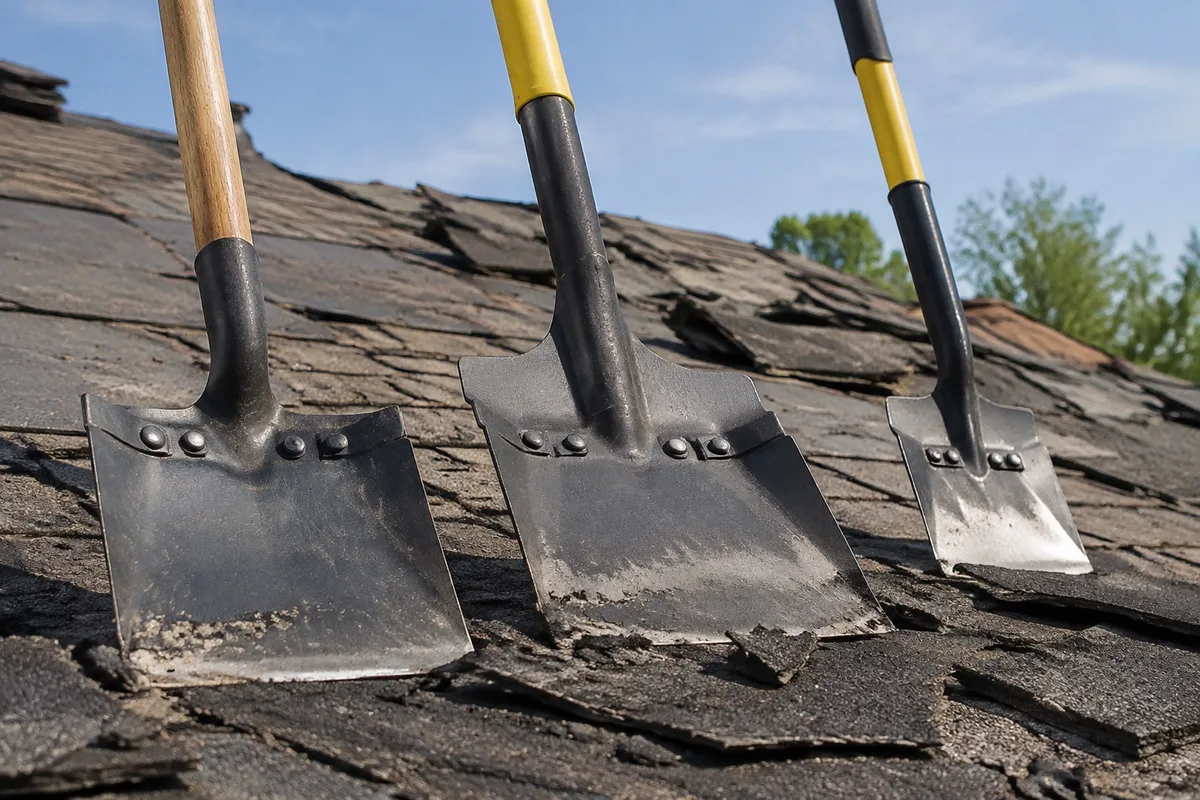
Roofing Shovels & Tear-Off Spades
Before a new roof goes on, the old one has to come off, and it has to come off completely. Roofing shovels and tear-off spades are the basic hand tools that make that possible — simple in design, but the difference between a deck that is truly ready for new material and one that still has old layers hiding underneath it.
What roofing Shovels & Tear-Off Spades is
A roofing shovel, sometimes called a tear-off spade, is a flat, forked-blade tool built to slide under shingles, underlayment and old fasteners and lift them off the deck in sections rather than piece by piece. The blade edge is usually notched to catch nail heads, and the handle is long enough to let the crew work standing up, using leverage instead of just arm strength.
It replaced the slower method of prying and hand-pulling every layer with a hammer or bar. On most residential roofs, a shovel can clear a wide strip of old roofing in a few passes, which is why it remains the standard tool for tear-off even alongside more specialized equipment. It is not a power tool — it works because of the blade shape and the technique behind it, which is part of why tear-off is still a physical, hands-on stage of any roof replacement or overlay removal.
How we use it at SoffitSmith by Smithbuilt Roofing
On a tear-off job, shovels and spades do the bulk of the work of getting a roof down to bare, clean deck. We pair that work with pry bars and nail pullers for stubborn fasteners and edge details that a shovel can't cleanly lift, so old nails come out rather than get hammered flat under new material. As debris comes off, it goes straight into roll-off dumpsters or dump trailers staged on site, and magnetic nail sweepers go over the yard, drive and beds afterward to pick up stray fasteners — often more than once before we consider a property clear.
A clean deck is also an inspection opportunity. Once the old layers are off, moisture meters and, where the job calls for it, core sampling tools let us check the deck itself for wet spots or soft areas before a single piece of new underlayment goes down. Landscape protection tarps go over beds, walkways and plantings before tear-off begins, so debris and dropped fasteners land somewhere we control rather than in the yard.
What it means for you
A thorough tear-off means whoever inspects the deck afterward is looking at the actual structure, not a stack of old roofing that hides problems underneath. That matters because rot, soft spots or hidden damage are far easier to see and address on a bare deck than under two or three layers of old shingles.
It also means the new roofing goes down on a flat, consistent surface. Old nails left in place, or old layers not fully removed, can create high spots that show up as unevenness or premature wear later. Tear-off with hand tools, done carefully, avoids that. And because debris is contained and cleared as it comes off, the property stays more walkable and safer throughout the work rather than accumulating a pile of old material underfoot.
What to expect during your visit
Before tear-off starts, the crew typically sets up landscape protection around the areas below the roofline and stages a dumpster or trailer for debris. Once that's in place, tear-off begins in sections, with shovels clearing the bulk of the old roofing and pry bars handling flashing, edges and any fasteners left behind.
You'll generally hear steady scraping and thumping sounds from above during this stage — that's normal and expected. As sections clear, the crew inspects the exposed deck before moving to the next area, so tear-off and inspection happen close together rather than as two separate visits. Timing depends on roof size and the number of old layers involved. At the end of the day, or at the end of the job, the crew does a cleanup pass with magnetic sweepers before pulling equipment and dumpsters off the property.
Frequently asked questions
Is tear-off with shovels and spades noisy or disruptive?
There is noticeable noise from scraping and prying, along with foot traffic on the roof, for as long as tear-off is underway. It's a normal, expected part of the process rather than a sign of a problem, and it's temporary — once the deck is clear, the noise level drops as the crew moves into inspection and installation.
How long does tear-off usually take?
It depends on the size of the roof and how many layers of old roofing are being removed. A straightforward single-layer tear-off moves faster than a roof with multiple overlays, since each additional layer means more material to lift and clear before the deck is exposed.
Is this safe for the crew and for my property?
Tear-off happens with fall protection and stable access equipment in place, and debris is directed into a dumpster or trailer rather than left to pile up. Landscape protection around the work area helps keep beds, walkways and plantings clear of dropped material during the process.
Does every roof need a full tear-off?
Not always — some roofs are candidates for an overlay instead of a full tear-off, depending on their condition and local code requirements. When a full tear-off is the right approach, shovels and spades are the standard tools used to get the deck down to bare material for inspection and re-roofing.
If you're planning a roof replacement or want to understand what tear-off will involve for your home, reach out to SoffitSmith by Smithbuilt Roofing and we'll walk you through it.