Roof Jacks, Toe Boards & Planks
Roof Jacks, Toe Boards & Planks
Roof jacks, toe boards, and planks are the equipment that lets a crew stand, walk, and work safely on a sloped roof surface. On a steep-slope job in Bradenton, this simple hardware is what keeps footing solid from the first shingle pulled to the last nail driven.
What roof Jacks, Toe Boards & Planks is
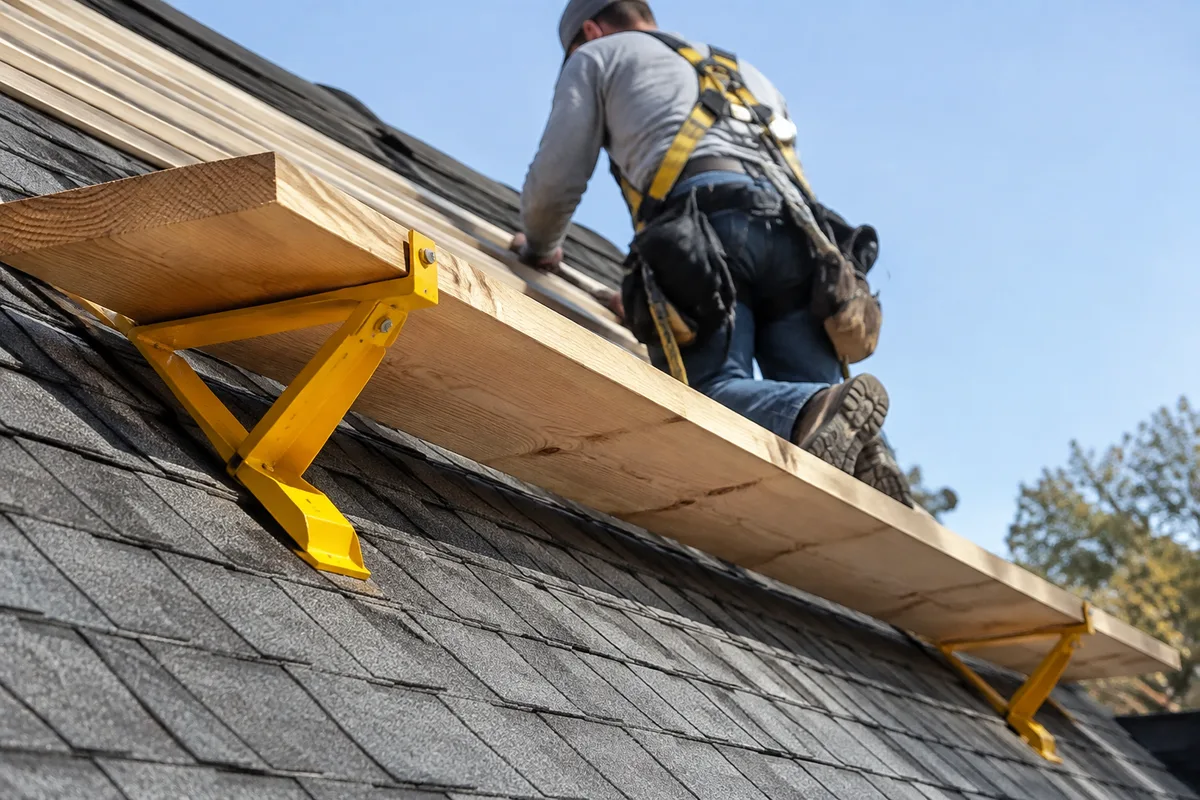
A roof jack is a bracket that hooks onto the roof deck or is nailed through the shingles into the framing below, creating a stable point to support a horizontal plank. Toe boards are the wood boards that sit across a run of jacks, giving a crew a flat, level place to stand rather than balancing directly on a sloped surface. Planks span longer distances between jacks or supports, spreading a worker's weight and creating a walking surface across the field of the roof.
Before this kind of staging was standard, roofers often worked directly on the sloped shingles or deck, relying on friction and careful footwork alone. Jacks, boards, and planks improved on that by giving a level, purpose-built platform, which matters most on steep pitches where a slip has real consequences for both the crew and the roof surface underneath them.
How we use it at SoffitSmith by Smithbuilt Roofing
On steep-slope roofs, our crews set roof jacks at intervals across the working area and lay toe boards and planks across them before tear-off or installation begins. This staging works alongside our other access equipment — scaffolding, boom and scissor lifts for taller sections, and stabilized extension ladders for getting materials and crew up to the roof line in the first place. Full-body harnesses, lanyards, and roof anchors are used together with this staging as fall protection on every steep or elevated job.
Because the jacks and boards give a level platform, our crews can focus on the work itself — laying courses straight, keeping fastener spacing consistent, and handling flashing and trim details — without fighting the slope underfoot. This is standard staging on shingle replacement, roof-over work, and full roof replacement jobs wherever the pitch calls for it.
What it means for you
For a homeowner, this kind of staging is mostly invisible from the ground, but it shows up in the quality of the finished work. A crew with stable footing can move more deliberately, place fasteners more consistently, and handle flashing and trim details without rushing to keep their balance. It also means less risk of a slipped foot scuffing shingles, denting metal, or leaving a footprint where one shouldn't be.
It also matters for what happens around your property. Stable staging tends to keep debris and tools contained to the work area instead of sliding off the roof edge, and it lets a crew set down materials in a controlled way rather than juggling them on a slope.
What to expect during your visit
On a steep-slope job, setting up jacks, toe boards, and planks is one of the first things that happens once access equipment — ladders or lifts — gets the crew and materials onto the roof. You may notice boards being carried up and positioned across sections of the roof before any tear-off or shingle work starts; this setup typically happens in stages as the crew works across different slopes or sections of a larger roof.
During the work itself, you'll likely see crew members standing and moving along these planks rather than directly on the shingles or deck. As work finishes in one area, the jacks and boards are moved to the next section. At the end of the job, this staging comes down along with the rest of the equipment, and the roof surface underneath is inspected as part of finishing up.
Frequently asked questions
Is this staging safe for the crew and the roof?
Roof jacks, toe boards, and planks are set up specifically to give a stable, level surface on a sloped roof, and they're used together with full-body harnesses, lanyards, and roof anchors for fall protection. This combination is standard practice on steep or elevated roofing work.
Will I notice this equipment from the ground?
You may see boards and jacks positioned across the roof while work is underway, but this staging is set up and removed as part of the job and isn't left in place afterward. It's a working tool for the crew, not a permanent fixture.
Does every roof need this kind of staging?
Roofs with a steeper pitch benefit most from jacks, toe boards, and planks, since a level walking surface matters more as the slope increases. Lower-slope or flat roofs typically don't require the same setup, since crews can move more freely without it.
How long does setup and takedown add to a job?
Setting up and moving staging happens in stages as work progresses across the roof, so it's built into the overall timeline of a steep-slope job rather than a separate, standalone step. The exact time depends on the size and layout of the roof.
If you have a steep-slope roof and want to know more about how we approach access and safety on your project, reach out to SoffitSmith by Smithbuilt Roofing to ask about roof jacks, toe boards, and planks.