Roll-Off Dumpsters & Dump Trailers
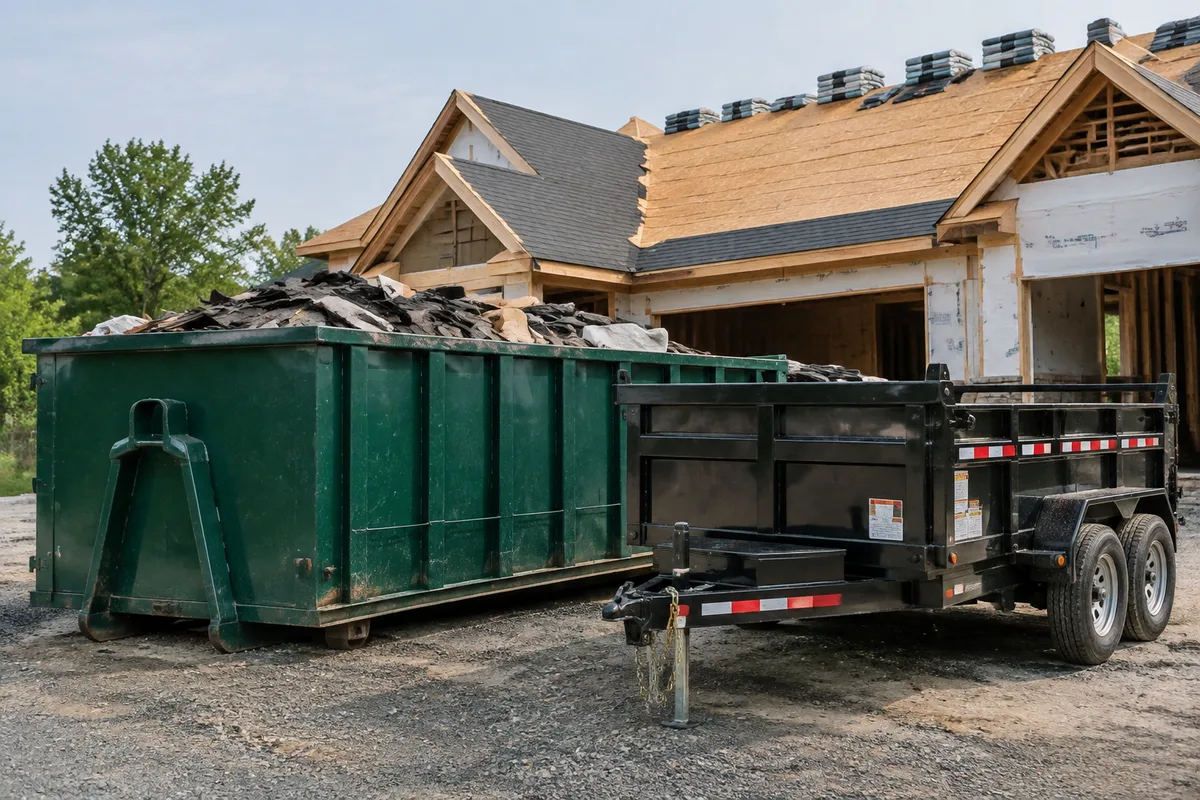
Roll-Off Dumpsters & Dump Trailers
A tear-off generates far more debris than most homeowners expect — layers of old shingles, underlayment, nails, and sometimes rotten decking all come off in a short window. Roll-off dumpsters and dump trailers give a crew a place to put that material the moment it comes off the roof, instead of letting it pile up on the lawn or driveway.
What roll-Off Dumpsters & Dump Trailers is
A roll-off dumpster is a large open container dropped on site for the duration of a job, while a dump trailer is a towable version that can be positioned, filled, and hauled away without waiting for a separate pickup. Both serve the same purpose on a roofing job: they give tear-off debris one contained destination instead of many scattered ones.
Before this kind of on-site containment became standard, crews often relied on tarps, wheelbarrows, and repeated trips to a truck bed to move debris off the property. That approach works on small repairs, but on a full tear-off it slows the crew down and increases the chances of nails, shingle fragments, and granules ending up in the grass, beds, or driveway. A dumpster or trailer positioned close to the work area shortens that path considerably.
How we use it at SoffitSmith by Smithbuilt Roofing
On tear-off jobs, we position a roll-off dumpster or dump trailer where it can catch debris directly from the roof edge, so material goes from the roof to the container with as few intermediate stops as possible. Debris is contained on site and hauled away the same day where possible, which keeps the property from sitting under a pile of old roofing for longer than necessary.
This works alongside other parts of the tear-off process: roofing shovels and tear-off spades bring the old material down to a clean deck, pry bars and nail pullers remove old fasteners rather than leaving them behind, and magnetic nail sweepers go over the yard, drive, and beds before we leave — more than once. Landscape protection tarps go down ahead of time to cover plantings and walkways, and our own dump trucks and material trailers mean debris hauling and material delivery do not depend on waiting for a third party to show up.
The same approach applies whether the job is a full roof replacement, a roof-over or overlay installation, or a deck rot repair that generates rotten sheathing along with old shingles.
What it means for you
Contained debris means fewer stray nails and shingle pieces working their way into your lawn or flower beds over the following weeks. It also means your driveway and yard are not serving as a temporary debris pile for the length of the job, which matters if you have kids, pets, or vehicles that need to move around the property during the work.
Having a dedicated container on site also keeps the crew moving. Time that would otherwise go to repeated trips to a truck or a distant collection point goes into the actual tear-off and installation instead, which generally means less disruption spread out over fewer days.
What to expect during your visit
Before tear-off begins, the container is positioned somewhere it can be filled efficiently without blocking access to the house, and landscape tarps go down to protect nearby beds and walkways. During the tear-off itself, old roofing material goes straight from the roof into the dumpster or trailer, with the crew working section by section rather than letting debris accumulate loose on the ground.
Once tear-off is complete, the container is typically hauled away the same day where scheduling allows, so the property is not left with a full dumpster sitting on it any longer than needed. A final pass with magnetic sweepers and a visual check of the yard, driveway, and beds happens before the crew leaves.
Frequently asked questions
Is it safe to have a dumpster or trailer parked on my property?
Yes. It is positioned to stay clear of walkways and vehicle access, and landscape protection tarps go down around it and the work area to protect plantings and surfaces underneath.
Will debris end up in my yard or gutters?
The goal of positioning the container close to the roof edge is to keep debris moving directly into it rather than onto the ground. Magnetic nail sweepers are also used across the yard, drive, and beds before the crew leaves, more than once if needed.
How long does the dumpster stay on my property?
It stays for the length of the tear-off and is generally hauled away the same day where possible, so the property is not left with a full container sitting there any longer than the job requires.
Is this used on every type of roofing job?
It is most relevant to jobs that generate real volumes of debris, such as full roof replacements, roof-overs, and deck rot repairs. Smaller repairs may not need a dedicated container at all.
If you have a tear-off or replacement coming up and want to know how debris will be handled on your property, get in touch with SoffitSmith by Smithbuilt Roofing to talk it through.