Reciprocating Saws
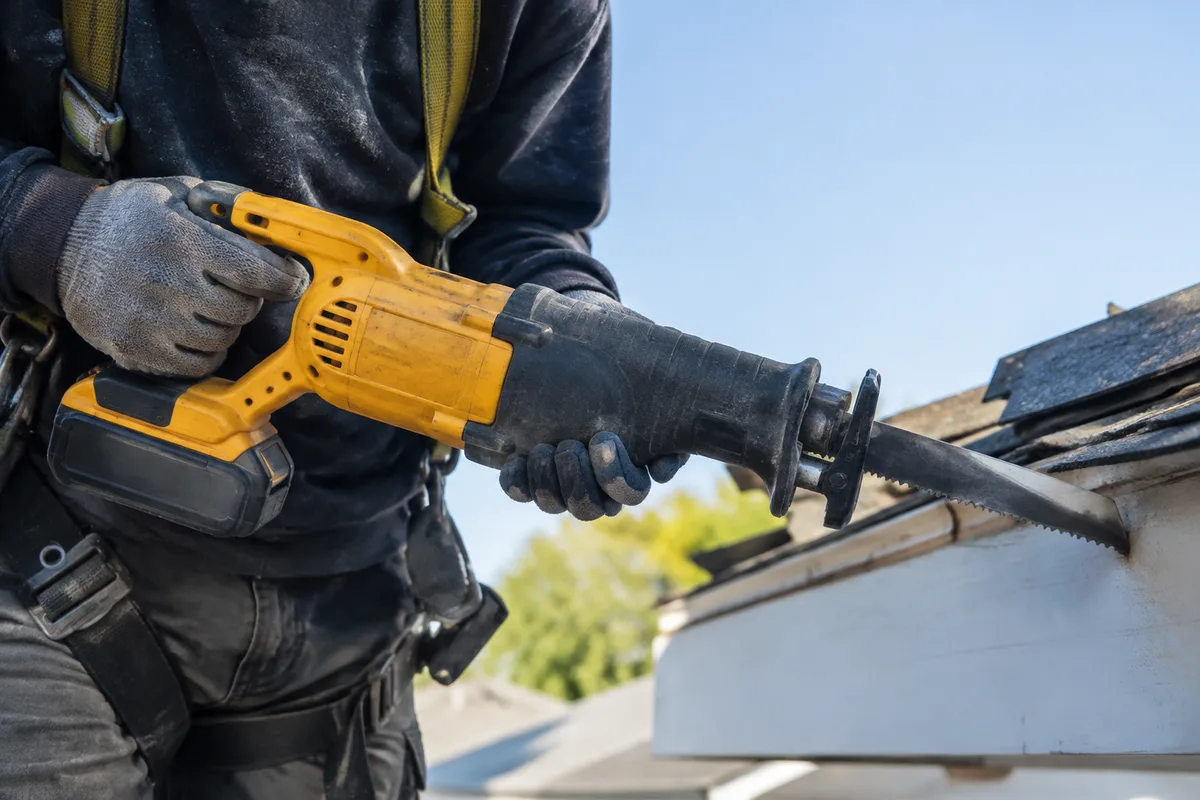
Reciprocating Saws
A reciprocating saw is one of the most-used cutting tools on a roofing job site, and for good reason: it moves through old decking, stuck fasteners and framing lumber with a straight back-and-forth blade stroke that a circular saw or hand tool simply cannot match in tight, awkward spots. On this page we cover what the tool is, how it fits into work at SoffitSmith by Smithbuilt Roofing, and what homeowners can expect when it shows up on their roof.
What reciprocating Saws is
A reciprocating saw drives a blade in a rapid push-pull motion, letting it cut through wood, nails, and light metal in places a rigid-blade saw cannot reach. Because the blade can be swapped for the material at hand, the same tool handles rotted decking, embedded fasteners, and framing members without changing equipment.
It largely replaced slower hand-sawing and blunt-force methods like hammering or prying through stuck material. Where a pry bar can bend a stubborn nail and a hand saw can bind in a tight joist bay, a reciprocating saw cuts through cleanly and keeps the surrounding wood intact for whatever repair comes next.
How we use it at SoffitSmith by Smithbuilt Roofing
On repair calls, the saw comes out for controlled cutting of decking, framing, and stubborn fasteners — the kind of cutting that shows up during roof deck rot repair, sagging roof and structural repair, and general leak repair once the covering has been pulled back. It works alongside hand tools already on the truck: pry bars and nail pullers loosen what can be pulled, and the reciprocating saw takes over on fasteners or framing that won't come free cleanly.
Before cutting, wood moisture meters and core sampling tools help confirm which sections of decking are actually compromised, so cutting stays limited to what needs to come out. On steep or elevated sections, roof jacks, toe boards and planks, along with full-body harnesses, lanyards and roof anchors, give the crew stable, secured footing while this kind of cutting is underway.
What it means for you
For a homeowner, the practical benefit is precision. Cutting rotted or damaged material out cleanly, rather than tearing or prying it, helps keep the surrounding structure sound and ready for new decking or framing. It also tends to be faster than manual removal methods, which can shorten the time your roof is open during a repair.
A saw-based approach also reduces incidental damage to nearby material. Because the blade follows a controlled line, repairs can target exactly the section that needs replacing instead of disturbing more of the roof than necessary.
What to expect during your visit
Cutting work with a reciprocating saw usually happens after the roof covering has already been opened up during a repair or tear-off, once the crew can see the decking or framing underneath. Landscape protection tarps typically go down first to protect beds, walkways, and plantings before any cutting or debris starts falling.
During the cut itself, you may hear the saw's motor and blade running in short bursts as the crew works through fasteners or sections of wood — this is a normal part of getting a clean opening for repair. Once cutting is finished, the crew clears debris, and magnetic nail sweepers pass over the yard and drive before anyone leaves, since loose fasteners are a natural byproduct of this kind of work.
Frequently asked questions
Is cutting with a reciprocating saw safe for my roof and property?
Yes. The saw is used in controlled, targeted cuts limited to the section being repaired, and the crew works from secured footing using roof jacks, toe boards, and harnesses on steep or elevated areas. Landscape protection tarps and magnetic sweeps afterward keep the surrounding property clear of debris and stray fasteners.
How long does this part of a repair take?
The cutting itself is typically a short portion of a larger repair visit, since it happens after the roof has already been opened up. The overall time depends on how much decking or framing needs to be addressed, which is assessed with moisture meters and core samples before any cutting begins.
Will it be noisy?
There will be intermittent motor and blade noise while cutting is underway, similar to other power tools used during roof repairs. It is not continuous — the saw runs in short passes as fasteners or sections of material are cut through.
Is this tool used on every roof type?
Reciprocating saws are most relevant where wood decking or framing needs to be cut or removed, which comes up across shingle, tile, metal, and low-slope repair work whenever rot, structural sagging, or stuck fasteners are involved. Its use is decided job by job, based on what the moisture readings and core samples show.
If you're dealing with a soft spot, a sagging section, or a repair that involves cutting into the deck or framing, reach out to SoffitSmith by Smithbuilt Roofing to talk through what the work will involve.