Pry Bars & Nail Pullers
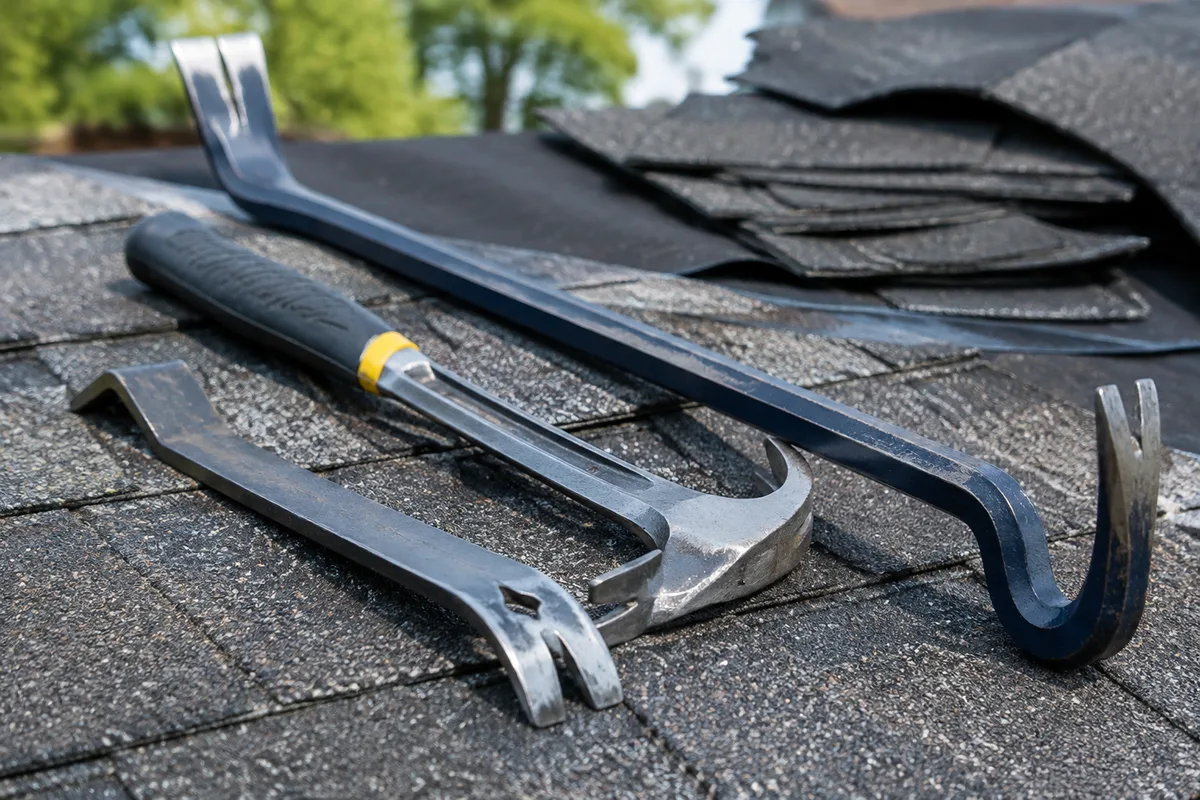
Pry Bars & Nail Pullers
Before any new roofing material goes down, the old fasteners have to come out — cleanly, not just bent over. Pry bars and nail pullers are hand tools built for exactly that job: lifting shingles, flashing and old nails free of the deck without tearing the wood or leaving debris behind that will telegraph through the new roof.
What pry Bars & Nail Pullers is
A pry bar is a flat, angled steel tool used to lift shingles, felt, and flashing away from a roof deck. A nail puller is a related hand tool, often with a claw or slotted head, made specifically to grip a fastener shank and draw it straight out rather than snapping the head or bending the shaft. Both tools are simple by design, but the technique matters: worked correctly, they separate old material from the deck in sections instead of ripping it, and they remove nails whole instead of leaving broken shanks behind.
These tools improved on the older habit of simply hammering old nails flat and roofing over them. A flattened nail can still work its way back up over time, or leave a slightly raised spot under the new layer. Pulling the fastener removes that risk at the source, which is part of why pry bars and nail pullers remain standard equipment on a tear-off even with all the powered tools available today.
How we use it at SoffitSmith by Smithbuilt Roofing
On a tear-off, our crews use pry bars and nail pullers alongside roofing shovels and tear-off spades to bring the roof down to a clean, bare deck — one that can actually be inspected before anything new goes on. Pulling fasteners rather than hammering them flat means the deck surface stays true, which matters once Underlayment & Ice-and-Water Shield or new shingles are laid over it.
Where a section of decking shows soft spots, our crews use wood moisture meters to check the wood before deciding what stays and what gets replaced as part of Roof Deck Rot Repair. Once a deck is cleared, magnetic nail sweepers pass over the yard, drive, and beds to catch anything a pry bar or nail puller missed, and photo documentation through CompanyCam records the deck condition at each stage so you can see the same progress we do. On jobs involving overlay work rather than a full tear-off, the same tools are used more selectively — lifting only what needs to come up around flashing, valleys, or damaged sections.
What it means for you
A deck cleared of old fasteners, rather than one with nails hammered flat underneath, gives the new roofing material a flatter, more even surface to lie on. That matters for how shingles or membrane sit and seal over time. It also reduces the chance of a fastener working its way back up through the new layer later.
Removing nails properly, one at a time, also gives a roofing crew a better look at the deck itself — where wood is sound and where it is not — before any decisions are made about repair. For homeowners, that generally means fewer surprises mid-project, since deck condition is assessed on a cleared surface rather than guessed at through old material.
What to expect during your visit
Tear-off day starts with landscape protection tarps going down around the work area, then roofing shovels and tear-off spades removing the bulk of the old shingles and felt. Pry bars and nail pullers come in for the detail work — around flashing, valleys, edges, and any spot where the shovel can't cleanly separate material from deck without pulling nails first. This is hand work, done section by section, so it takes time; the pace depends on the roof's size and how the old roofing was originally fastened.
Once a section is cleared, it gets checked before the next layer goes down. Debris is collected as the crew works and hauled off in roll-off dumpsters, and magnetic sweepers pass the ground below at the end of the day. You should expect noise and activity on the roof throughout, but the property itself should look progressively cleaner rather than more cluttered as the day goes on.
Frequently asked questions
Is pulling nails safer than hammering them flat?
Yes, in the sense that it removes the fastener entirely rather than leaving it in the deck where it could work loose or push back up later. Our crews use full-body harnesses, lanyards, and roof anchors during this work as they do on any steep or elevated task, which protects the crew rather than changing how the tool itself works.
Will this be noisy or disruptive?
Tear-off work involving pry bars and nail pullers is a hands-on, physical process, so there is noise from material coming up and debris moving into containers. It is typically limited to the active tear-off phase of the job rather than the entire visit.
How long does the fastener removal step take?
It depends on the size of the roof and how the old material was originally attached. It happens as part of the tear-off phase on a full roof replacement or roof-over project, not as a separate visit.
Is this used on every type of roof?
Pry bars and nail pullers are used wherever fasteners need to come out cleanly — most commonly on asphalt shingle tear-offs, but also around flashing and detail areas on other roofing types being repaired or replaced.
If you're planning a roof replacement or repair and want to know more about how tear-off is handled, reach out to SoffitSmith by Smithbuilt Roofing to talk through what your roof will need.