Propane Torch Kits
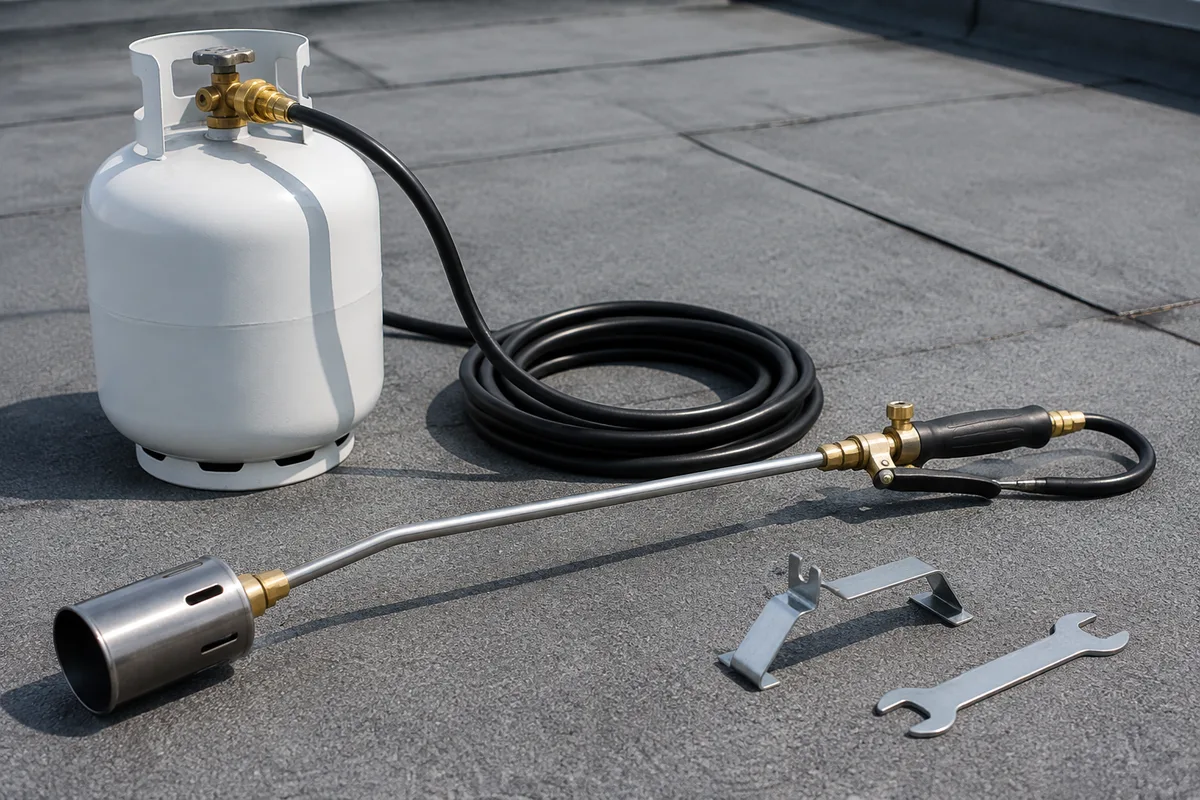
Propane Torch Kits
Propane torch kits are used on low-slope roofs to heat and fuse modified bitumen membrane, creating a bonded, watertight surface. At SoffitSmith by Smithbuilt Roofing, controlled torch application is one of the methods we use for modified bitumen systems, applied carefully and checked at every seam before the roof is called finished.
What propane Torch Kits is
Modified bitumen is a roofing membrane made of asphalt reinforced with polymers, sold in rolls that are laid across the roof deck and joined at the seams. One common way to bond those seams and adhere the membrane to the substrate is with heat: a propane torch kit warms the underside of the roll and the surface below it until the asphalt softens enough to fuse the two layers together as the roll is unrolled.
This torch-applied method is an alternative to cold adhesives and self-adhering membranes. Where those systems rely on chemical bonding or pressure-sensitive backing, torch application uses heat to melt the asphalt itself, which is why the process depends on steady, even technique rather than just laying material down and walking away.
Because it involves an open flame worked directly against roofing material, torch application is a task that calls for deliberate handling: consistent travel speed, attention to how the membrane reacts to heat, and awareness of what is directly beneath the work area.
How we use it at SoffitSmith by Smithbuilt Roofing
On flat and low-slope sections where modified bitumen is the chosen system, we use propane torch kits to bond membrane sheets and seams into a continuous, watertight covering. Application is controlled — the goal is a fully fused seam, not a scorched one, and that means working at a pace that lets the asphalt soften without overheating the membrane.
Once a seam is torched, we go back over it with seam rollers and probes, checking by hand that the bond has taken along its full length rather than assuming a good pass was enough. Where a section of roof involves related flat-roof work, torch application sits alongside our other low-slope tools and services, including built-up roofing, flat roof puncture and seam repair, and roof coatings applied with airless sprayers, rollers and squeegees once the membrane is in place.
Moisture meters and core sampling tools also come into play on the same jobs, since knowing what condition the existing deck and insulation are in helps determine whether a torch-applied modified bitumen system is the right fit before any flame touches the roof.
What it means for you
A properly torch-applied modified bitumen roof creates a membrane that is fully bonded rather than just layered, which is part of what gives flat and low-slope roofs their resistance to standing water and foot traffic over time. For a homeowner or property manager, that generally means fewer weak points at the seams, which are the most common place a flat roof develops a leak.
Because the work is done with hand tools and direct attention rather than large machinery, torch application tends to be quieter and less disruptive than some other roofing methods, and it can be done in sections, which is useful on larger commercial or multi-family low-slope roofs.
Clear communication matters here too. Photo documentation of the roof at each stage of a torch-down job gives you a record of what was applied and where, so you are not left guessing what happened under the membrane once it is sealed.
What to expect during your visit
Before torch work begins, the roof deck and any existing insulation are prepared and inspected, and the modified bitumen rolls are positioned and measured against the roofline. On a job that involves torch-applied membrane, our crew works section by section, typically starting at a low point or drain and working toward the roof's high point so water is always directed toward drainage as each course goes down.
During application, you may notice the smell of warm asphalt and see the crew moving at a steady, unhurried pace along each seam — that pace is intentional. Once a section is bonded, seams are rolled and probed by hand before the crew moves on. Afterward, the roof surface is cleared of debris and, where a coating is part of the scope, that finish is applied once the membrane has had time to set.
Timing depends on the size and complexity of the roof area involved, and larger commercial sections are generally handled over more than one day.
Frequently asked questions
Is torch-applied roofing safe?
Torch application is a controlled process that our crew handles with direct attention to technique, work area, and surroundings. Fall protection and access equipment are used on the same jobs as needed, and the roof deck is checked before any torch work begins.
Will I notice anything during the work?
You may notice the smell of warm asphalt while torch work is underway, along with the sound of the torch itself. Most of this is contained to the roof, and the crew clears the work area of debris once each section is finished.
How long does torch-applied modified bitumen take?
Time on site depends on the size of the roof area and how many layers or seams are involved. Larger or commercial low-slope roofs are generally completed over more than one visit.
Is this method right for every roof?
Torch-applied modified bitumen is suited to flat and low-slope roof sections rather than steep-slope shingle or tile roofs. Whether it is the right choice for a given roof depends on the existing deck, insulation, and drainage, which is part of what an inspection is for.
If you are considering a modified bitumen roof or want to know more about how we approach torch-applied systems, reach out to SoffitSmith by Smithbuilt Roofing and we will be glad to talk through your roof.