Portable Sheet Metal Brakes
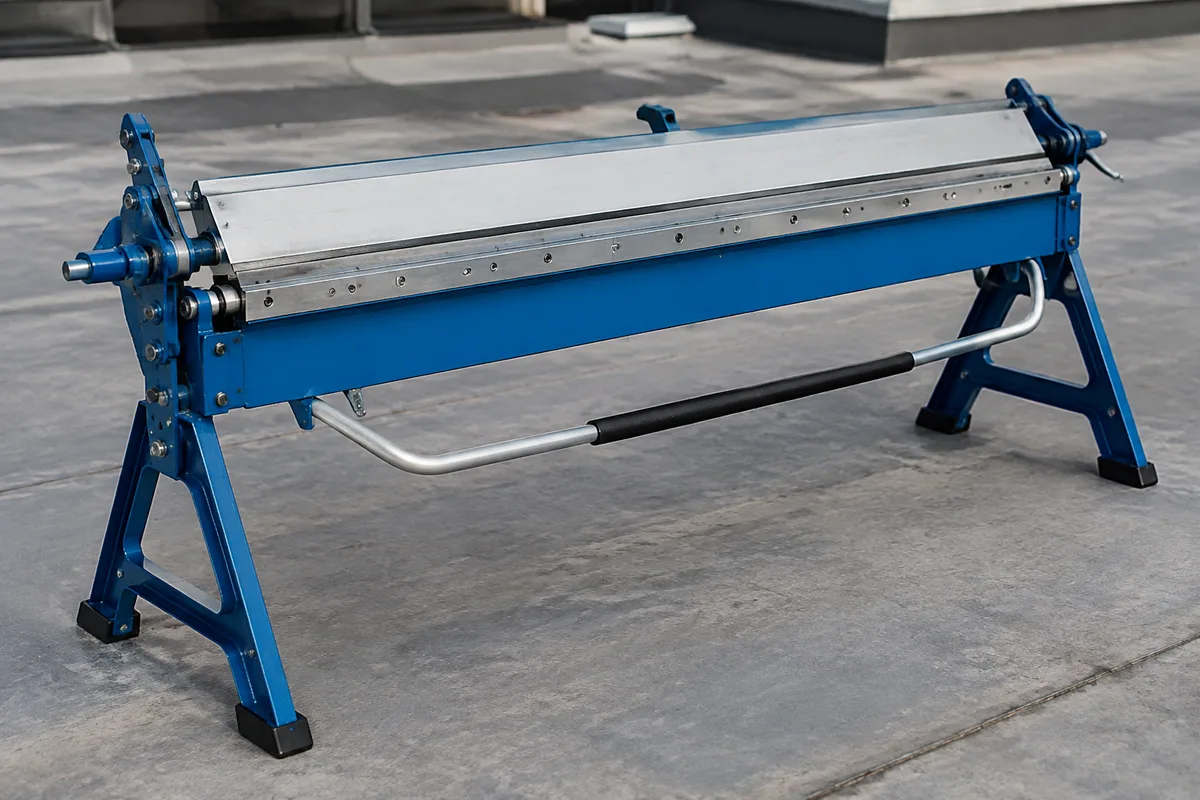
Portable Sheet Metal Brakes
A portable sheet metal brake is a bending tool that turns flat stock metal into the exact flashing, trim and counter flashing shapes a roof needs. Brought to the job site rather than a shop, it lets crews form pieces on demand, matched to the actual measurements of your roof rather than a standard size cut in advance.
What portable Sheet Metal Brakes is
At its core, a sheet metal brake clamps a flat piece of metal and folds it along a straight line to a set angle. Roofers use this to create the bends and hems found in step flashing, counter flashing, drip edge, valley metal, and roof trim. Before portable brakes were common, many of these pieces had to be pre-ordered in fixed profiles or bent off site, which meant delays if a measurement was off or a roof detail was unusual.
A portable brake removes that gap. Because it travels with the crew, metal can be measured, cut, and bent on location, then test-fit against the actual roof edge, chimney, or wall detail it will cover. This is especially useful on older homes, additions, or rooflines where no two edges are quite the same length or angle.
How we use it at SoffitSmith by Smithbuilt Roofing
On site, our portable sheet metal brakes are used to bend custom flashing, counter flashing, and trim so it fits your roof exactly, rather than forcing a stock piece into place. This work is done alongside our other metal tools: electric shears and nibblers give clean, burr-free edges before a piece goes into the brake, and tin snips and hand seamers handle the smaller hand-formed details a machine cannot reach. Where a job also involves gutters, our mechanical and hand seamers, downspout roll-former, and gutter crimpers, outlet punches and rivet guns work from the same bench area.
This bending work supports several of our other services, including flashing repair, drip edge and valley installation, chimney flashing, crown and cap work, and metal roofing installation. Because the metal is shaped on site, it can be adjusted in the moment if a wall, chimney, or valley does not match the original measurements exactly.
What it means for you
For a homeowner, on-site metal bending generally means fewer surprises. Instead of ordering a fixed flashing profile and hoping it fits, the crew can shape the piece to your roof's actual dimensions, which tends to reduce gaps, overlaps, or awkward seams at valleys, walls, and penetrations.
It can also mean fewer delays. If a piece needs a slightly different bend once it is held up against the roof, that adjustment can happen right there rather than waiting on a new order from a supplier. For older or irregular rooflines in particular, this kind of on-site flexibility often makes the difference between a flashing detail that sheds water cleanly and one that does not.
What to expect during your visit
On a job that involves metal bending, the crew typically starts by measuring the specific edges, valleys, or penetrations that need flashing or trim, using layout tools such as laser distance meters and framing squares to confirm angles and lengths. Flat metal stock is then cut to size with electric shears or nibblers.
The brake itself is set up in a clear, stable area on the property, away from foot traffic, and each piece is bent to the needed angle before being carried up and test-fit. Depending on the number and complexity of the pieces needed, this bending work can take anywhere from a short portion of the visit to a more involved part of a full metal roofing or flashing job. Homeowners usually notice the process as a distinct, contained step: some clamping and bending sounds from one area of the property, followed by crew members carrying finished pieces to the roof for fitting.
Frequently asked questions
Is bending metal on site safe for my property?
Yes. The brake and cutting tools are set up in a defined work area, and metal edges are handled with the same care as any other sharp material on a job site. Landscape protection tarps are used to keep beds, walks, and plantings covered during roofing and metal work.
Will this be noisy or disruptive?
There is some sound from cutting and bending metal, similar to other hand and power tool work during a roofing project. It is generally limited to the portion of the visit when flashing or trim pieces are being formed, not the entire visit.
How often is a portable brake used on a job?
It depends on the project. Jobs involving flashing repair, valley work, chimney details, or metal roofing are more likely to need on-site bending than a straightforward shingle repair. The crew determines this once they see the specific details on your roof.
Is this suitable for any type of roof?
Custom-bent flashing and trim are useful on most roof types, including asphalt shingle, metal, and tile roofs, wherever a flashing or trim detail needs to match an irregular edge, wall, or penetration exactly.
If you have a flashing, valley, or metal trim detail you would like looked at, reach out to SoffitSmith by Smithbuilt Roofing to ask about our on-site sheet metal bending.