Plywood & Board-Up Kits
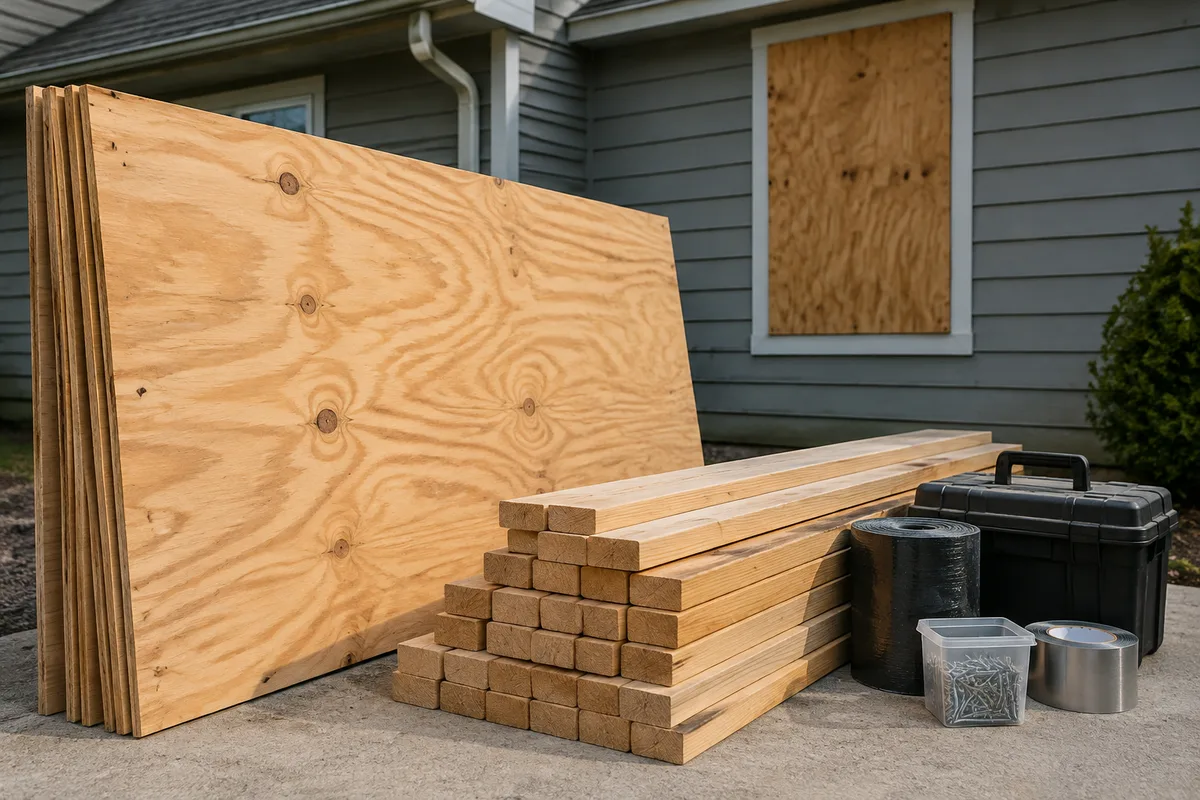
Plywood & Board-Up Kits
When a storm, fallen limb, or impact opens up a roof or the walls beneath it, the priority shifts from repair planning to closing the gap fast. Plywood & Board-Up Kits are the on-site materials and tools SoffitSmith by Smithbuilt Roofing keeps ready so an opening can be secured the same visit it is found, protecting the structure until permanent work begins.
What plywood & Board-Up Kits is
A board-up kit is a set of pre-cut or cuttable plywood panels, fasteners, and sealing materials kept on hand for emergency use. Rather than measuring, sourcing, and cutting material after damage is already found, a crew arrives with panels, saws, and fastening tools ready to close a hole in a roof deck, wall, or window opening on the spot.
This approach improves on older, improvised methods — scrap wood, whatever tarps happen to be on the truck, fasteners driven in without much thought to wind resistance. A proper kit is matched to the size of the opening and fastened with the same attention given to any structural repair, so the covering actually stays put until the real fix is scheduled.
How we use it at SoffitSmith by Smithbuilt Roofing
Board-up work at SoffitSmith by Smithbuilt Roofing happens alongside the same tools used for storm response generally. Chainsaws and pole saws clear fallen limbs away from the opening first. Reciprocating saws, circular saws, and cordless impact drivers square up damaged decking and framing so the plywood seats against sound material instead of splintered edges. Pry bars and nail pullers remove broken material cleanly rather than hammering it flat, which matters when the board-up needs a solid surface to bite into.
Where a job runs past daylight, portable generators and work lights keep the crew working safely. Wood moisture meters help confirm whether the surrounding deck is still sound enough to fasten into or needs to be cut back further before boarding. Every stage gets recorded through our photo documentation app, so you have a time-stamped record of what was found and what was closed off — useful for your own records and for any claim you may file. Heavy-duty tarps, battens, and sandbags often go over or alongside a board-up on a broader storm-damaged section of roof, giving fuller coverage while the opening itself stays mechanically secured.
What it means for you
A secured opening keeps weather, animals, and debris out of a home while a permanent repair is scheduled, which limits the amount of secondary damage — soaked insulation, stained ceilings, spreading rot — that can develop in the meantime. Because the materials and tools travel with the crew, there is typically no separate trip required just to close up the damage.
Clear, dated photos of the opening and the board-up give you something concrete to reference when talking to an insurance adjuster or planning the next steps, rather than relying on memory of what the damage looked like. And because the covering is fastened rather than just laid over the gap, it is meant to hold through the kind of wind and rain that often follows the event that caused the damage in the first place.
What to expect during your visit
A board-up visit usually starts with a walk of the affected area to confirm the size and location of the opening and check the surrounding structure for related damage. Any hazards nearby — broken branches, unstable framing — get cleared or addressed first. From there, plywood is cut to fit, the surrounding surface is checked and prepped, and the panel is fastened securely across the opening.
The board-up itself is generally a fast process compared to a full repair; the length of the visit depends more on how much clearing and structural checking the situation needs than on the boarding step itself. You should not need to do anything beyond giving the crew access to the area. Once the opening is closed, you will typically have photos documenting the work and a conversation about scheduling the permanent repair.
Frequently asked questions
Is a board-up a permanent fix?
No. A board-up is meant to close and protect an opening temporarily until a full repair to the roof, deck, or structure can be completed. It is a safeguard against further damage, not a replacement for the actual roofing or structural work.
How long does a board-up take?
It depends on the size of the opening and the condition of the surrounding structure, but boarding itself is typically a quick step once any debris is cleared and the area is prepped. Larger openings or damaged framing can add time to the visit.
Is it safe to have this done while people are still in the home?
Yes, in most cases. The work is generally limited to the damaged area, and the crew clears hazards like loose material or fallen limbs before beginning. If access to a specific room or area is needed, the crew will let you know.
What kinds of damage call for a board-up?
Board-up kits come into play after storm damage, wind and hail impact, or a fallen tree or limb has opened up a roof, wall, or window. Any situation where an opening needs to be closed against weather and intrusion before permanent repairs can be scheduled is a fit.
If you have an opening that needs to be secured, reach out to SoffitSmith by Smithbuilt Roofing to talk through what is happening and get a board-up scheduled.