Photo Documentation Apps (CompanyCam)
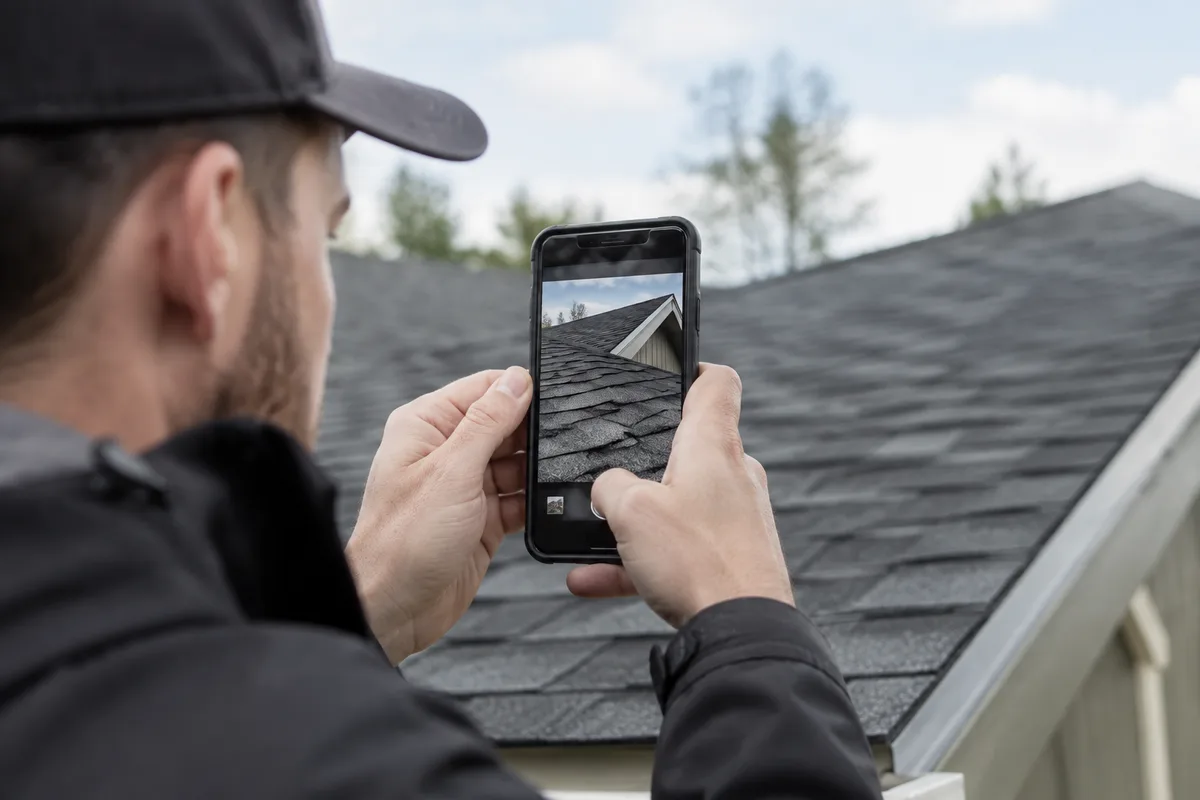
Photo Documentation Apps (CompanyCam)
Photo documentation is the practice of recording a roof job in pictures, tagged with the time and location they were taken, so nothing about the work is left to memory or guesswork. At SoffitSmith by Smithbuilt Roofing, every stage of the job is time- and location-stamped, so you see the same photos we do.
What photo Documentation Apps (CompanyCam) is
A photo documentation app is software built for job sites rather than personal photo libraries. A crew member takes pictures on a phone or tablet, and the app automatically attaches the date, time, and GPS location to each image, then organizes them by project. Instead of loose photos scattered across text threads or lost when a phone changes hands, the record stays attached to the job itself.
This approach improves on the older habit of a handful of before-and-after snapshots taken on a personal phone, which could be misplaced, mislabeled, or simply forgotten by the time a warranty question or insurance claim came up months later. A structured, time-stamped photo trail turns what used to be informal notes into a clear, ordered account of what was found and what was done, in the sequence it actually happened.
How we use it at SoffitSmith by Smithbuilt Roofing
On a typical job, documentation starts before a single shingle comes off and continues through to cleanup. It pairs naturally with the other inspection tools already on site: images from drones with thermal and high-resolution cameras, handheld infrared scans, moisture meter readings, and core sampling cuts can all be logged alongside standard photos, giving a fuller picture of roof condition than photos alone would show.
During tear-off and installation, photos are taken of the exposed deck, any repairs, underlayment, flashing, and fastening patterns at each stage, before those details are covered by the next layer. This matters most on work like membrane welding, coating application, or metal roofing details, where the finished roof will not show what is underneath it. The same time- and location-stamped record also supports the paperwork side of a job, including warranty registration and any documentation an insurance carrier or property manager requests.
What it means for you
For a homeowner, the main benefit is clarity. Rather than taking someone's word for what a crew found on the roof or how a repair was made, you can see the actual images, in order, tied to the day and location they were taken. That makes conversations about scope of work, unexpected findings, or completed repairs more concrete and easier to follow.
Photo documentation also reduces the number of times someone needs to climb back onto a roof to answer a question. If a detail needs to be revisited later, whether for a warranty claim or a follow-up question from a property manager or insurance adjuster, the images are already organized and available instead of requiring a fresh site visit just to look at something that was already checked.
What to expect during your visit
You won't need to do anything to prepare for photo documentation specifically; it happens as a normal part of inspection, repair, or installation work rather than as a separate visit. Before work begins, a crew member typically photographs the roof's overall condition and any problem areas identified during inspection. As the job proceeds, photos are taken at key stages, such as when the old roofing is removed, when the deck is exposed, and when new materials go on, particularly where a layer is about to be covered.
After the work is finished, final photos document the completed roof, including flashing, vents, and any other details that were part of the scope. The photo-taking itself adds only a few minutes here and there throughout the visit and does not change how long the overall job takes; it happens alongside the work rather than instead of it.
Frequently asked questions
Is photo documentation safe and does it slow down the job?
Photo documentation does not involve any additional equipment on the roof beyond a phone or tablet already carried by the crew, so it adds no extra safety exposure. It takes only moments at each stage and is worked into the normal flow of the job rather than treated as a separate task.
Will I actually get to see the photos?
Yes. Because every stage is time- and location-stamped, the photos are organized by job and available for you to review, so you see the same record the crew is working from rather than a summary after the fact.
Is this used on every type of roofing job?
Photo documentation is a general practice that applies across roof types and project sizes, from a single repair to a full replacement, since the goal is simply to keep an accurate visual record of what was found and what was done.
How does this connect to other inspection tools you use?
Images from tools like drones, infrared cameras, and moisture meters can be logged into the same documented record as standard job photos, so findings from those inspections stay tied to the same time- and location-stamped project history.
If you would like to know more about how photo documentation works on a roofing job, reach out to SoffitSmith by Smithbuilt Roofing and we'll be glad to answer your questions.