Moisture Meters
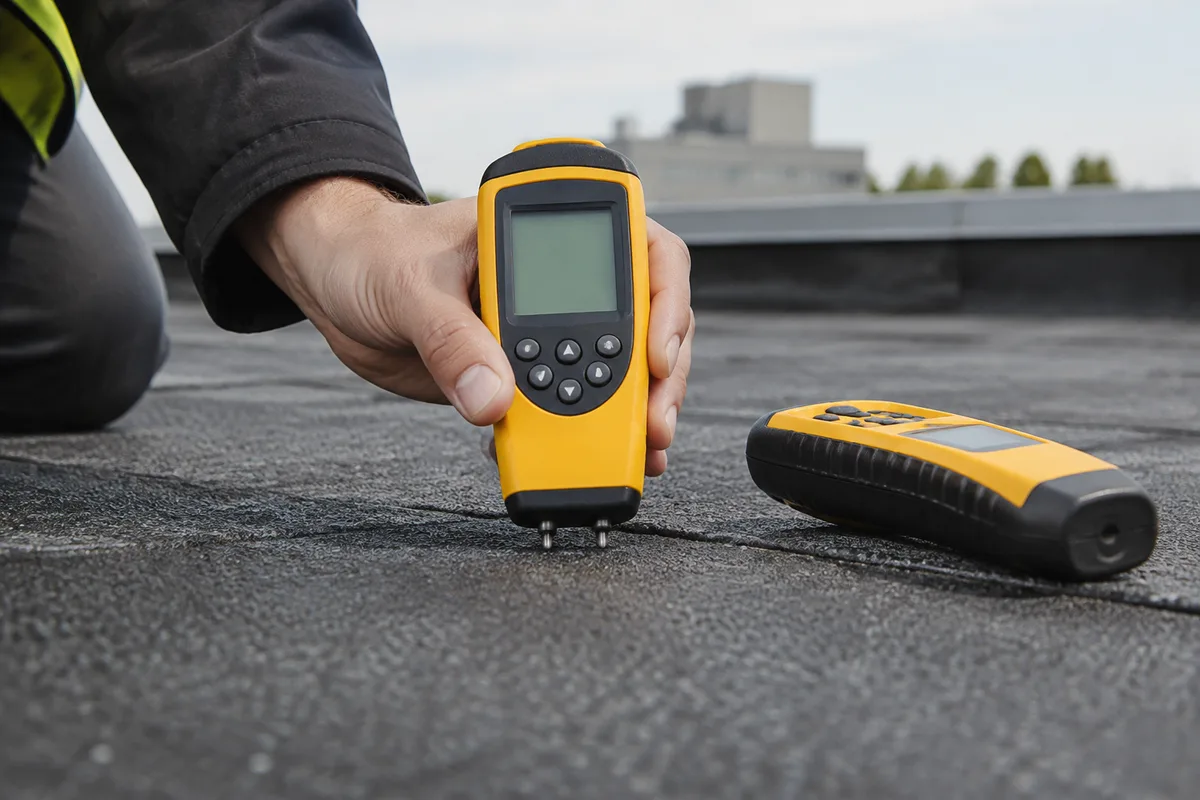
Moisture Meters
A moisture meter gives a direct, on-the-spot reading of how much water is sitting inside a roof system, rather than relying on guesswork from a stain on the ceiling below. At SoffitSmith by Smithbuilt Roofing, direct moisture readings across the roof surface separate a wet deck from a stain left over from an old leak, so decisions about repair or replacement are based on what is actually happening under the surface, not just what is visible on top.
What moisture Meters is
A moisture meter is a handheld instrument that measures the moisture content of roofing materials, most often the roof deck, insulation, and sometimes the framing underneath. Some meters use two small pins pressed into the surface to read electrical resistance; others read moisture non-invasively by passing a low-level signal into the material and measuring how it responds. Either way, the reading tells a crew whether a section of roof is dry, damp, or saturated, without cutting the roof open to look.
Before tools like this were common, the only way to confirm a suspected wet deck was to remove roofing material and inspect visually, or to wait and see if a stain spread or a soft spot got softer. Moisture meters let a roofer check a wide area quickly and confirm findings before committing to any tear-off, which keeps unnecessary demolition off the job and keeps sound decking in place.
How we use it at SoffitSmith by Smithbuilt Roofing
On a roof, moisture meter readings are typically taken across the field in a grid pattern, especially around areas that look suspect from an infrared scan or a visual inspection, such as valleys, flashing lines, and low spots where water tends to collect. Readings that come back elevated point to where the roof deck or insulation has taken on water; readings that come back normal next to a visible stain tell us the stain is old and the leak that caused it has already been addressed.
This work often pairs with other on-site equipment. Handheld infrared cameras and drone-based thermal imaging can flag likely wet zones from a distance, and moisture meter readings then confirm those findings hand-to-material. Where a reading or a thermal signature raises a real question, core sampling tools can be used to physically check how many layers are present and how far moisture has traveled. Wood moisture meters extend the same idea to decking and framing once a section is opened up, so replacement decisions are based on actual condition rather than assumption. Findings are recorded through the practice's photo documentation process, so homeowners can see the same readings and images the crew is working from.
What it means for you
For a homeowner, the practical value of a moisture meter is clarity. Instead of hearing that a roof "might" have a wet deck, you get a specific reading tied to a specific location, which makes it easier to understand what is actually being recommended and why. This kind of direct measurement also helps limit the scope of repair work to the areas that genuinely need it, since dry sections of deck do not need to be disturbed just because a nearby area is wet.
Catching trapped moisture early, before it spreads further into insulation or framing, is generally easier and less disruptive to address than waiting until damage becomes visible from inside the home. Moisture readings taken during a routine inspection, a pre-purchase inspection, or a post-storm assessment give a homeowner a clear, current picture of roof condition to plan around, whether that means scheduling a repair, monitoring a small area, or moving ahead with confidence on a purchase.
What to expect during your visit
A moisture meter check is usually part of a broader roof inspection rather than a stand-alone visit. The crew will walk the roof surface (or use a drone first, depending on access and the roof type) and take readings at points of interest, often the same spots flagged by a visual check or a thermal scan. Each reading takes only a few seconds; scanning a typical residential roof section adds a modest amount of time to the overall inspection rather than requiring a separate appointment.
There is little for a homeowner to prepare. If the crew needs roof access, keeping walkways and gutters clear helps, but the inspection itself does not involve cutting into materials unless readings and other findings point to a specific area that needs a closer core sample. Once readings are collected, findings are documented with photos and discussed before any repair scope is decided, so you know what was found and where before any work begins.
Frequently asked questions
Is a moisture meter reading safe for my roof?
Yes. Pin-type meters leave only tiny pinholes that are far smaller than a fastener hole, and non-invasive meters make no contact at all beyond resting on the surface. Neither method damages roofing material or shortens its life.
How long does a moisture scan take?
Most moisture meter checks are folded into a standard roof inspection and add only a short amount of time, since each reading is quick to take. The overall length depends on roof size and how many areas need a closer look.
Will I be able to see the readings myself?
Findings are documented with time- and location-stamped photos as part of the inspection, so you can see the same images and results the crew is reviewing, alongside any thermal imaging used to guide where readings were taken.
Is this suitable for any type of roof?
Moisture meters are used across shingle, tile, metal, and flat or low-slope membrane roofs, since every deck and insulation type can hold trapped moisture. The specific approach, and whether a core sample is warranted, depends on the roof system in question.
If you have a stain, a soft spot, or just want a clear read on your roof's condition, reach out to SoffitSmith by Smithbuilt Roofing to ask about a moisture meter check as part of your next inspection.