Magnetic Nail Sweepers
Magnetic Nail Sweepers
A roof replacement or repair sends far more than shingles to the ground. Loose nails, staples and small metal fasteners fall during tear-off and again during install, and they do not stay where they land. A magnetic nail sweeper is the tool that finds them afterward, run across the yard, the driveway and the planting beds so that stray metal does not end up in a tire, a bare foot or a mower blade.
What magnetic Nail Sweepers is
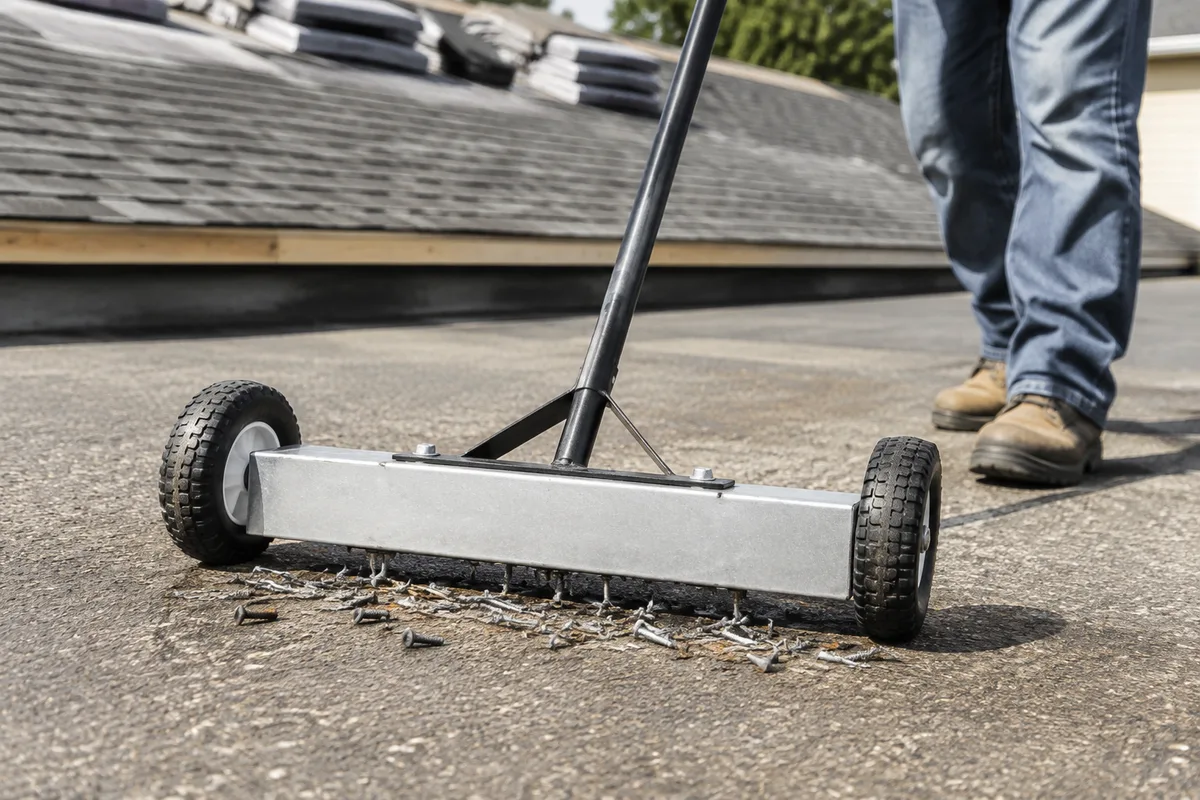
A magnetic nail sweeper is a wheeled magnetic bar, pushed or pulled across the ground like a lawn edger, that picks up ferrous metal on contact. Roofing nails, screws, staples and small clips cling to the magnet instead of staying hidden in grass, mulch or gravel. Some models are handheld for tight corners; larger units cover open lawn and drive surfaces in wide passes.
Before tools like this were standard, cleanup after a tear-off relied on visual inspection and hand-raking, which missed fasteners buried in grass or dropped into beds. A magnetic sweep does not replace looking down, but it catches what looking down cannot.
How we use it at SoffitSmith by Smithbuilt Roofing
Magnetic sweeping happens at the close of a job, after the roofing shovels and tear-off spades have done the heavy lifting and the roll-off dumpster or dump trailer has taken the bulk debris away. Nails that missed the tarp or bounced off the roof during pneumatic coil nailing, cap nailing, or pry-bar removal of old fasteners are the target — the small metal that a broom or a leaf blower will move around but not remove.
We run the sweep more than once, because a single pass over grass or gravel does not always catch everything on the first try. Landscape protection tarps placed before work begins reduce how much metal reaches the beds in the first place, and the magnetic sweep is the last check on the areas those tarps covered, along with the drive and any open ground the crew walked or worked over.
What it means for you
The main benefit is straightforward: fewer stray nails means fewer flat tires, fewer punctured bare feet, and fewer surprises for pets that walk the yard after the crew has gone. It also means less metal working its way into a lawn mower over the following weeks, which is often when a missed nail actually causes damage.
Because the sweep is a visible, physical pass across the property, it is also a clear point in the job where you can see the cleanup happening rather than take it on faith. For most homeowners, this is a small but noticeable part of a roofing job feeling finished rather than abandoned mid-cleanup.
What to expect during your visit
The magnetic sweep is one of the last things that happens on site, after tear-off debris, the dumpster or trailer, and larger material have already left the property. A crew member walks the magnetic sweeper across the driveway, walkways and open lawn, then works it along the perimeter of the house and any planting beds near the roofline. Leaf blowers may clear loose debris first so the sweep can move freely.
The pass itself takes a short amount of time relative to the rest of the job — it is a walking sweep, not a separate visit — and it is usually repeated at least twice before the crew considers the area clear. You do not need to do anything to prepare beyond keeping the area accessible; if you have pets or small children, it is reasonable to keep them off the lawn and driveway until the crew confirms the sweep is done.
Is a magnetic sweep really necessary after a roof job?
Yes. Roofing nails are small, they scatter during tear-off and installation, and grass or mulch hides them easily. A magnetic sweep is the practical way to find what a visual check alone would miss.
Will it damage my lawn or driveway?
No. The sweeper rolls across the surface and picks up metal magnetically; it does not dig, scrape or apply any chemical. It is safe to run over grass, gravel, pavement and planting bed edges.
How many times is the yard swept?
More than once. A single pass can miss fasteners resting at an angle or tucked against an edge, so the sweep is repeated to cover ground missed the first time.
Does this apply to every type of roofing job?
It applies to any job where metal fasteners are used or removed, which covers most tear-offs, re-roofs and repairs involving nails, screws, staples or clips, on both residential and commercial properties.
If you have a roofing project coming up and want to know how site cleanup, including the magnetic sweep, fits into the process, reach out to SoffitSmith by Smithbuilt Roofing to ask.