Leaf Blowers
Leaf Blowers
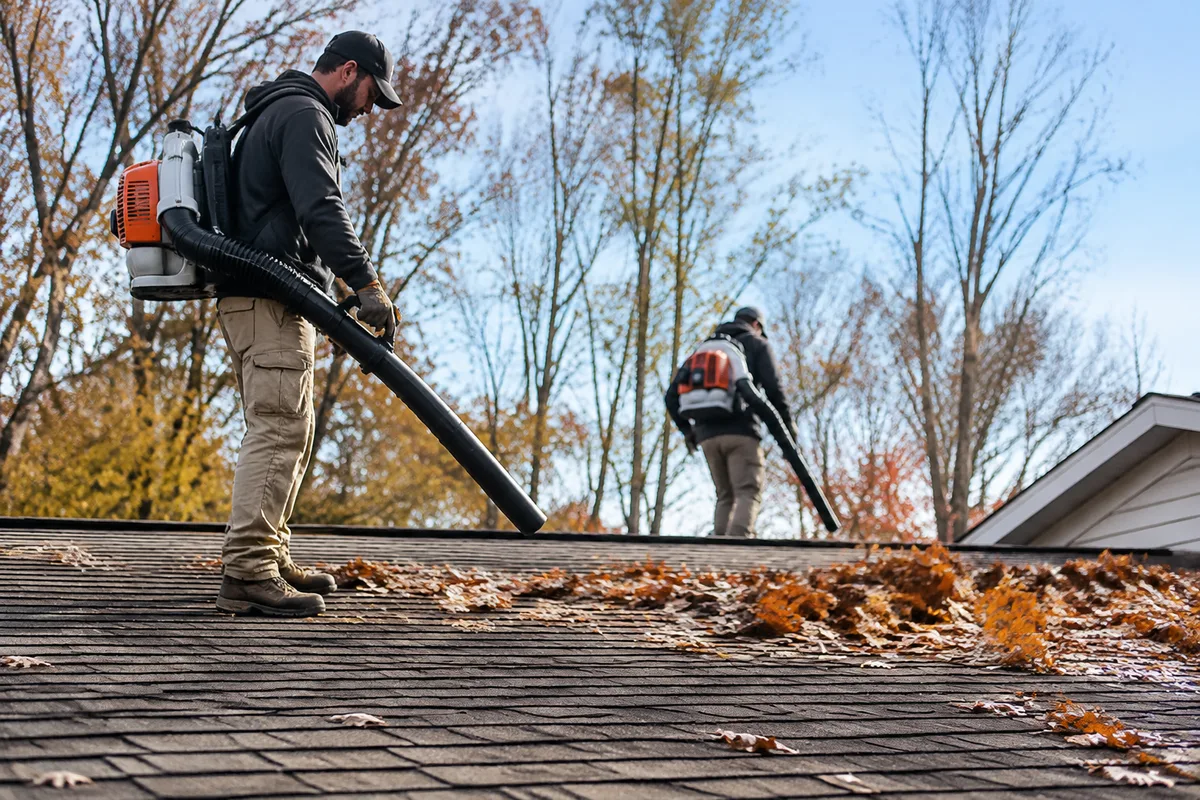
At the end of nearly every roofing visit, there is debris to clear before the job is truly finished. Leaf blowers are the tool we reach for to move that debris off the roof surface, out of valleys, and out of gutters, so the finished work is visible and the roof drains the way it should.
What leaf Blowers is
A leaf blower is a handheld or backpack unit that moves a controlled stream of air across a surface, pushing loose material ahead of it without contact. On a roof, that means granule debris, cut-offs from shingles or metal, sawdust, twigs, and windblown leaves can be cleared without brooms or brushes dragging across the surface and disturbing granules or coatings.
Before blowers were standard practice on job sites, cleanup relied on hand sweeping, which is slower and can grind grit into a coating or scuff a membrane. A blower clears the same area faster and with less abrasive contact, which matters most on shingle roofs, coated flat roofs, and metal panels where surface texture is part of the finished product.
How we use it at SoffitSmith by Smithbuilt Roofing
We use leaf blowers to clear roof surfaces, valleys, and gutters at the end of every visit, whether that visit is a full replacement, a repair, or a routine inspection. Valleys and gutter runs collect the bulk of loose material during tear-off and installation, and blowing them clear lets water move freely once the job is done.
This step pairs with other equipment we already have on site. Wet/dry and gutter vacuums handle debris that has settled into gutters and drains rather than sitting loose on the roof surface, and magnetic nail sweepers pass over the yard, drive, and beds to pick up any stray fasteners after the roof itself has been blown clear. Where a roof also needs moss, algae, or stain treatment, that work is done separately with pressure washers and soft-wash systems, since a blower only moves loose debris and is not a substitute for washing. We also document the finished, cleared roof with our photo documentation app so you can see the same condition we do.
What it means for you
Clearing debris at the end of a visit means valleys and gutters can do their job right away instead of holding leaves, granules, or cut-offs that slow drainage. It also gives you a clean, readable view of the finished work, whether that is a new roof, a repair, or an inspection, since loose debris can hide details that matter.
Because the tool works from a distance without scrubbing, it reduces the chance of surface disturbance on shingles, coatings, and metal panels during final cleanup. For property owners, this final pass is also part of leaving the site tidy, since a roof crew that clears its own debris leaves less for you to deal with once the crew has left.
What to expect during your visit
Blower use happens at the close of a visit, after the roofing, repair, or inspection work itself is complete. You will typically hear it as one of the last sounds of the visit, running for a few minutes across the roof plane, into valleys, and along gutter runs. It is a short, routine step rather than a separate service call.
No preparation is needed on your end. If landscaping below the roofline is a concern, our crew will already have it protected with tarps as part of the job, so debris moved by the blower does not land directly in beds or walkways. Once the blower pass is done, the crew does a final walk of the site, including a magnetic sweep for fasteners, before considering the visit complete.
Frequently asked questions
Is it safe to be near while it is running?
Yes. A leaf blower moves air and light debris, not tools or materials, and our crew directs the airflow away from people, vehicles, and open windows. If you would rather step inside or move to another part of the property while it runs, that is fine, but it is not a safety requirement.
Will it damage my roof or gutters?
No. The airflow is controlled and does not involve contact or abrasion, which is why it is used on finished shingle, metal, and coated surfaces instead of a stiff brush. It clears loose material without scrubbing or scraping the surface underneath.
How long does this step take?
It is a brief part of a longer visit, typically a few minutes once the main roofing or repair work is finished, since it covers the roof plane, valleys, and gutter runs rather than a separate task on its own schedule.
Is this used on every type of roof?
It is used on any roof surface where loose debris needs to be cleared, including shingle, metal, tile, and flat coated or membrane roofs, and on the gutters and valleys attached to them, making it a routine closing step across most of our visits.
If you have questions about how we clean up after a roofing visit, or want to schedule one for your home, get in touch with SoffitSmith by Smithbuilt Roofing.