Landscape Protection Tarps
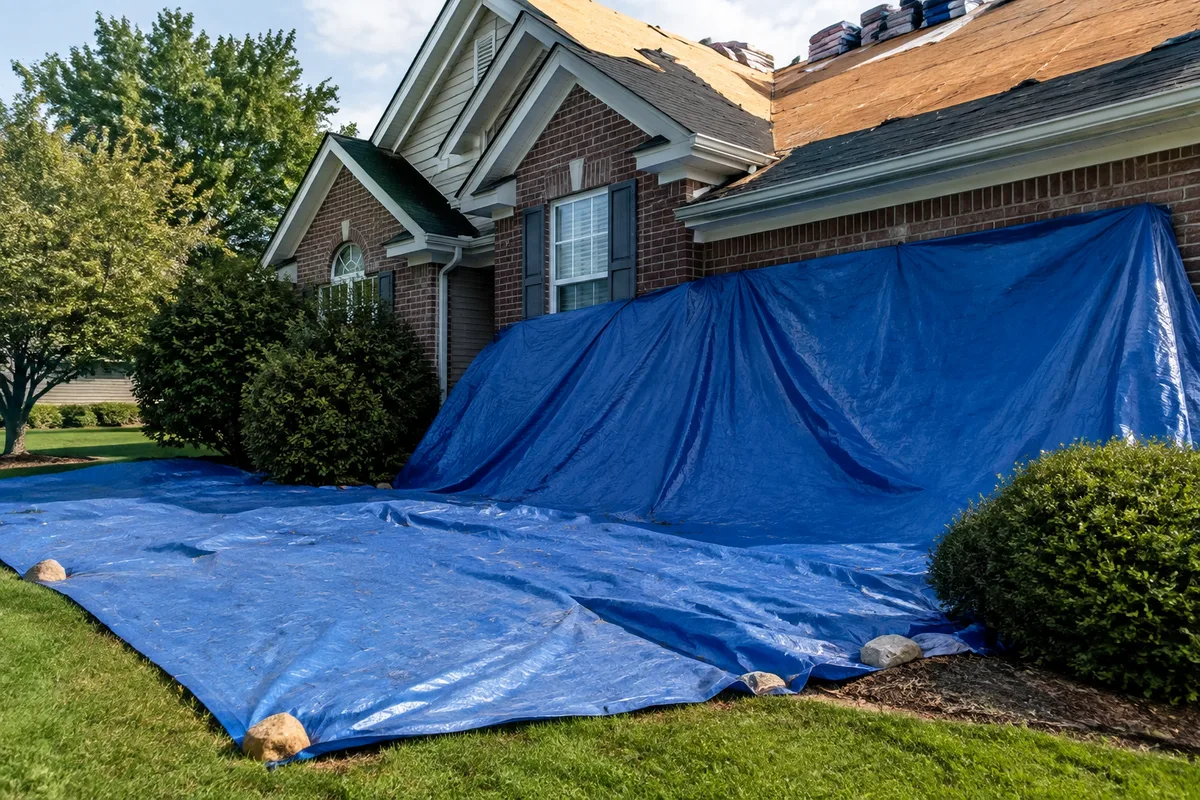
Landscape Protection Tarps
Before any tear-off begins, the ground around your home needs its own kind of protection. Landscape Protection Tarps are heavy-duty ground covers laid across beds, walkways, shrubs and other plantings so that falling shingles, old nails, and debris land on a barrier instead of on your landscaping. It is a simple idea, but it matters on every roofing job, from a single repair to a full replacement.
What landscape Protection Tarps is
Landscape Protection Tarps are large, durable sheets of woven or coated material designed to be spread over plant beds, walkways, driveways, pool decks, and any other ground-level feature near the work area. They are staked, weighted, or otherwise secured so wind and foot traffic do not shift them mid-job.
Before tarps became standard practice, crews often relied on whatever plywood scraps or drop cloths were on hand, which left gaps where debris could still reach plantings or hardscaping. Purpose-built landscape tarps close those gaps by covering a wider, more consistent area and holding their position through a full day of tear-off and installation.
How we use it at SoffitSmith by Smithbuilt Roofing
At SoffitSmith by Smithbuilt Roofing, beds, walks and plantings are covered before the first shingle comes off. The tarps go down as part of the setup for tear-off, ahead of any work that involves stripping old roofing material, so nothing lands directly on soil, mulch, or plants.
The tarps work alongside other on-site equipment used during tear-off and cleanup. Roll-Off Dumpsters & Dump Trailers give debris a contained place to go instead of the yard, Magnetic Nail Sweepers pick up stray fasteners once the tarps are pulled back, and Leaf Blowers clear any remaining fine debris from the surface. On jobs where access requires it, Scaffolding & Boom/Scissor Lifts or Extension Ladders with Stabilizers are positioned with the protected ground in mind, keeping equipment off plantings as well.
This same approach applies whether the work is a full roof replacement, a roof-over, or an emergency response after storm or fallen-tree damage, since Heavy-Duty Tarps, Battens & Sandbags and Plywood & Board-Up Kits are also part of how the property is secured during and after urgent repairs.
What it means for you
Ground protection means less cleanup on your end and fewer surprises in the flower beds after the crew leaves. It generally lets you keep using parts of your yard, walkway, or driveway that are not part of the immediate work zone, since the covered areas are clearly marked off from the rest of the property.
For homeowners with established landscaping, mature shrubs, or newly planted beds, this kind of preparation is often one of the first visible signs that a crew is working carefully. It also tends to shorten the time needed for post-job cleanup, since debris is already contained rather than scattered.
What to expect during your visit
On the day work begins, expect the crew to walk the property first, identifying beds, walkways, and other landscaping near the roof line. Tarps are laid out and secured before any tear-off tools come out, which adds a short amount of time to the start of the job but is done as part of the normal setup, not as a separate visit.
During tear-off, the tarps stay in place, catching shingles, underlayment, and fasteners as they come down. At the end of the work session, or once tear-off is complete, the tarps are gathered along with the debris they collected, and the crew does a final sweep of the area with hand tools and blowers before moving on to the next stage of the job.
Frequently asked questions
Will the tarps damage my plants or grass underneath?
The tarps are meant to protect plantings, not smother them for an extended period. They are typically in place only for the duration of tear-off and cleanup on a given work day, then removed once the ground protection is no longer needed for that stage.
Do I need to move anything before the crew arrives?
It helps to move small, easily portable items like planters, garden ornaments, or hoses out of the immediate work area. Anything rooted in the ground, such as shrubs or beds, does not need to be moved — that is exactly what the tarps are for.
How long does the ground protection stay down?
Ground protection generally stays in place for as long as tear-off or debris-producing work is happening in that area, then comes up during cleanup. On multi-day jobs, it may go back down each time work resumes.
Is this used on every type of roofing job?
Landscape Protection Tarps are considered for any job where debris could fall near plantings or hardscaping, which covers most tear-off work, roof-overs, and emergency repairs. The extent of coverage depends on the layout of your property and where the work is happening.
If you have beds, walkways, or plantings you want protected during roof work, reach out to SoffitSmith by Smithbuilt Roofing to talk through how ground protection fits into your project.