Ladder Hoists & Shingle Conveyors
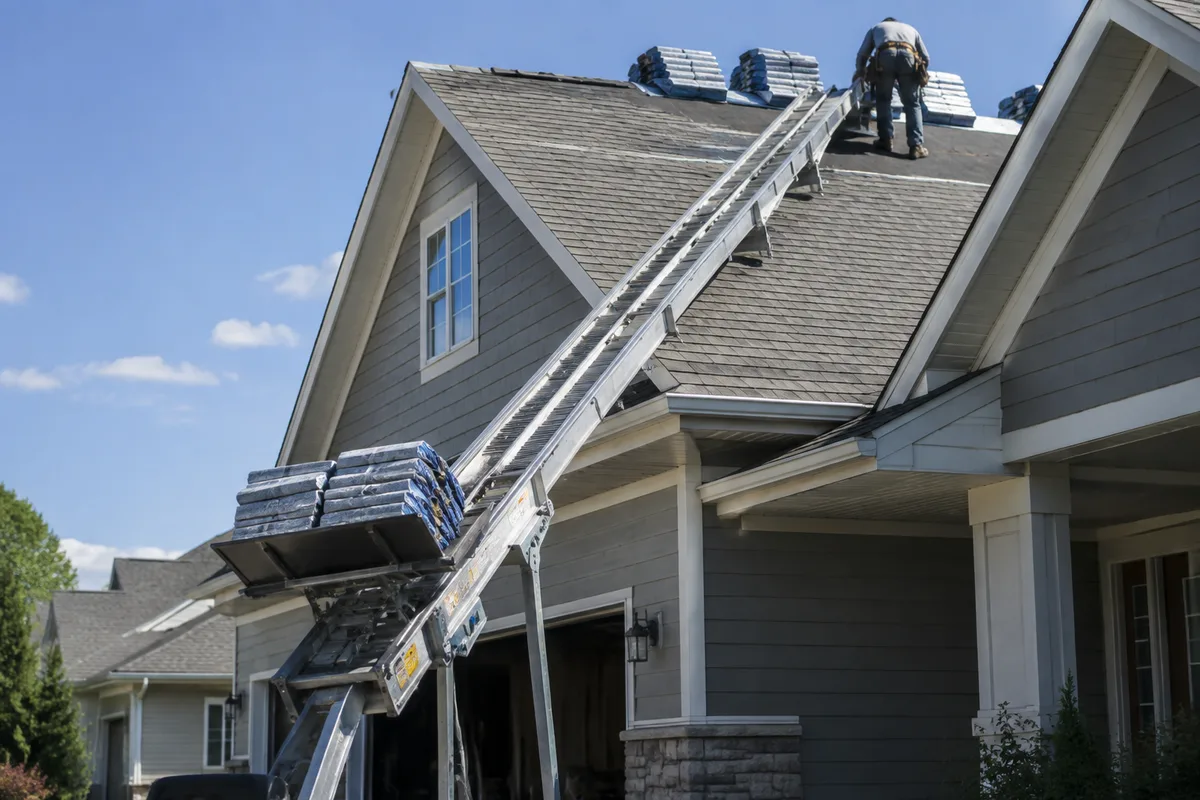
Ladder Hoists & Shingle Conveyors
Getting bundles of shingles and rolls of underlayment from the ground to the roofline is one of the more physically demanding parts of any roofing project. Ladder hoists and shingle conveyors move that material mechanically instead of by hand, one armload at a time up a ladder. It is a straightforward piece of equipment, but it changes the pace and feel of a job in ways homeowners notice from the driveway.
What ladder Hoists & Shingle Conveyors is
A shingle conveyor is a motorized track, typically set at an angle against the eave, that carries bundles or boxes of material up to roof level on a continuous belt or chain. A ladder hoist works on a similar principle but rides along a ladder frame, lifting a platform or hook loaded with material to the working height. Both replace the older method of carrying bundles up an extension ladder rung by rung, which is slower and puts more strain and repetitive motion into the crew's day.
These systems are set up at the start of a job and repositioned as needed while material is staged, tear-off debris comes down, or the crew moves to a different section of roof. They are common on steep-slope shingle work and on jobs where a large volume of material needs to move in a short window.
How we use it at SoffitSmith by Smithbuilt Roofing
On a shingle roof replacement or roof-over, a conveyor or hoist is generally positioned early, alongside the scaffolding, boom or scissor lifts, and stabilized extension ladders that keep crew access safe and off your gutters. Material comes up mechanically instead of being hand-carried, which keeps the crew's energy on layout, fastening and detail work rather than on repeated trips up and down.
The same setup works in both directions. Once tear-off begins, the conveyor can help move old shingles and debris down toward the roll-off dumpster or dump trailer staged on site, rather than having it thrown or carried off the roof. Between the mechanical lift and the magnetic nail sweepers and landscape protection tarps used around the property, the goal is to keep the work area controlled from the first bundle to the last piece of debris.
These tools support the physical movement of material; the actual installation still relies on the pneumatic coil nailers, cap nailers, and layout tools described elsewhere on this site. A hoist or conveyor does not change how a shingle roof is installed — it changes how the material gets to the roof in the first place.
What it means for you
For a homeowner watching a re-roof happen, the most visible benefit is speed: material arrives at roof level faster, so a crew can spend more of the day actually installing rather than hauling. There is also less foot traffic across lawns and driveways, since bundles are not being walked back and forth by hand as often.
Mechanical lifting also reduces the number of trips up and down a loaded ladder, which is a meaningful safety consideration on any job, and it tends to reduce incidental contact with gutters, siding and landscaping near the access point. None of this is a guarantee about how any specific job will go, but it describes why this equipment is a standard part of shingle roofing work generally.
What to expect during your visit
Before work begins, the crew will identify a clear, flat area near the roofline to set up the conveyor or hoist, usually close to where material is staged for delivery. Landscape protection tarps typically go down first if the setup point is near beds or plantings.
During the workday, you will see and hear the equipment running periodically as bundles move up and, later, as debris moves down. It is not continuous noise — it runs in bursts as material is needed. The setup itself takes a matter of minutes; how long it stays in place depends on the size of the job and how much material has to move.
At the end of each work session, the equipment is repositioned or broken down as needed, and the ground area is cleared and swept before the crew leaves for the day.
Frequently asked questions
Is a ladder hoist or shingle conveyor safe to have near my house?
Yes. The equipment is set up on stable, level ground and positioned to avoid contact with gutters, siding and landscaping wherever possible. Landscape protection tarps and careful placement are part of the standard setup around it.
How long does the equipment stay set up?
That depends on the size of the job and how much material needs to move. On a straightforward shingle replacement it may only run for a portion of a day; on larger jobs it can be part of the setup for the full project.
Is this equipment used on every roofing job?
It is most common on steep-slope shingle work, including full replacements, roof-overs and new construction, where a large volume of bundles needs to reach roof level. It is less relevant on small repairs or flat-roof work.
Will it damage my lawn or driveway?
The setup point is chosen to minimize contact with soft ground and landscaping, and protective tarps are used around the base when needed. The crew clears and checks the area, including a sweep for stray fasteners, before leaving.
If you have a shingle roofing project coming up and want to know how material handling will work at your property, reach out to SoffitSmith by Smithbuilt Roofing to talk it through.