Hole Saws & Vent Cutting Jigs
Hole Saws & Vent Cutting Jigs
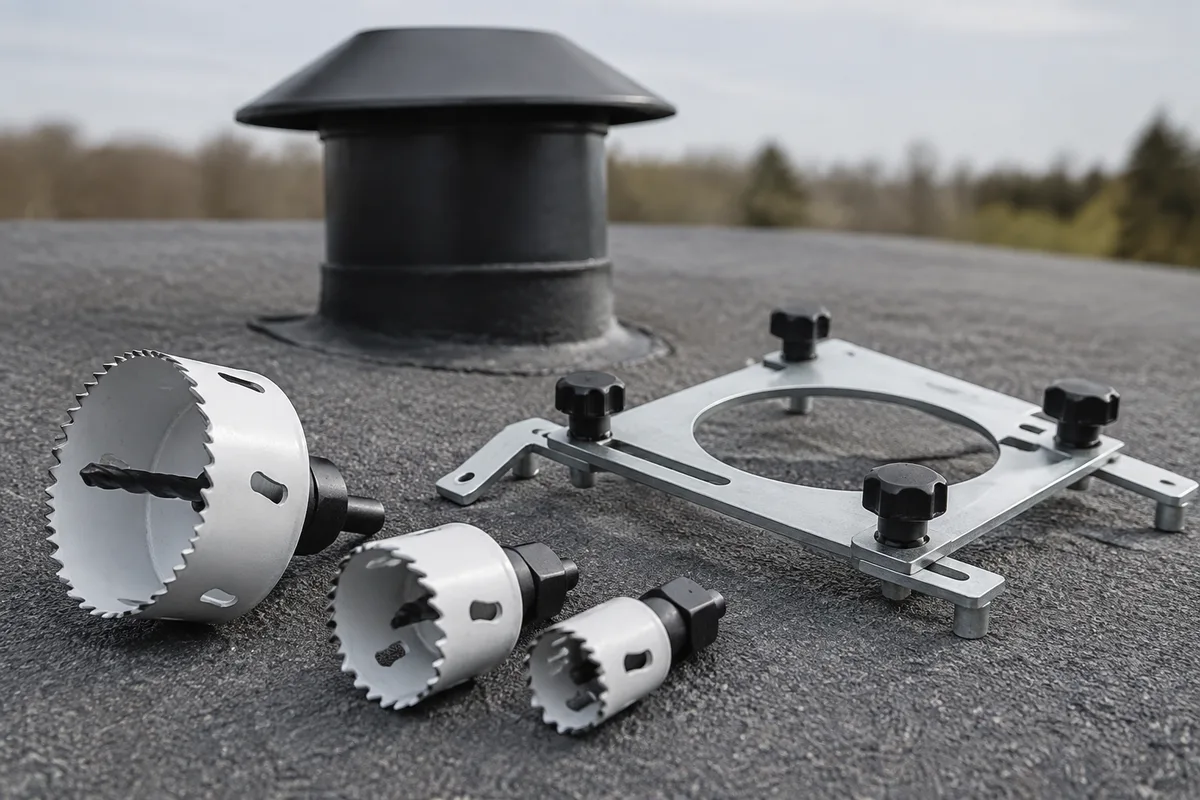
Every roof needs a certain number of openings — for plumbing vents, exhaust fans, attic ventilation, and pipe boots — and each one has to be the right size, in the right place, cut cleanly through shingles, underlayment and decking. Hole saws and vent cutting jigs are the tools that make that possible without guesswork or damage to the surrounding roof.
What hole Saws & Vent Cutting Jigs is
A hole saw is a cylindrical cutting attachment, sized to a specific diameter, that bores a clean round opening through roof decking or existing roofing material. Vent cutting jigs are guides that hold the saw steady and on-center, so the opening lines up with the pipe, fan housing or vent collar it needs to receive. Together they replace the older approach of marking a circle by eye and cutting it freehand with a reciprocating saw or utility knife.
The improvement is in consistency. A freehand cut can wander, leave an oversized gap around the pipe, or nick shingles that were never meant to be disturbed. A hole saw guided by a jig produces a round, properly sized opening every time, which matters because vent boots, flashing collars and fan housings are manufactured to fit standard diameters. An opening that is too large or too small undermines the seal around it no matter how good the flashing work is afterward.
How we use it at SoffitSmith by Smithbuilt Roofing
We reach for hole saws and vent cutting jigs whenever a job calls for a new penetration through the roof surface — installing a pipe boot, adding or replacing a fan, fitting a new vent collar, or preparing an opening for a powered or solar attic fan, sun tunnel, or skylight. Because these openings pass through decking, framing square and layout tools are used first to confirm placement between rafters, and a laser distance meter or chalk line helps keep multiple penetrations aligned across a roof plane.
Once the opening is cut, the surrounding work is what makes it watertight: tin snips and hand seamers to form or trim flashing around the collar, caulking guns and heat guns to seal and bond the detail, and hook blade utility knives to trim shingle or membrane courses cleanly around the new fitting. On flat or low-slope sections finished in single-ply membrane, the same penetration work ties in with our membrane fastening tools so the field around the new opening stays continuous and sealed. Every stage is documented through our photo documentation app, so you can see exactly where each opening was made and how it was finished.
What it means for you
A correctly sized, cleanly cut penetration is one of the more overlooked details on a roof, but it is also one of the more common places a leak starts if it is done poorly. Precise cutting means the flashing or boot that goes over the opening fits the way it was designed to, rather than being forced to compensate for a gap that is too wide or a shingle edge that is torn instead of cut.
For homeowners, this generally translates into fewer callbacks tied to vent or pipe leaks, less disruption to the surrounding roofing material, and a faster, more predictable repair when a fan, vent or pipe boot needs replacing. It also means new ventilation, a sun tunnel, or a skylight can be added to an existing roof without unnecessary cutting beyond what the fitting actually requires.
What to expect during your visit
Before any cutting begins, the location of the new or replacement penetration is marked from below, at the attic or ceiling level where possible, and cross-checked against the roof surface to avoid rafters or existing framing. On the roof itself, the layout is confirmed again before the jig is set and the hole saw is used.
The cutting itself is quick — usually a matter of minutes per opening — but the surrounding flashing, sealing and shingle or membrane tie-in work takes longer and is where most of the visit's time is spent. Afterward, the area is checked for a snug fit around the new boot, collar or fan housing, sealed, and photographed for your records. Debris from the cut is cleared before the crew leaves the area.
Frequently asked questions
Is cutting a new hole in my roof safe for the rest of the roofing?
Yes, when the opening is placed and sized correctly. The cut is confined to the immediate area needed for the vent, fan or pipe boot, and the surrounding shingles or membrane are trimmed cleanly rather than torn, which keeps the rest of the roof surface intact.
How long does this kind of work take?
The cutting step itself is brief. Most of the visit is spent on layout beforehand and on flashing, sealing and finishing work afterward, so total time depends on how many penetrations are involved and what type of roofing surrounds them.
Will this create noise or mess inside the house?
There is some noise from the saw and normal roof-work activity, but it is limited to the time the opening is being cut. Debris is contained and cleared from the roof and gutters before the crew finishes for the day.
Is this suitable for any roof type?
Hole saws and vent cutting jigs are used across shingle, tile, metal and low-slope membrane roofs alike — the technique adapts to the material, though the flashing and sealing details that follow differ by roof type.
If you have a vent, fan, pipe boot or attic ventilation project in mind, reach out to SoffitSmith by Smithbuilt Roofing and we can talk through what your roof needs.