Hidden Hanger Tools
Hidden Hanger Tools
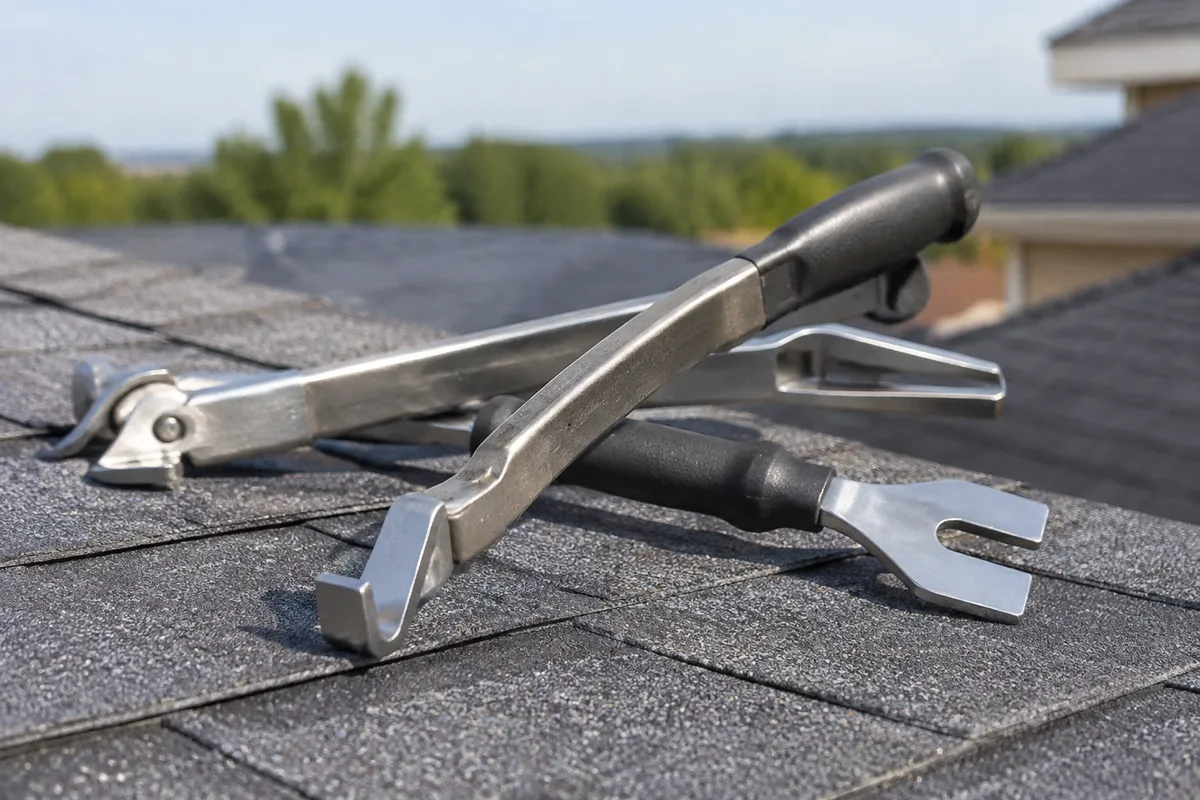
Hidden Hanger Tools cover the specialized hand tools and fasteners used to hang gutters on concealed brackets rather than exposed spikes or straps. The result is a gutter that holds its line along the fascia while the hardware that carries the load stays out of sight.
What hidden Hanger Tools is
Concealed, or "hidden," hangers are brackets that clip inside the back lip of the gutter and screw into the fascia board from underneath the gutter's front edge. Because the fastener sits inside the trough instead of driven straight through the gutter face, there is no visible spike, no exposed screw head, and no strap wrapping over the front of the gutter. Hidden Hanger Tools are what let an installer set, space, and drive those brackets accurately along a full run.
This approach improved on older spike-and-ferrule systems, where a long spike is driven through the gutter and into the fascia. Spikes tend to work loose over time as the fascia flexes with heat and moisture, which lets the gutter pull away from the roofline. Concealed hangers spread the load across more points along the run and keep the fastening point protected from direct weather, which is part of why they have become the more common choice for new gutter work.
How we use it at SoffitSmith by Smithbuilt Roofing
When a gutter run at your home is fabricated with our trailer-mounted seamless gutter machine, we set hidden hangers along that same run so the finished gutter has no mid-run seams and no exposed fasteners disrupting the fascia line. Laser distance meters, levels, and chalk lines are used to lay out hanger spacing evenly before any bracket goes in, and cordless impact drivers do the actual driving once that layout is marked.
Where a run includes outlets, miters, or corners, gutter crimpers, outlet punches, and rivet guns are used alongside the hanger work to keep those joints tight, and our downspout roll-former shapes downspouts on site so drops line up with the finished run. This work is typically part of gutter installation, replacement, or seamless gutter fabrication, and it is often paired with fascia and soffit repair when the board underneath needs attention before hangers are set into it. Magnetic nail sweepers are run afterward to clear stray fasteners from the yard and drive.
What it means for you
The main visible benefit of concealed hangers is a clean fascia line — no row of spike heads or strap brackets breaking up the front of the gutter. Because the hanger is fastened from inside the trough, it is also less exposed to sun and rain than a fastener driven through the front face, which is generally easier on the fastening point over time.
Even spacing of hidden hangers helps a gutter carry the weight of water and debris more evenly along its length, rather than concentrating stress at a few spike points. For homeowners, that generally means less flexing and sagging in the run and a gutter that holds its shape and position against the fascia.
What to expect during your visit
Before hanger work begins, the fascia is checked to confirm it is sound enough to hold fasteners, and layout marks are set along the run using laser and level tools. If the gutter itself is being fabricated on site, the seamless gutter machine forms it to length first, then the crew moves to hanging it with concealed brackets spaced along the marked layout.
During installation, expect an impact driver running steadily along the roofline as hangers are set, with occasional pauses to check level and to fit outlets, corners, and downspout connections. Landscape protection tarps are typically put down first to keep beds and walkways clear of drop and debris. Photo documentation through CompanyCam is taken as the work progresses, so you can see the hanger spacing and finished line without needing to be on a ladder yourself. Timing depends on the length and complexity of the run, but a straightforward gutter installation is generally completed within a single visit.
Frequently asked questions
Is hidden hanger installation disruptive to my property?
The work is done from ladders or lifts along the roofline and does not require access inside the house. Landscape protection tarps are used to keep beds and walkways clear, and magnetic sweepers go over the yard and driveway afterward to pick up stray fasteners.
How long does it take to hang a gutter run with hidden hangers?
Most gutter runs are laid out, formed, and hung with concealed hangers in a single visit. The exact time depends on the length of the run and how many corners, outlets, or downspout connections are involved.
Are hidden hangers suitable for any type of fascia?
Concealed hangers need a fascia board that is solid enough to hold a screw fastener. If the fascia shows rot or damage, that is addressed as part of fascia and soffit repair before hangers are set, so the finished gutter has something sound to hold onto.
Will I be able to see the hangers once the gutter is up?
No — that is the point of a concealed hanger system. The bracket sits inside the back of the gutter and is fastened from underneath the front lip, so from the ground you see a clean gutter edge along the fascia rather than exposed hardware.
If you would like to talk through gutter or fascia work that involves hidden hangers, reach out to SoffitSmith by Smithbuilt Roofing to ask what it would look like for your home.