Heavy-Duty Tarps, Battens & Sandbags
Heavy-Duty Tarps, Battens & Sandbags
When a roof is opened up by wind, hail, or a fallen limb, the first job is not a full repair — it is stopping water from getting in tonight. Heavy-duty tarps, battens, and sandbags are the tools that make that possible: a temporary, weather-tight cover held down against wind and rain until permanent repair work can begin.
What heavy-Duty Tarps, Battens & Sandbags is
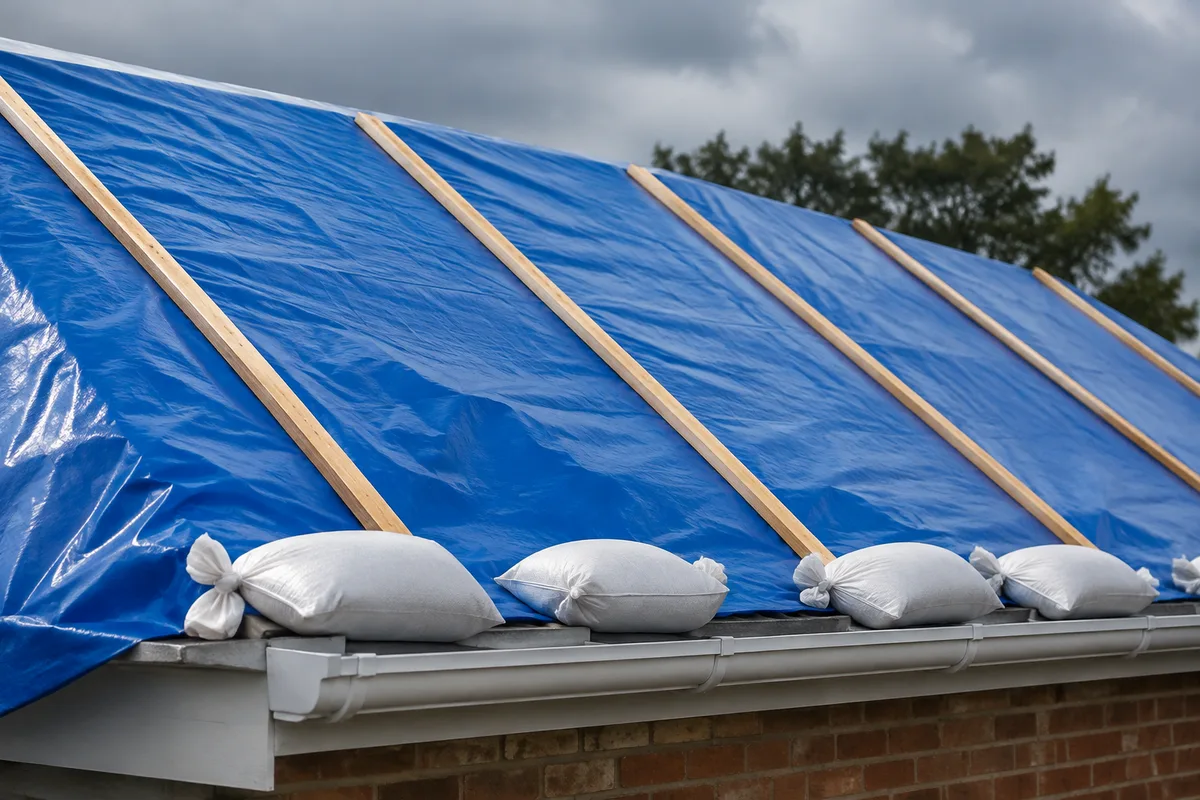
A heavy-duty roof tarp is a reinforced sheet, usually polyethylene with grommets along the edges, sized to span a damaged section of roof and lap well past the exposed area. On its own, a tarp is only half the job — wind will lift and shred a loose tarp within a single storm cycle. Battens are the wood strips fastened over the tarp edges and seams to pin them flat against the deck or existing roofing, spreading pressure evenly instead of relying on a handful of fasteners. Sandbags add weight along edges and low points where nailing through the roof is not practical, particularly on membranes or tile.
This system replaced the old approach of a few nails and a hope that the weather would hold. Batten-and-sandbag tarping is built to survive repeated wind events and rain bands, not just a single dry night, which matters in a climate where the next storm often arrives before the roof does.
How we use it at SoffitSmith by Smithbuilt Roofing
On an emergency call, tarping is rarely used in isolation. It works alongside plywood and board-up kits when an opening needs to be closed as well as covered, and landscape protection tarps to keep debris and runoff off beds and walkways while the crew works overhead. Where a leak has already put water inside, submersible pumps, air movers, and dehumidifiers handle the drying side while the tarp stops the source. Roll-off dumpsters or dump trailers take damaged material off the property the same visit where that is possible.
Because storm damage is often tangled up with a downed limb, chainsaws and pole saws may be used first to clear the roof before a tarp can even be laid flat. Once the deck is accessible, the tarp is set, battened down at every edge and seam, and weighted with sandbags anywhere fasteners are not an option — the same approach described for emergency tarping generally: battened down to hold through the next round of weather, not just the current one.
What it means for you
A properly battened tarp buys time. It keeps rain out of insulation, decking, drywall, and framing while a full repair or replacement is scheduled and materials are ordered, which limits how much interior damage a roof opening causes. Because the covering is secured rather than just laid on, homeowners are not left checking the roof after every gust to see if the tarp survived.
A tarp job also tends to be fast relative to a repair, which matters when the opening is exposed to active weather. And because it is visibly a temporary measure, it sets clear expectations: this is protection now, with permanent repair still to come, not a finished fix.
What to expect during your visit
The crew first walks the roof to see the extent of the opening and clears any debris — branches, torn shingles, loose material — that would puncture or lift a tarp. The tarp is then positioned to overlap well beyond the damaged section on all sides, since water will travel under an edge that stops too close to the opening. Battens go down over every edge and seam, fastened through to solid decking where possible. Sandbags fill in wherever a fastener is not appropriate, such as over membrane roofing or tile.
Most tarping visits are measured in a couple of hours rather than a full day, though the exact time depends on roof size and how much clearing is needed first. Homeowners can expect the crew to check that every edge is pinned down before leaving, since a tarp that flaps at even one corner will fail in the next wind.
Frequently asked questions
Is a tarped roof safe to leave until repairs are scheduled?
A battened tarp is designed to hold through additional wind and rain, which is exactly why the battens and sandbags matter more than the tarp material itself. It is a protective measure meant to bridge the gap until permanent repair, not a substitute for it.
How long does a tarp usually stay up?
That depends on the extent of the damage and how quickly permanent repair materials can be sourced and scheduled, so there is no single answer. The tarp is built to hold for as long as that gap takes.
Will tarping damage my roof further?
Battens are fastened to spread pressure rather than relying on a few isolated points, and sandbags are used specifically where fastening through the roof surface is not appropriate, such as on tile or membrane. The goal is to secure the cover without adding new penetrations that would need their own repair later.
Does this work on any roof type?
Tarping, battening, and sandbagging adapt to shingle, tile, metal, and flat membrane roofs, with the securing method adjusted to the surface — fasteners where the deck allows it, sandbags where it does not. The approach is chosen based on what the specific roof can handle.
If a storm or fallen limb has opened up your roof, reach out to SoffitSmith by Smithbuilt Roofing to talk through emergency tarping and what it would take to protect your home right away.