Handheld Infrared Cameras
Handheld Infrared Cameras
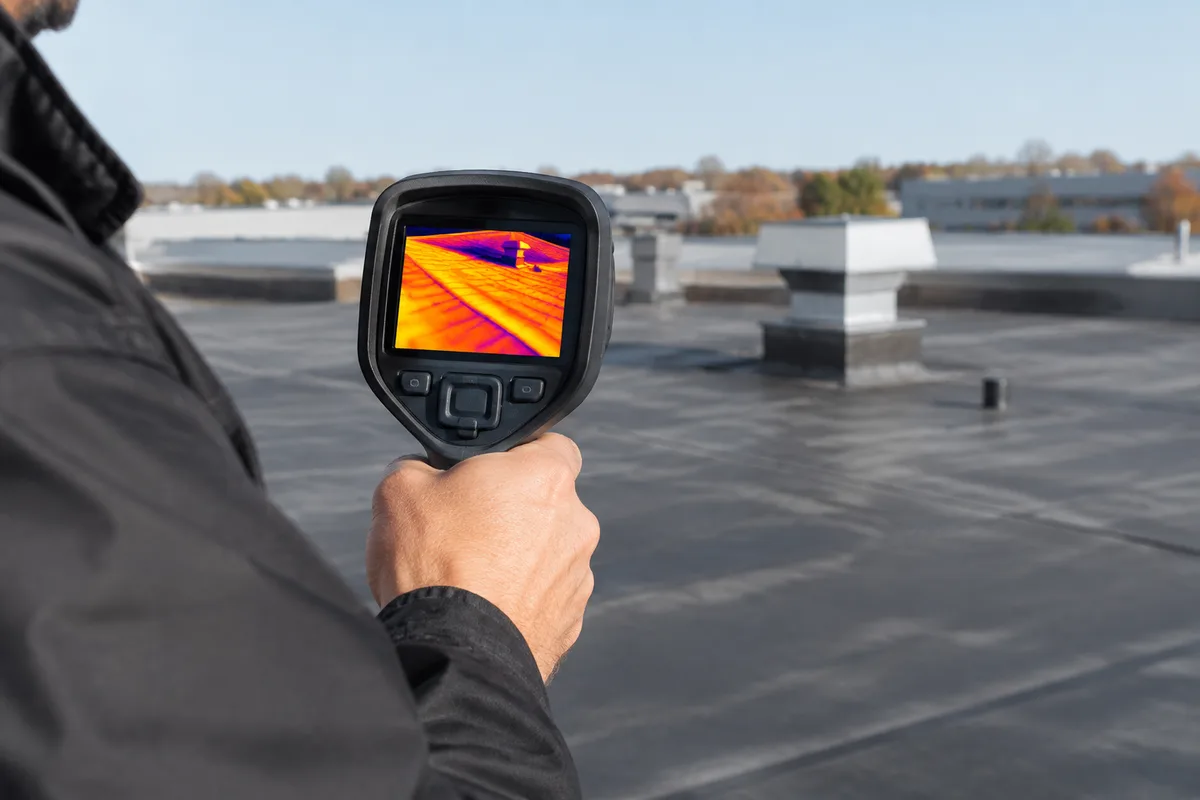
A handheld infrared camera reads the surface temperature of a roof and the ceiling below it, turning invisible heat differences into a picture you can actually look at. Wet materials hold and release heat differently than dry ones, and that difference is often the first sign of a leak path long before a stain or a soft spot shows up. At SoffitSmith by Smithbuilt Roofing, this is one of the tools we reach for when we need to see what is happening inside a roof assembly, not just on top of it.
What handheld Infrared Cameras is
The camera itself is a portable thermal imager, similar in size to a large camcorder or a heavy pair of binoculars. Instead of capturing visible light, it captures infrared radiation and displays it as a color-coded thermal map, where warmer and cooler areas of a roof, deck, or ceiling appear as distinct zones. Wet insulation, saturated decking, and areas where water has traveled sideways under a membrane or shingle often show up as temperature anomalies that are easy to miss with the naked eye.
Before tools like this were common, roofers largely relied on visible clues: stains, sagging, bubbling, or a leak that had already worked its way through to the interior. That approach works, but only after damage is visible, and by then wet insulation or a rotted deck may already be spreading further than the original leak point. A handheld thermal camera lets a technician scan a surface directly, from the roof or from inside the attic, and find the pattern of a problem while it is still contained.
How we use it at SoffitSmith by Smithbuilt Roofing
We use handheld infrared cameras for scanning from both inside and outside the roof assembly, which lets us cross-check what the attic side is showing against what the roof surface is showing. That two-sided view is part of how we separate a genuinely wet deck from an old stain that is not actively leaking.
Thermal scanning rarely works alone, and we do not treat it as a stand-alone answer. When a scan flags a suspect area, we often confirm it with moisture meters for a direct reading, and in some cases a core sample to see exactly how many layers and how much wet insulation are present. On larger or steep roofs, this handheld work can complement the aerial thermal imaging our drones capture from above, giving us a ground-level detail check on top of the wider aerial picture. Every finding we document gets recorded through our photo documentation app, so what we see on the camera screen is the same thing you see in your report.
This kind of scanning supports several of the services we offer, including leak detection and repair, roof deck rot repair, post-storm damage assessment, and both routine and pre-purchase roof inspections.
What it means for you
For a homeowner, the main benefit of thermal scanning is clarity before decisions get made. Instead of guessing at the extent of a leak from a ceiling stain, you get a picture of where moisture actually sits in the roof assembly, which helps separate a small, contained repair from a larger deck or insulation replacement.
It also tends to mean fewer surprises mid-project. Finding wet insulation or a hidden leak path during an inspection, rather than after tear-off has already started, generally makes for a more predictable scope of work and a clearer conversation about what needs to happen.
- Non-invasive first look — scanning happens without cutting into the roof or ceiling.
- Clearer communication — a thermal image is easier to point to and discuss than a description of a suspected problem.
- Better-informed repairs — knowing the extent of moisture helps match the repair to the actual problem.
What to expect during your visit
A thermal scan is typically part of a larger inspection or diagnostic visit rather than a service on its own. A technician will usually scan from inside the attic space first, looking for temperature patterns along the underside of the deck and around penetrations like vents and chimneys, then move to the exterior to check the roof surface itself. Scanning generally works best when there is a meaningful temperature difference between the roof surface and the air, such as after a sunny afternoon or overnight, so timing can affect when the scan is done.
You do not need to do anything to prepare for the scan itself; access to the attic, if there is one, is the main thing that helps the visit move smoothly. Any areas the camera flags are usually checked further with a moisture meter or a small core sample on the spot, and everything is photographed as we go so you have a record to review alongside any recommendations.
Frequently asked questions
Is a thermal scan safe for my roof and my home?
Yes. The camera only reads existing surface temperatures and does not emit anything into the roof or the home, so there is no added stress on the materials being scanned. Any follow-up steps, like a core sample, are handled separately and explained before they happen.
Will the scan disrupt my household?
Scanning from the roof is quiet and mostly happens outside; scanning from inside the attic involves a technician briefly accessing that space. Most homeowners find the process low-disruption compared to more invasive inspection methods.
How long does a scan take?
The scanning itself is usually a relatively quick part of a broader inspection visit, though total time depends on the roof's size and how many areas need a closer look with moisture meters or core samples once something is flagged.
Is thermal scanning suitable for any roof type?
It is commonly used across asphalt shingle, metal, tile, and flat or low-slope membrane roofs alike, since the underlying principle, reading temperature differences tied to moisture, applies broadly. The exact approach and what we check alongside it can vary depending on the roof system.
If you are dealing with a suspected leak or just want a clearer look at what is happening inside your roof assembly, reach out to SoffitSmith by Smithbuilt Roofing to ask about scheduling a visit that includes handheld infrared scanning.