GPS Fleet Tracking
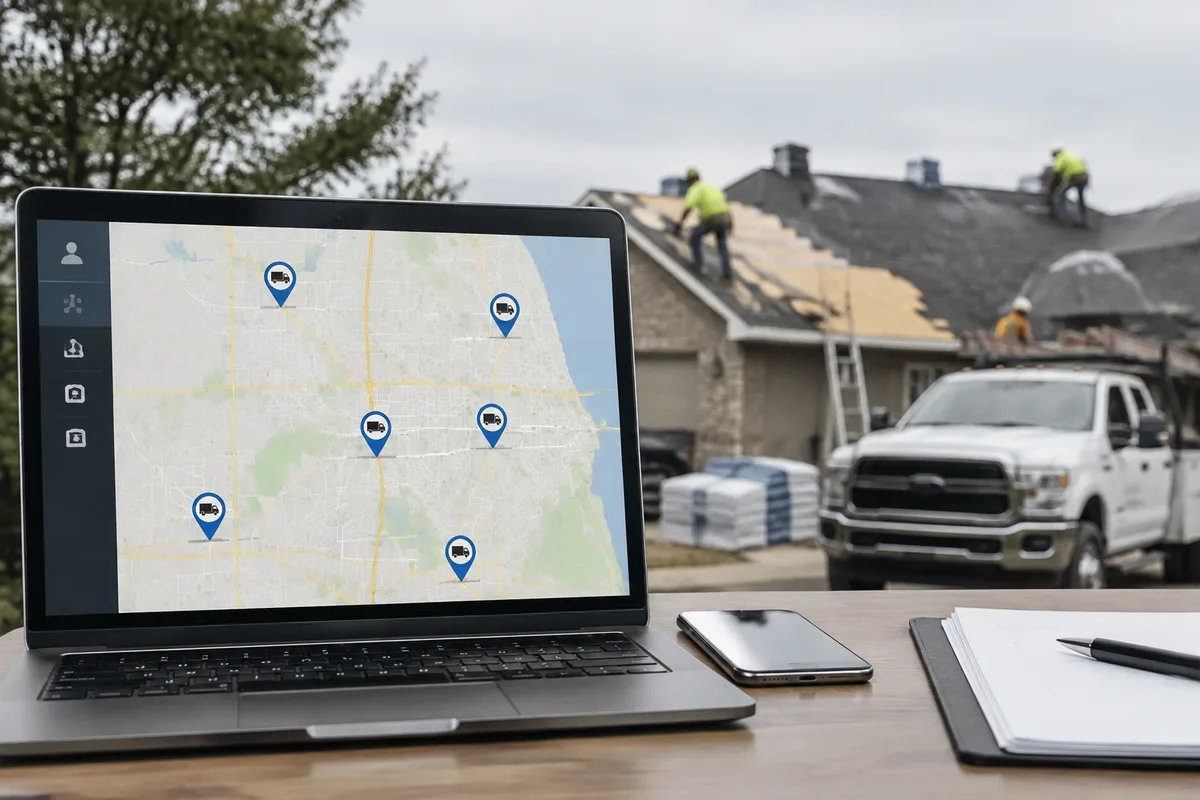
GPS Fleet Tracking
GPS fleet tracking is a simple piece of technology with a direct payoff for homeowners: it shows where our trucks and crews actually are, in real time, so scheduling stops being a guessing game. At SoffitSmith by Smithbuilt Roofing, it works quietly in the background of every visit, from a first estimate to a storm-response tarp job.
What GPS Fleet Tracking is
GPS fleet tracking uses a location device in each service vehicle to report its position, route, and movement back to a dispatch system. Instead of a dispatcher calling a driver to ask "where are you," the location is already visible on a screen. It replaces the older model of estimated arrival windows based on a phone call or a guess, with a live, updating picture of where a crew or truck actually is on the road.
For a roofing company, this matters more than it might for some other trades, because roofing work depends on multiple vehicles moving between jobs on the same day: a truck delivering material, a crew heading to a repair, a supervisor checking a completed tear-off. Fleet tracking keeps all of that visible in one place.
How we use it at SoffitSmith by Smithbuilt Roofing
Our service vans and pickups with ladder racks, along with our dump trucks and material trailers, are tracked so our office can see where each vehicle is relative to the next appointment. That means when you call to ask if the crew is still coming, we can look at an actual location instead of relaying a guess.
This ties directly into how we handle communication on the job more broadly. We also use photo documentation apps that time- and location-stamp progress photos throughout a project, so between fleet tracking and photo documentation, you have a clear picture of where your crew is and what they are doing, without having to ask.
Fleet tracking is especially useful around services with tighter timing, such as post-storm damage assessment, emergency tarping and board-up, and 24/7 emergency response, where knowing which truck is closest and how far out it is can shorten the wait during weather that will not hold off.
What it means for you
The most direct benefit is a more honest arrival window. Rather than a broad morning-or-afternoon estimate, a homeowner can be told when a crew is realistically close, based on where the truck actually is rather than where it was supposed to be.
It also reduces the back-and-forth of checking in. You are not left calling a dispatcher who then has to call the driver; the information is already available. For emergency situations, such as a storm-damaged roof needing a tarp before more rain arrives, that same visibility can help prioritize which truck responds first based on actual proximity, not just a list order.
Over the course of a longer project, this same transparency extends to knowing when material deliveries or follow-up crews are en route, which is useful for anyone coordinating around the work, such as being present for access or moving vehicles out of a driveway.
What to expect during your visit
You will not see the tracking system itself during a visit; it operates on our end, not yours. What you notice instead is the effect: when you call or are told an arrival window, that window is based on where the crew currently is, not a rough guess from earlier in the day.
Before a scheduled visit, our office can check the vehicle assigned to your job and give you a realistic sense of timing. During the visit, if a crew needs to leave for material or another stop, the same tracking lets us keep an accurate handle on when they will return. After the visit, if a follow-up truck is needed, such as for hauling debris in a roll-off dumpster or dump trailer, we can tell you roughly when to expect it using the same information.
Frequently asked questions
Does GPS fleet tracking affect my privacy?
The tracking applies to our vehicles, not to your property or anything on it. It shows the location of our trucks on the road so our office can manage scheduling and routing; it does not involve any monitoring of your home.
How often is it used?
It runs continuously in the background of our scheduling, rather than being switched on for special jobs. Any visit involving one of our vehicles, from a routine inspection to an emergency tarping call, can draw on the same location information.
Will it change how long my appointment takes?
No. Fleet tracking affects the accuracy of arrival timing and communication around a visit, not the length of the work itself. A roof inspection, repair, or installation takes the time the work requires regardless of how the truck got there.
Is it useful for storm or emergency calls specifically?
Yes. When a roof needs urgent attention, such as after wind or hail damage or a fallen tree, knowing which truck is closest and how far out it is can help our office respond with the nearest available crew rather than working strictly from a call order.
If you would like to know more about how GPS fleet tracking factors into scheduling your roof work, reach out to SoffitSmith by Smithbuilt Roofing and ask.