Dump Trucks & Material Trailers
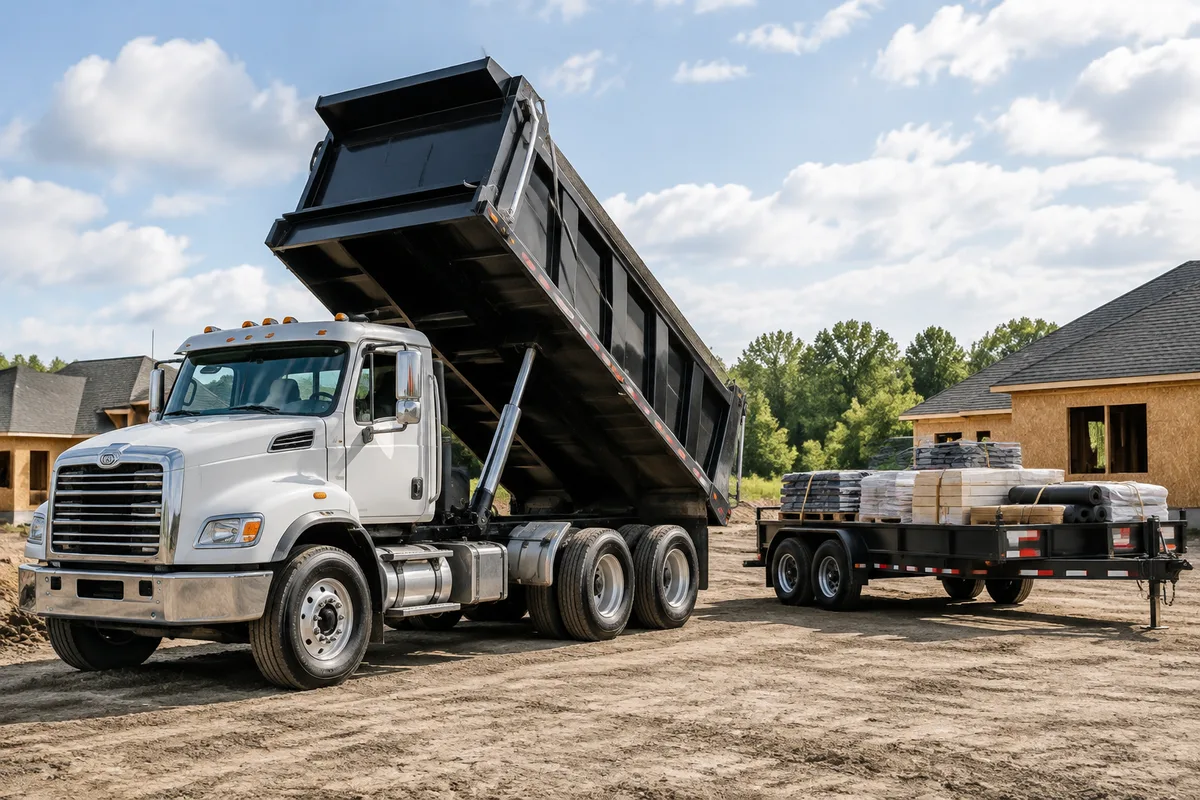
Dump Trucks & Material Trailers
A roof job moves a lot of material in both directions — new shingles, metal, underlayment and flashing coming in, and old roofing, packaging and debris going out. Dump trucks and material trailers are the equipment that makes that movement possible without a job site turning into a bottleneck. At SoffitSmith by Smithbuilt Roofing, having this hauling capacity on hand means material delivery and debris removal happen on our schedule, not a rental company's.
What dump Trucks & Material Trailers is
A dump truck is a vehicle built to carry loose or bundled material and unload it by tipping the bed, while a material trailer is a towable platform used to move bundled shingles, metal panels, underlayment rolls or lumber to and from a site. Together they cover both directions of a roofing project: bringing product to the property and hauling tear-off debris away from it.
Before crews had this kind of equipment on hand, roofing companies often depended on rental haulers, third-party dumpsters delivered on someone else's timeline, or repeated small trips in pickup trucks. That approach works, but it adds waiting time and reduces control over when debris actually leaves the property.
How we use it at SoffitSmith by Smithbuilt Roofing
Our own hauling covers material delivery and debris removal without waiting on a third party, which keeps a roof job moving on its own timeline rather than a rental company's. It works alongside our roll-off dumpsters and dump trailers, which contain tear-off debris on site as it comes off the roof so it can be hauled away the same day where possible.
On the material side, our service vans and pickups with ladder racks handle the smaller loads and tool restocking, while dump trucks and material trailers move the larger volumes — bundles, panels, or a full tear-off load — in and out. Before any of that hauling starts, our landscape protection tarps go down to cover beds, walks and plantings, and once loading is done, magnetic nail sweepers go over the yard and drive. GPS fleet tracking on our trucks also means we can tell you a realistic delivery or pickup window instead of an open-ended one.
What it means for you
For a homeowner, in-house hauling generally means fewer strangers' trucks parked on the street and fewer separate appointments to coordinate around. Material can arrive and debris can leave on the same general schedule as the roofing work itself, rather than sitting staged in the yard or driveway for days waiting on a rental pickup.
It also tends to mean a cleaner property during the job. Debris that is loaded directly into a truck or trailer as it comes off the roof does not accumulate in piles on the lawn, which reduces the chance of nails, granules or scrap metal getting tracked around before cleanup.
What to expect during your visit
On a delivery day, expect a truck or trailer to arrive with material staged for the crew — shingles, metal, or underlayment positioned close to where it will be used, often lifted into place with the same equipment used to unload it. Landscape areas near the drop zone are typically protected first.
During the roofing work itself, tear-off debris is generally loaded directly into a trailer or dumpster as the old roofing comes off, rather than left in a pile to be dealt with later. At the end of the job, expect a final sweep of the yard and drive with magnetic tools before the crew leaves, and a truck or trailer pulling away with the debris rather than a dumpster left behind to be picked up separately.
Timing depends on the scope of the roofing project — a small repair may involve nothing more than a pickup with a ladder rack, while a full replacement or new construction job will typically involve a scheduled material delivery and one or more debris hauls.
Frequently asked questions
Is having a dump truck or trailer on site disruptive to my property?
Trucks and trailers are positioned to keep driveways and street access usable where possible, and landscape protection tarps go down before loading or unloading begins. Most of the disruption is limited to the time the vehicle is actually on site for delivery or pickup.
Will debris sit in my yard before it's hauled away?
The goal is to load tear-off debris directly into a trailer or dumpster as it comes off the roof, rather than letting it collect in piles. Same-day removal is common where the project schedule allows it.
How often is this equipment used on a project?
It depends on the job — a repair might not need a dedicated haul at all, while a full roof replacement or new construction project typically involves at least one material delivery and one debris pickup, sometimes more on larger jobs.
Is this suitable for both residential and larger properties?
Dump trucks and material trailers scale to the job, from a single-family reroof to larger volumes on multi-family or commercial work. The same equipment and cleanup steps apply regardless of property size.
If you have a roofing project coming up and want to know how material delivery and debris hauling will be handled at your property, reach out to SoffitSmith by Smithbuilt Roofing to talk it through.