Drain Snakes for Internal Drains
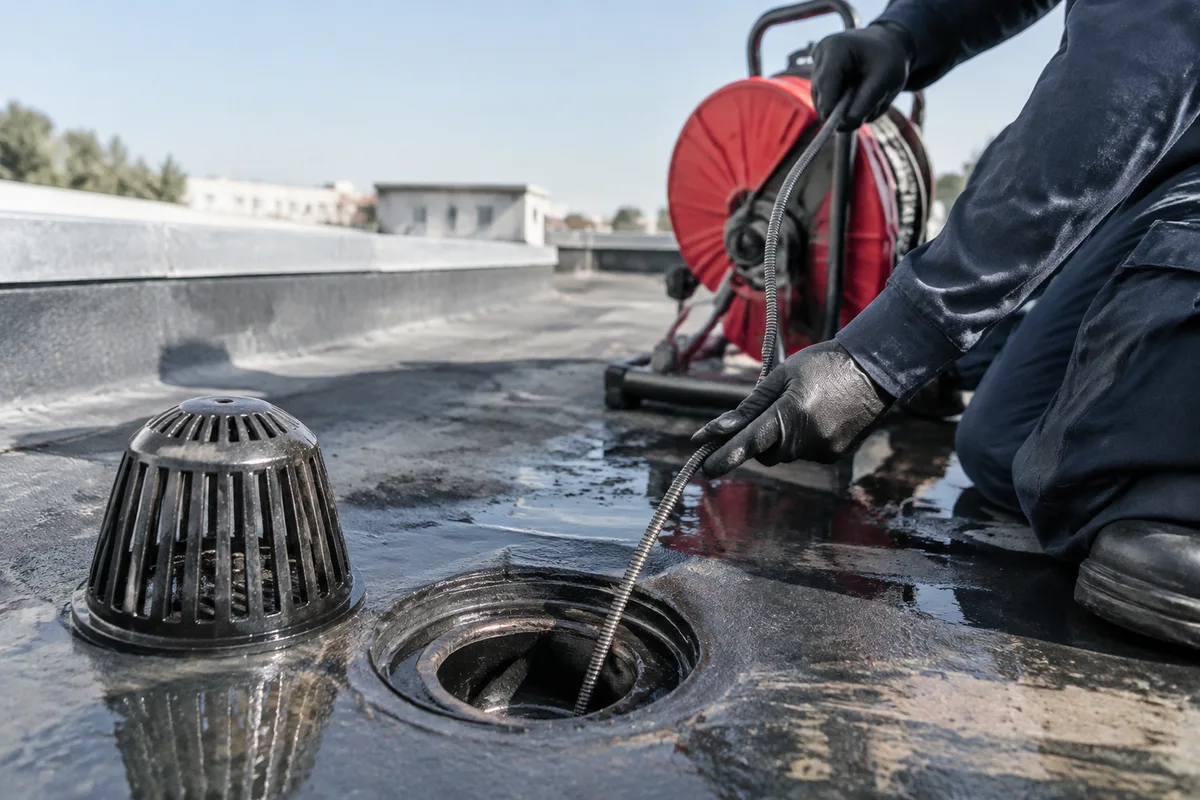
Drain Snakes for Internal Drains
Flat and low-slope roofs rely on internal drains to move water off the surface and into the building's plumbing. When one of those drains clogs with debris, sediment, or roofing granules, water has nowhere to go and starts to pond. A drain snake is a simple, mechanical tool that reaches into the drain line and physically clears the blockage so the drain can do its job again.
What drain Snakes for Internal Drains is
A drain snake is a flexible cable, often hand-cranked or motor-driven, that feeds down through an internal roof drain and into the pipe below the roof deck. As it advances, it breaks apart or pulls out whatever is blocking the line — leaves, granules, sediment, nesting material, or built-up sludge. It is a direct, physical method rather than a chemical one, which matters on a roof because there is no risk of chemical residue draining into the building's plumbing or pooling against the membrane.
Internal drains are common on commercial and larger flat-roof buildings where water cannot simply run off the edge. Unlike scuppers or gutters, these drains sit within the roof field itself and tie into interior piping, so a blockage is not always visible from the ground or even from a quick walk of the roof surface. The snake lets a technician confirm and clear the obstruction at the point where it actually sits, rather than guessing from the surface.
How we use it at SoffitSmith by Smithbuilt Roofing
At SoffitSmith by Smithbuilt Roofing, drain snakes are part of how we address ponding water on flat roofs with internal drainage systems. When a drain is blocked, we clear it directly rather than only treating the ponding as a membrane or coating issue. This work sits alongside our broader scupper, drain, and internal drainage services, so a cleared drain is checked in the context of the roof's overall drainage path, not as an isolated fix.
We often pair drain clearing with moisture meters to check whether standing water has already worked its way into the roof assembly, and with submersible pumps, air movers, and dehumidifiers if water needs to be removed and the area dried before further work. Every stage is documented through our photo documentation app, so you can see the blockage, the clearing, and the drain flowing again in the same record.
What it means for you
A cleared internal drain means water has a working path off the roof again, which reduces the load and standing weight on the membrane. Homeowners and building owners generally benefit from having ponding addressed at its source rather than only patched or coated over, since a blocked drain will keep causing the same problem until it is physically cleared.
Because the process is mechanical rather than invasive to the roof surface, it typically does not require cutting into the membrane or disturbing surrounding roofing material. That tends to mean less disruption and a more contained scope of work compared to repairs that involve opening up the roof assembly.
What to expect during your visit
A visit that involves drain clearing usually starts with a look at where water is ponding and which drains serve that area. The technician removes the drain strainer or dome, if present, and feeds the snake down into the line, working it through the blockage. You may hear the cable turning or feel light vibration if you are standing nearby, but there is no loud equipment involved.
Once the line is clear, water is generally tested by pouring or allowing existing ponded water to flow, confirming the drain now moves water at a normal rate. If standing water has been sitting for a while, we may bring in pumps or air movers to remove it and begin drying the area. The length of the visit depends on how many drains need attention and how severe the blockage is, but clearing a single drain is typically a straightforward, same-visit task.
Frequently asked questions
Is drain snaking safe for the roof membrane?
Yes. The snake works inside the drain pipe itself, not against the surrounding membrane, so it is not intended to contact or disturb the roofing material around the drain. Care is taken when removing and replacing the drain strainer or dome so the surrounding area is left as it was found.
How long does clearing a drain take?
Clearing a single blocked drain is usually a quick, focused task within a larger roof visit. The exact time depends on how far the blockage sits in the line and what it is made of, but it does not typically require multiple visits on its own.
How often do internal drains need this kind of attention?
It depends on the roof, the surrounding trees and debris, and how well the drains are maintained. A drain that is ponding water or draining slowly is a sign it may be time to check for a blockage, regardless of how long it has been since the last cleaning.
Is this suitable for any flat roof with internal drains?
Drain snaking applies specifically to roofs with internal drain systems tied into interior plumbing, which is common on commercial and larger flat-roof buildings. If your roof uses scuppers or gutters instead, a different approach to drainage would apply.
If you are seeing ponding water on a flat roof, get in touch with SoffitSmith by Smithbuilt Roofing to ask about clearing your internal drains.