Core Sampling Tools
Core Sampling Tools
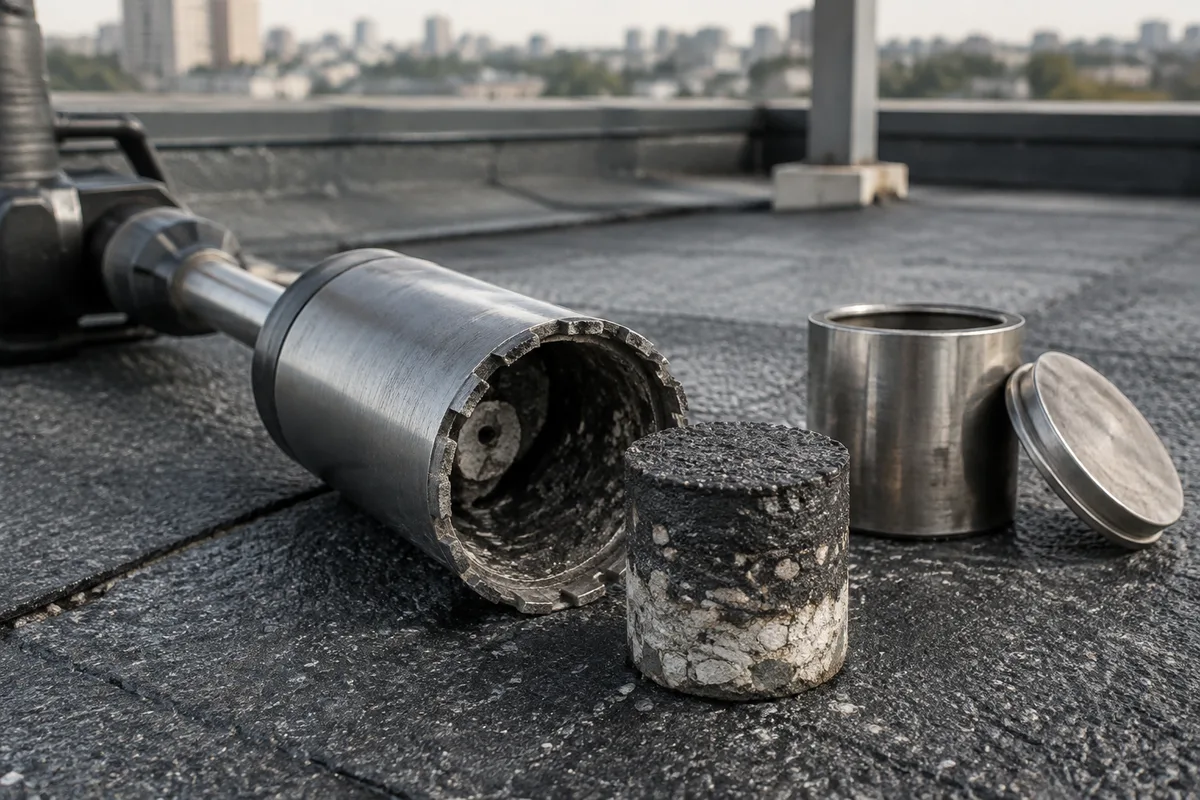
A core sample is a small, precise cut through the roof system that shows what is actually underneath the surface layer — how many roofs have been layered on top of each other, what the insulation and deck look like, and whether moisture has worked its way in. It is one of the few ways to know for certain what a roof is made of, rather than guess from the ground.
What core Sampling Tools is
Core sampling uses a sharp cutting tool, typically a hole saw or a specialized core cutter, to remove a small round or square section of the roof assembly, usually just a few inches across. That plug can be pulled apart layer by layer: membrane or shingles, underlayment, insulation board, and deck. Each layer can be inspected directly and checked for moisture, deterioration, or evidence of prior repairs.
Before core sampling was common practice, roofers and inspectors often had to estimate what was under a roof surface based on age, visible wear, or how a roof felt underfoot. A core sample removes the guesswork. It is a small, controlled cut rather than an assumption, and the small opening it leaves is patched and sealed as part of the same visit.
How we use it at SoffitSmith by Smithbuilt Roofing
At SoffitSmith by Smithbuilt Roofing, core sampling tools are one part of a broader inspection approach. A core cut is typically called for after other tools have already raised a question — a handheld infrared camera or a drone thermal scan showing a suspicious area, or a moisture meter reading that reads wet in a spot that should be dry. The core sample then confirms what those readings are pointing to: how many layers are on the roof, whether the insulation underneath is holding water, and what condition the deck is in.
Because every core cut opens the roof, even briefly, it is done with care and closed back up the same visit. Findings from a core sample, along with photos, are documented through our photo documentation app so you can see exactly what was found and where, rather than take a description on faith. This information feeds directly into decisions about leak detection and repair, roof deck rot repair, and, where a roof has multiple layers built up over the years, whether a roof-over is even an option or a full tear-off is the right call.
What it means for you
A core sample turns uncertainty into a direct answer. Instead of an estimate based on age or appearance, you get a look at the actual layers, insulation, and deck condition under the surface. That clarity matters most before a big decision: a roof replacement, a pre-purchase inspection, or a post-storm damage assessment where the extent of hidden moisture affects the whole plan.
Because the cut is small and targeted, it does not require opening up large sections of roof to get an answer. Homeowners generally find the process quick and minimally disruptive, and the information gathered helps avoid surprises once a larger repair or replacement is already underway.
What to expect during your visit
A core sample is usually one step within a larger inspection, not a stand-alone visit. Before any cutting happens, the roof is typically checked with thermal imaging or a moisture meter to identify the area most worth sampling, so the cut is made where it will actually answer a question. The core itself is small, and taking it generally takes only a few minutes per location.
Once the sample is pulled, it is examined on the spot — layers separated, insulation checked for moisture, and the deck inspected. Photos are taken throughout for your records. The opening is then sealed before the visit ends, so the roof is left secure. Depending on the size of the roof and how many areas need checking, the full inspection that includes core sampling can take anywhere from under an hour to a longer visit on larger or more complex roofs.
Frequently asked questions
Does core sampling damage my roof?
The cut made for a core sample is small and deliberate, and it is sealed before the visit is over. It is a controlled, minor opening rather than a source of ongoing damage, and it is done specifically to answer a question that could otherwise require guesswork.
Is core sampling safe to have done while I'm home?
Yes. The work happens on the roof itself, and homeowners are welcome to be home during the visit. There is no need to vacate the property, and the process does not involve any chemicals or disruption inside the house.
How often does a roof need core sampling?
Core sampling is not a routine or repeated task like a scheduled inspection. It is typically used once, when there is a specific question about layer count, insulation condition, or deck moisture that other tools have flagged but not fully answered.
Is core sampling suitable for every type of roof?
Core sampling can be used across most roof types, including low-slope membrane roofs, built-up roofing, and steeper shingle or tile roofs, though the tool and technique vary with the assembly. It is most often used where there is a specific concern to check rather than as a general check on a roof with no signs of trouble.
If you are weighing a roof replacement, buying a home, or simply want a clear answer about what is really under your roof surface, reach out to SoffitSmith by Smithbuilt Roofing to ask whether core sampling is a good fit for your situation.