Circular Saws & Angle Grinders
Circular Saws & Angle Grinders
Circular saws and angle grinders are two of the most-used power tools on a roofing job site, covering everything from cutting a new sheet of decking to trimming a piece of standing seam metal to size. On this page we walk through what these tools do, how they fit into a typical SoffitSmith by Smithbuilt Roofing visit in Bradenton, and what homeowners can expect when they're in use.
What circular Saws & Angle Grinders is
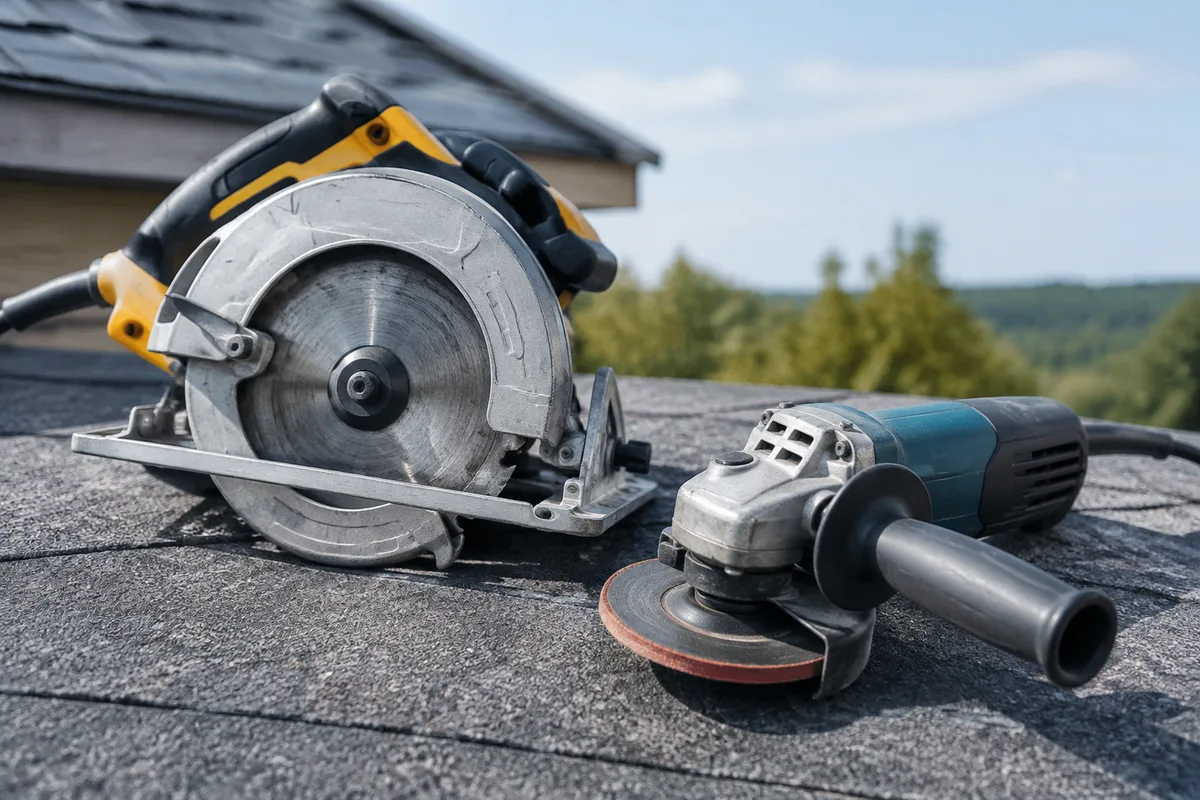
A circular saw is a handheld power saw with a round, toothed blade used to make straight cuts through wood-based materials like roof decking, framing lumber, and plywood sheathing. An angle grinder is a smaller, faster-spinning tool fitted with an abrasive disc, used for cutting, grinding, or smoothing harder materials — most often metal flashing, fasteners, or standing seam panels on a roof.
Before tools like these were standard, roofers relied on handsaws and files, which meant slower cuts and more variation from one cut to the next. A circular saw or angle grinder, guided by a straight edge or a layout line, produces a straight, repeatable cut in a fraction of the time, whether the material is wood, fastener, or sheet metal.
Both tools are common across residential and commercial roofing work. They are not specialty or rare equipment — they are baseline tools that almost any roof deck, framing, or metal roofing job depends on somewhere in the process.
How we use it at SoffitSmith by Smithbuilt Roofing
On a SoffitSmith by Smithbuilt Roofing job, circular saws and angle grinders are used for accurate cuts in deck, framing, and metal, right on site. That covers cutting replacement decking to fit an existing roof plane, trimming framing members during a structural repair, and cutting metal roofing panels, flashing, or trim to the dimensions the job calls for.
These tools rarely work alone. Framing squares and layout tools are used first to mark accurate cut lines, and once a cut is made, cordless impact drivers and framing nailers or pneumatic coil roofing nailers are used to fasten the piece in place. On metal roofing work, a cut made with an angle grinder is often followed by hand seamers or mechanical seamers to lock the panel down to spec. Wood moisture meters are sometimes used first on decking or framing, so that cutting and replacement is limited to material that actually needs it rather than sound wood that can stay. Once cutting is finished, magnetic nail sweepers pass over the work area to pick up any metal debris the process leaves behind.
This kind of cutting most often comes up during roof deck rot repair, structural repair on a sagging roof, metal roofing installation, and fallen-tree impact repair, where damaged wood or metal has to be removed and replaced with something that fits the space exactly.
What it means for you
Accurate cuts on site mean a replacement piece of decking, framing, or metal fits the space it's going into the first time, rather than needing rework or a return trip. That translates into less time on your roof overall and a tighter, more consistent finished surface.
Clean cuts also matter for how a roof performs over time. A decking or framing cut that lines up correctly gives fasteners solid material to grip, and a metal cut that's straight and burr-free seats properly into seams and flashing, which is part of what keeps a roof watertight and holding up to wind.
Because these tools are handled with layout tools and measured cuts rather than guesswork, you can generally expect a tidier work area and fewer surprises about how a repair will look once it's finished.
What to expect during your visit
Before any cutting starts, the area is measured and marked, and fall protection such as harnesses, lanyards, and roof anchors is set up if the work is happening on a slope. During the cutting itself, you can expect the sound of a saw or grinder for short, intermittent stretches rather than continuous noise — most cuts take seconds, with pauses for measuring and fitting in between.
Afterward, the crew fastens the cut piece into place, and the immediate work area is cleared of scrap material and swept for stray metal debris with magnetic sweepers. On a repair visit, this cutting work is usually one part of a larger job — removing damaged material, cutting and fitting the replacement, and fastening it down — rather than a standalone service.
Frequently asked questions
Is it safe to be home while these tools are in use?
Yes. Cutting work happens on the roof or in a contained work area, and the crew uses fall protection and standard safety practices throughout. You'll hear the tools running in short bursts, but there's no need to stay away from the property.
How long does the cutting portion of a job take?
Individual cuts take only seconds, but the overall time depends on how much decking, framing, or metal needs to be cut and fitted. It's typically one step within a larger repair or installation visit rather than a job on its own.
What kinds of jobs actually need a circular saw or angle grinder?
Any job involving new or replacement decking, framing repair, or metal roofing and flashing work is likely to involve one or both tools. That includes structural repairs, metal roof installation, and roof deck rot repair.
Will cutting leave debris behind?
Cutting produces sawdust or metal shavings in the immediate work area, and the crew clears scrap material and passes magnetic sweepers over the site to pick up loose metal before finishing the visit.
If you have a repair, replacement, or metal roofing project that involves cutting decking, framing, or metal, reach out to SoffitSmith by Smithbuilt Roofing to talk through what your job needs.