Caulking Guns & Heat Guns
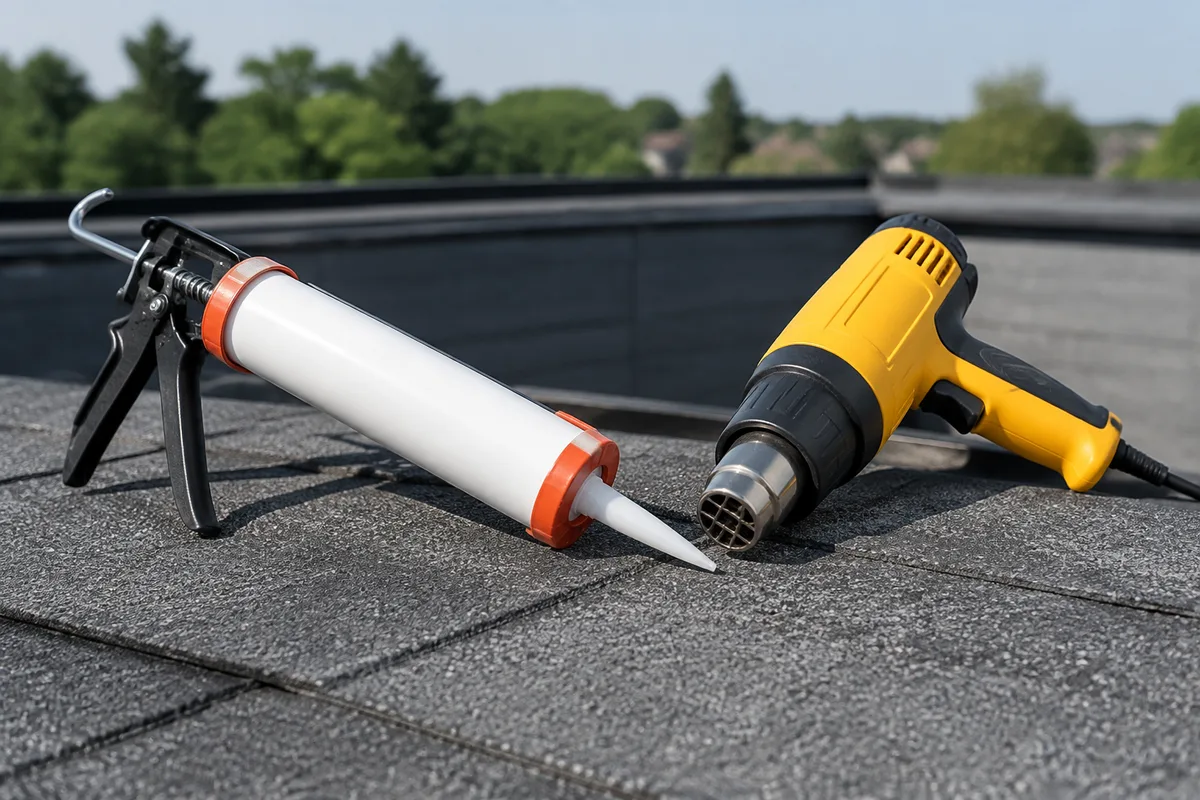
Caulking Guns & Heat Guns
Caulking guns and heat guns are two of the smallest tools on a roofing truck, and two of the most frequently used. Together they handle the sealant work and detail bonding that finish a roof properly — the joints, laps, and small penetrations where a roof either holds tight or starts to leak. At SoffitSmith by Smithbuilt Roofing, they show up on almost every job, from a full re-roof down to a single pipe boot repair.
What caulking Guns & Heat Guns is
A caulking gun is a simple mechanical tool that applies sealant in a controlled, even bead instead of by hand from a tube. It lets a roofer lay down consistent pressure and volume along a seam, a flashing edge, or a fastener head, which matters because a bead that is too thin will crack and one that is too thick will slump before it cures.
A heat gun does the opposite job with the same goal in mind. It applies controlled, directed heat to soften sealant, membrane, or adhesive so it flows and bonds properly, or to prep a surface before sealant goes on. On single-ply and modified bitumen work, controlled heat is often what makes the difference between a seam that is truly fused and one that only looks sealed.
Neither tool is new to the trade, but the improvement over the years has been in control — guns that meter sealant more evenly, and heat guns with adjustable output that avoid scorching membrane or leaving a bead brittle. That control is what keeps the detail work reliable.
How we use it at SoffitSmith by Smithbuilt Roofing
On this crew, caulking guns and heat guns are applied at the right temperature so sealant bonds and lasts, rather than being rushed on cold or overheated in the field. That shows up in the small, specific spots that determine whether a roof stays watertight: pipe boots, vent collars, chimney and skylight flashing, and the fastener heads on metal and shingle work.
They also work alongside the practice's other detail tools rather than in isolation. Hot-air welders handle the long membrane seams on TPO and PVC roofs, and seam rollers and probes check that those welds hold; propane torch kits are used for modified bitumen. Caulking guns and heat guns pick up the finer detail work around those systems — terminations, fastener heads, and transitions where a wider tool cannot reach. Tin snips and hand seamers, along with portable sheet metal brakes, shape the flashing that the sealant then finishes and seals.
This detail work supports several of the other services offered, including flashing repair, chimney and skylight leak sealing, pipe boot and vent collar replacement, and general sealant and caulking renewal on roofs that are otherwise sound but showing wear at the joints.
What it means for you
Sealant applied at the correct temperature and consistency tends to bond better and resist cracking sooner than sealant rushed on in poor conditions. For a homeowner, that generally means fewer small leaks starting at penetrations and terminations, which are some of the most common places a roof lets water in even when the field of the roof is fine.
Because caulking and heat gun work is detail work, it is also usually quick. A crew can address a handful of penetrations or flashing details in a single visit without disturbing the rest of the roof, which keeps disruption to the property to a minimum.
Consistent bead application also makes inspection easier down the line — a clean, even seal is simple to check for cracking or separation at a future inspection, compared to sealant that was applied unevenly.
What to expect during your visit
Before any sealant or heat is applied, the area is typically cleaned and dried, since sealant will not bond well over dirt, old sealant residue, or moisture. On a repair visit, this might follow a closer look with tools like moisture meters or a core sample to confirm the surrounding area is sound before it is resealed.
During the work, the caulking gun lays down the bead in a controlled pass, and the heat gun is used where needed to soften material for a proper bond or to help the sealant set and adhere evenly. This is close, hands-on work done directly on the roof surface, usually supported by roof jacks or planks on steeper slopes for secure footing.
Afterward, the area is usually documented with photo records so you can see exactly what was addressed. Detail work like this is often finished within the same visit as a related repair, without a separate trip.
Frequently asked questions
Is caulking and heat gun work safe for my roof?
Yes. These are controlled, low-impact tools used for precise, localized work rather than anything that stresses the roof structure. Heat is applied in a directed, adjustable way specifically to avoid damaging surrounding shingle, membrane, or metal.
How long does this kind of detail work take?
It depends on how many spots need attention, but sealant and heat gun work on a handful of penetrations or flashing details is typically quick compared to a full roofing job, often completed within a single visit alongside other repair work.
Will I notice any disruption during the work?
Most of the work happens directly on the roof, so there is little disruption at ground level. You may notice the crew on the roof briefly and hear normal tool sounds, but there is no interior work involved for this type of detail sealing.
What kinds of roofs is this used on?
Caulking and heat gun detail work applies across roof types — asphalt shingle, metal, tile, and single-ply membrane systems all have penetrations, flashing, and terminations that rely on properly applied sealant.
If you have a leak at a pipe boot, chimney, skylight, or flashing detail, or simply want existing sealant checked and renewed, reach out to SoffitSmith by Smithbuilt Roofing to ask about caulking gun and heat gun work on your roof.