Cap Nailers for Synthetic Underlayment
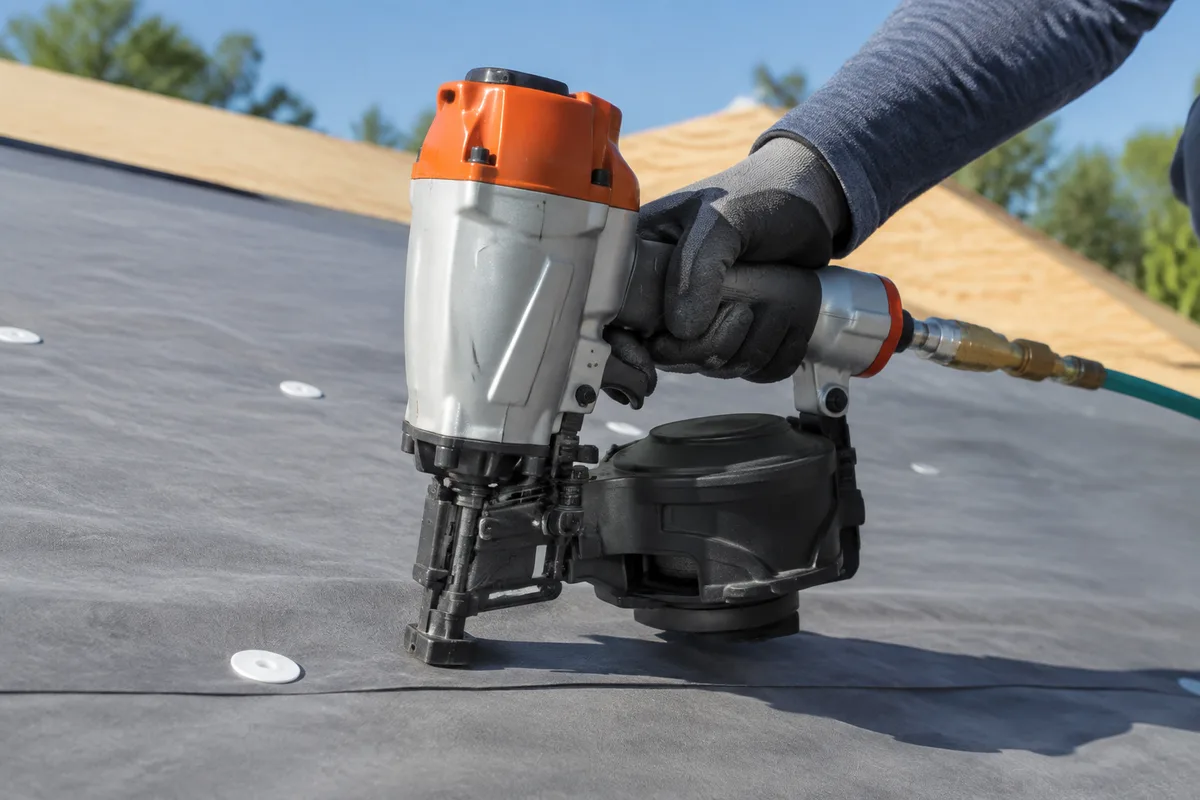
Cap Nailers for Synthetic Underlayment
Before shingles, tile, or metal panels ever go down, the roof deck gets a layer of synthetic underlayment that acts as the roof's secondary defense against wind-driven rain. How that underlayment is fastened matters as much as the material itself, and that is where a cap nailer comes in. It is a tool built to drive nails through a small plastic or metal cap, spreading the fastener's grip across the underlayment sheet instead of punching a bare nail head straight through it.
What cap Nailers for Synthetic Underlayment is
A cap nailer is a pneumatic or battery-powered tool loaded with coils of plastic or metal caps and nails together. Each trigger pull seats a cap over the fastener as it drives, so the underlayment is held down by a wide, flat disc rather than a narrow nail head. That disc spreads the holding force over more material, which keeps the synthetic sheet from tearing loose around the fastener in wind or foot traffic.
This is an improvement over older methods of stapling or nailing underlayment directly, where the fastener head alone had to resist every gust and every step a crew took while working on the deck. Staples and bare nails can pull through synthetic underlayment more easily, especially at the edges and laps where wind uplift concentrates. Capped fasteners were developed specifically to solve that weak point.
How we use it at SoffitSmith by Smithbuilt Roofing
On a Smithbuilt Roofing job, cap nailers go down after the deck has been inspected and prepared, and before shingles, tile, or metal go on. The underlayment gets rolled, laid to overlap correctly at the laps, and then fastened with capped nails at a pattern spaced to hold through wind events rather than just sit in place until covered.
This work runs alongside the rest of the deck-to-surface sequence: laser distance meters, levels, and chalk lines keep the underlayment courses straight and the pitch reference consistent, while the same pneumatic setup that runs our coil roofing nailers and towable air compressors can power the cap nailer where there's no site power available. Once the underlayment is fastened, the crew moves into drip edge, flashing, and the roofing material itself. At the end of the day, magnetic nail sweepers clear loose fasteners from the yard and drive before the crew leaves.
What it means for you
A properly capped underlayment layer is not something you will see once the roof is finished, but it is part of what keeps that layer doing its job for years underneath the visible roofing material. Homeowners generally benefit from underlayment that stays flat and continuous rather than lifting or tearing at fastener points during storms, since a torn underlayment sheet can let water reach the deck even while the shingles or tiles above it look intact.
Because the fastening step happens early in the job, getting it right the first time also means fewer surprises later — no re-nailing, no chasing a lifted edge before the next layer goes down. It is one of the less visible parts of a roof, but it is the kind of detail that affects how the whole system performs in wind.
What to expect during your visit
If your project includes underlayment work — a full roof replacement, a roof-over, or a deck repair that exposes bare sheathing — the cap nailing step happens after tear-off or deck prep and before any finish roofing material arrives. The deck is swept and checked, the underlayment is rolled out and aligned, and the cap nailer is run along the fastening pattern specified for that underlayment product and roof pitch.
This part of the job is usually quick compared to the rest of the install, often finished within the same work session as the deck prep, and it is done from ladders or lift access already set up for the roof. You will not need to be present for this stage specifically, though it is documented like the rest of the job so you can see the underlayment and fastening pattern before it disappears under the final roofing material.
Frequently asked questions
Does capped nailing make the job take longer?
Not meaningfully. A cap nailer works at roughly the same pace as a standard coil nailer, and fastening synthetic underlayment is a relatively fast step compared to tear-off or the finish roofing installation that follows it.
Is this safe for my roof deck and the crew?
Yes. The fastener depth and pattern are set for the underlayment product and deck, and our crews use the same fall protection and access equipment for this step as for the rest of the roof work.
Is capped underlayment fastening used on every roof type?
It is used wherever synthetic underlayment is specified, which covers most asphalt shingle, tile, and metal roof systems. Low-slope membrane roofs use different fastening methods suited to that material instead.
Will I be able to see the underlayment before it's covered?
Yes. Photo documentation is taken at each stage of the job, including the underlayment layer, so you have a record of that step even after the finish roofing material is installed over it.
If you have a roof project coming up and want to know how underlayment fastening fits into the plan, reach out to SoffitSmith by Smithbuilt Roofing and ask.