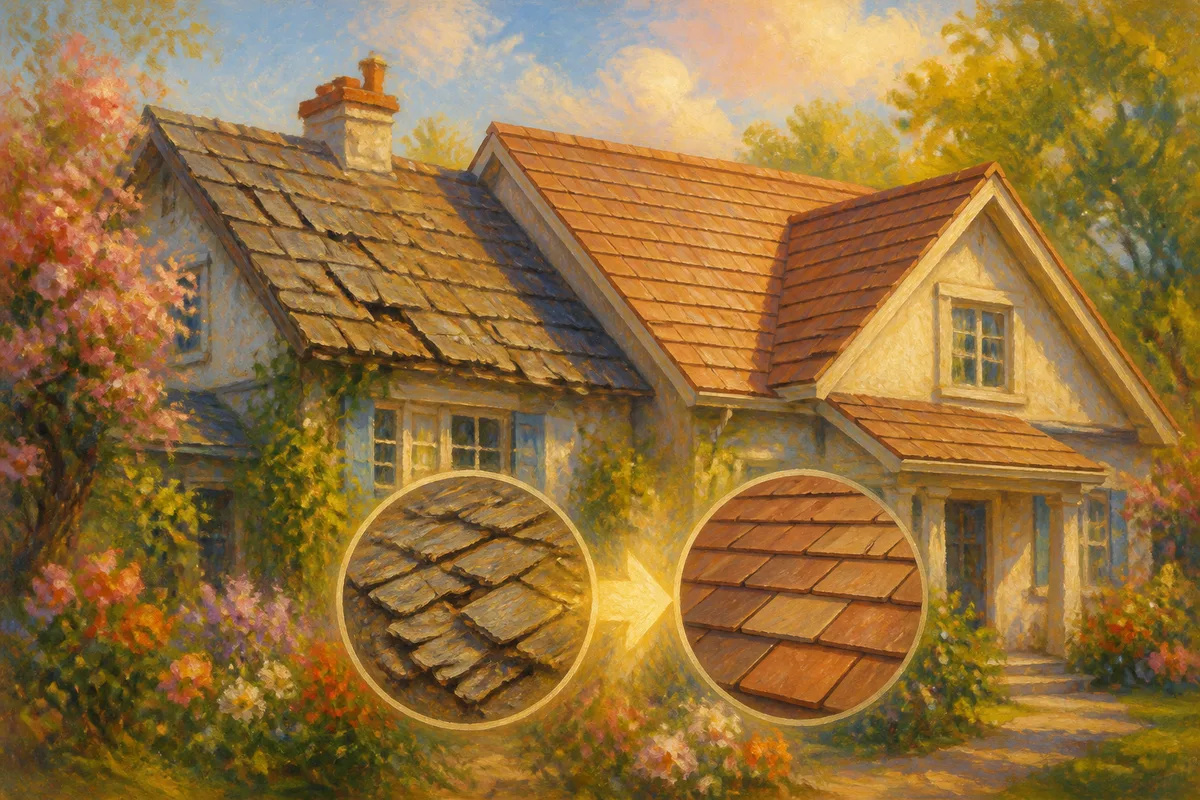
Roof Repair or Replacement? How Pros Decide
Every roof gives off small warning signs before it becomes a bigger problem. A few missing shingles here, a soft spot there, or a ceiling stain that shows up after a storm. When something like this happens, the question homeowners in Bradenton usually ask is simple: do I need a repair, or is it time for a whole new roof?
The honest answer is that it depends on more than just what you can see. Roofing professionals look at a handful of specific factors before making that call, and understanding them can help you make sense of what you're being told, ask better questions, and feel more confident about the decision either way.
How Old Is the Roof, Really?
Age is one of the first things a roofer considers, but it isn't just about counting years. Materials age differently depending on how they were installed, how much sun and humidity they've taken on, and whether they were properly ventilated underneath. A roof near the end of its expected lifespan that already needs a repair is a very different situation than a newer roof with the same issue.
This is why a lifespan estimate or a condition report can be so useful. It gives you a realistic picture of where your roof stands right now, instead of relying on a rough guess based on the calendar alone.
How Much of the Roof Is Affected?
The size of the problem area matters a lot. A localized issue, like a cracked pipe boot, a section of lifted shingles, or a small leak near a chimney, can often be fixed on its own without touching the rest of the roof. These targeted repairs are usually the first option, especially if the surrounding materials are still in decent shape.
But when damage shows up in multiple spots, or when one issue turns out to be connected to a wider pattern, repairing each area one at a time can start to feel like patchwork. At that point, a roofer will usually walk you through why a broader fix, or in some cases a full replacement, makes more sense in the long run.
This is also where things like drone and infrared moisture scans come in handy. They can reveal how far moisture has traveled under the surface, which isn't always obvious from a visual inspection alone.
What's Under the Surface?
Shingles are just the top layer. Underneath, you've got underlayment, decking, flashing, and in some cases ice-and-water shield around vulnerable areas like valleys and skylights. If moisture has been getting past the surface for a while, it can lead to roof deck rot or sagging that a simple shingle swap won't solve.
This is one of the biggest reasons a roof that looks fine from the ground can still need more than a patch. Once the wood underneath is compromised, repairing just the top layer would be like painting over a crack instead of fixing what caused it. A closer inspection, sometimes involving removing a section of shingles to check the decking, is often needed to know for sure.
How Many Layers Are Already There?
Some roofs have been reroofed more than once, with a new layer installed right over the old one. This is sometimes done as a roof-over or overlay, and it can be a reasonable option in the right circumstances. But there's a limit to how many layers a roof can safely carry, and once that limit is reached, adding another layer isn't a responsible choice, no matter how minor the current damage looks.
If your roof has already been overlaid once, that history plays a real role in whether a repair is still on the table. It's one of the first things a roofer will ask about, so knowing your roof's history, even roughly, helps speed up the conversation.
When to Call in a Professional Opinion
None of these factors work in isolation. A roof's age, the size of the damaged area, what's happening underneath, and how many layers already exist all get weighed together. That's why two roofs with a similar-looking leak can end up with two different recommendations.
If you're staring at a stain on your ceiling or noticing shingles in the yard after a windy afternoon, the best next step is a routine inspection or a post-storm damage assessment rather than guessing on your own. A trained eye can usually tell fairly quickly whether you're looking at a straightforward fix or something that calls for a bigger conversation.
If you're in the Bradenton area and want a clear, honest read on what your roof actually needs, give us a call. We're happy to answer questions about your specific situation and help you figure out the right next step, whether that's a small repair or something more involved.
Questions about your own situation? The team at SoffitSmith by Smithbuilt Roofing is happy to help — call us at 941-932-0172 or request an appointment.
This article is for general information only.